
Revestimento de Barreira Térmica por Plasma para Pás de Aviação de Superliga
Introdução
Nos motores a jato modernos, as pás da turbina operam em ambientes extremos onde as temperaturas superficiais podem exceder 1100°C. Mesmo as superligas avançadas à base de níquel, como Rene 80, CMSX-4 e PWA 1484, requerem proteção contra oxidação, fadiga térmica e corrosão a quente. Revestimentos de Barreira Térmica (TBCs) aplicados por plasma fornecem uma camada isolante crítica nessas pás de superliga, estendendo sua vida útil e melhorando a eficiência geral do motor.
Em nossa instalação, somos especializados na aplicação de TBCs por aspersão de plasma em pás de turbina de grau aeroespacial, garantindo adesão do revestimento, controle de espessura e desempenho de isolamento térmico em conformidade com as especificações aeroespaciais e do fabricante de equipamento original (OEM).
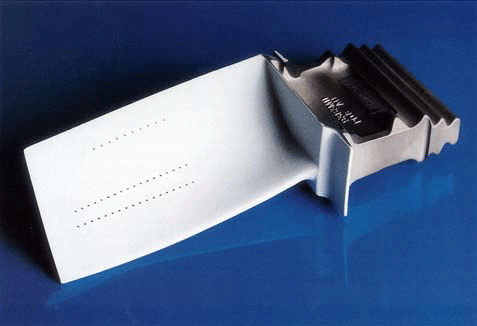
O que é o Revestimento de Barreira Térmica Aplicado por Plasma?
O TBC por aspersão de plasma é um sistema de revestimento cerâmico multicamada aplicado usando Aspersão de Plasma Atmosférico (APS) ou Aspersão de Plasma a Vácuo (VPS). Tipicamente consiste em:
Camada de Ligação (por exemplo, MCrAlY ou PtAl): Promove a adesão e protege o substrato contra oxidação e corrosão a quente.
Camada Superior (geralmente Zircônia Estabilizada com Ítria 7–8% em peso – YSZ): Fornece baixa condutividade térmica e isola a superliga subjacente do calor extremo.
Durante a aspersão de plasma, partículas fundidas são propelidas sobre a superfície da pá, formando uma microestrutura em camadas que resiste à esfoliação e ao estresse térmico.
Principais Benefícios para Pás de Aviação de Superliga
Benefício | Descrição |
|---|---|
Isolamento Térmico | Reduz a temperatura da superfície do metal em 100–200°C, protegendo o substrato. |
Resistência à Oxidação | Limita a difusão de oxigênio e previne a formação de escamas na superfície em altas temperaturas. |
Vida Útil em Fluência & Fadiga | Reduz o estresse térmico, melhorando a resistência à fadiga da pá e o tempo até a falha. |
Eficiência de Combustível | Permite temperaturas de entrada da turbina (TIT) mais altas, aumentando a eficiência do motor. |
Redução de Manutenção | Estende os intervalos de revisão e reduz as taxas de substituição de pás. |
Substratos de Superliga para Aplicação de TBC
Aplicamos TBCs de plasma a uma ampla gama de superligas monocristalinas e solidificadas direcionalmente, incluindo:
CMSX-4 – para pás de HPT de primeiro estágio em motores comerciais e militares.
PWA 1484 – usado em pás e palhetas de turbina da seção quente.
Rene 80 – comumente aplicado em palhetas guia de bocal e pás de turbina industrial.
Rene N5 e N6 – usado em pás monocristalinas onde a estabilidade de fase e a proteção térmica são essenciais.
Cada liga requer preparação de superfície precisa, seleção da camada de ligação e validação por ciclagem térmica.
Visão Geral do Processo de Revestimento
1. Preparação da Superfície
As pás são desengorduradas, jateadas com abrasivo e limpas para remover oxidação e promover a adesão da camada de ligação.
2. Aplicação da Camada de Ligação
Uma camada de MCrAlY (NiCoCrAlY ou CoNiCrAlY) é aplicada via HVOF ou aspersão de plasma. Ela forma a interface resistente à oxidação entre o substrato e a cerâmica.
3. Aplicação da Camada Superior (YSZ)
A camada de YSZ 7–8% é aplicada via APS, atingindo uma espessura típica de 150–300 μm com porosidade controlada para alívio da deformação térmica.
4. Processamento Pós-Revestimento
Tratamento térmico opcional ou processos de vedação podem ser usados para melhorar a resistência à esfoliação ou atender às especificações do OEM.
Garantia de Qualidade e Testes
Realizamos inspeções abrangentes e testes de qualificação para garantir o desempenho e a longevidade do revestimento, incluindo:
Medição da Espessura do Revestimento (±10 μm)
Teste de Adesão (ASTM C633)
Testes de Choque Térmico & Ciclagem (até 1100°C)
Análise de Microestrutura & Porosidade (MEV, análise de imagem)
Inspeção da Interface Camada de Ligação–Camada Superior
Todos os revestimentos estão em conformidade com especificações de revestimento aeroespacial, como GE C50TF26, Pratt & Whitney PWA 36945 e Rolls-Royce RPS 661.
Resultados e Desempenho
Redução da temperatura da superfície do metal: Até 200°C
Ciclos de fadiga térmica suportados: >1000 a 1150°C
Resistência à esfoliação: >95% de cobertura após 500 horas de ciclagem térmica
Força de ligação: ≥30 MPa (ASTM C633)
Esses resultados garantem alta confiança na integridade do TBC durante longos ciclos operacionais.
Perguntas Frequentes
Quais ligas são compatíveis com TBCs por aspersão de plasma para pás de motores a jato?
Qual deve ser a espessura da camada superior cerâmica para aplicações em pás de turbina?
Quais limites de ciclagem térmica os TBCs de plasma podem suportar?
Os TBCs podem ser reaplicados após a reforma de pás de superliga?
Quais métodos de teste verificam a adesão do revestimento e o desempenho térmico?
