
Fabricante de Soldagem de Pás de Turbina de Superliga de Fundição Equiaxial
Soldagem Especializada de Pás de Turbina de Superliga Equiaxial para Desempenho em Seções Quentes
As pás de turbina de superliga equiaxial são comumente usadas em turbinas a gás industriais e de geração de energia devido às suas robustas propriedades mecânicas isotrópicas e custo relativamente menor em comparação com as variantes solidificadas direcionalmente ou de cristal único. No entanto, essas peças fundidas—particularmente aquelas feitas de Inconel, liga Rene e Hastelloy—requerem técnicas de soldagem especializadas para evitar trincas, distorção e degradação de propriedades devido à sua microestrutura complexa de gama primo e porosidade de fundição.
Neway AeroTech é um fabricante profissional de soldagem de superliga que oferece serviços de soldagem TIG e a laser para pás de turbina fundidas equiaxialmente usadas em geração de energia, aeroespacial e sistemas de energia. Os serviços incluem reparo de ponta, reconstrução de borda, restauração de superfície e integração de solda em conformidade com as especificações do fabricante original (OEM).
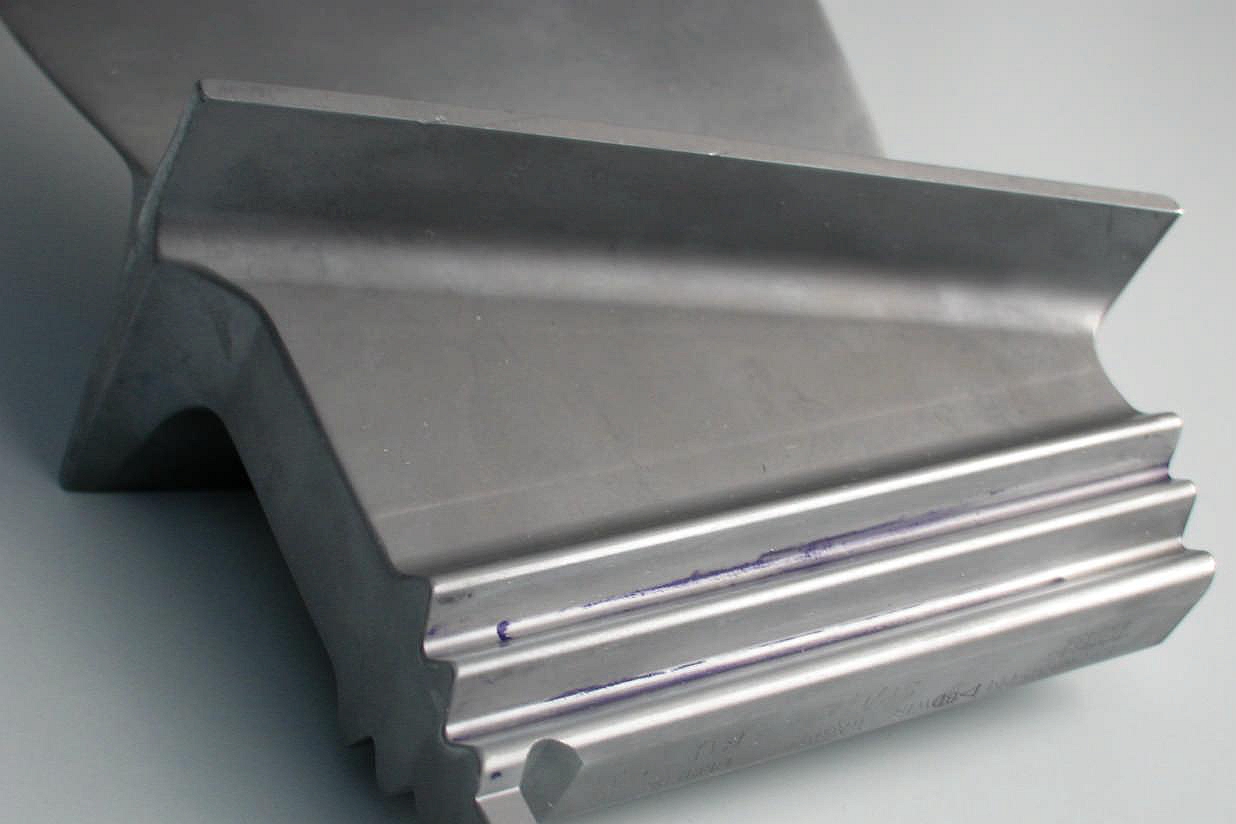
Tecnologias de Soldagem para Pás de Superliga Fundidas Equiaxialmente
Nossa oficina está equipada com sistemas avançados para realizar soldas confiáveis em pás equiaxiais submetidas a tensões térmicas e mecânicas.
Soldagem TIG usando aditivos compatíveis com Inconel, Rene e Hastelloy
Soldagem a laser para aplicações de borda de fuga fina e baixa distorção
Câmaras de proteção a vácuo para zonas de solda sensíveis à oxidação
Tratamento térmico pós-soldagem para restaurar o equilíbrio de fases e a dureza
Todos os processos são suportados pelas especificações AS9100D, NADCAP e OEM para pás de turbina.
Graus Comuns de Superliga Usados em Soldagem de Pás
Liga | Temp. Máx. (°C) | Resistência ao Escoamento (MPa) | Aplicação Típica em Pás |
|---|---|---|---|
1050 | 880 | Pás de turbina industrial | |
1040 | 960 | Anéis de palhetas, pás do rotor | |
1175 | 790 | Palhetas guia, pás de exaustão | |
950 | 760 | Pás da roda da turbina |
Essas ligas são fundidas usando métodos equiaxiais para resistência isotrópica e soldabilidade.
Estudo de Caso: Reparo por Solda TIG na Ponta de Pá Equiaxial de Rene 77
Contexto do Projeto
Um cliente operando turbinas a gás de 50 MW necessitava de reparo por solda em pás equiaxiais de Rene 77 que apresentavam trincas e erosão na ponta. A soldagem TIG foi realizada com aditivo compatível, seguida por tratamento térmico a 980°C e teste de raios-X para confirmar fusão completa e reparo livre de defeitos.
Tipos de Pás Soldadas Típicas e Indústrias
Modelo de Pá | Descrição | Liga | Indústria |
|---|---|---|---|
TBR-720 | Pá de turbina de alta pressão com reconstrução de ponta TIG de 2 mm | Inconel 738 | |
VNS-500 | Segmento de palheta com solda a laser na borda de fuga | Hastelloy X | |
RBX-860 | Restauração da borda da pá do rotor com solda TIG e perfilamento da raiz | Rene 77 | |
STX-330 | Pá do estator com solda na capa e validação de acabamento por CMM | Inconel 713C |
Todas as soldas são testadas quanto à vida útil em fadiga térmica e durabilidade em alto ciclo.
Desafios da Soldagem em Reparos de Pás de Turbina Equiaxiais
O risco de trinca por liquação aumenta quando a temperatura entre passes excede 175°C em ligas equiaxiais ricas em gama primo, como Inconel 738 ou Rene 77.
Dureza da ZTA acima de 420 HV se forma se a taxa de resfriamento não for controlada durante soldas na borda ou na borda de fuga da pá.
A oxidação ocorre acima de 500 ppm de oxigênio em arcos TIG, causando porosidade e camada alfa na superfície da poça de solda.
A distorção da solda excede 0,02 mm em bordas de fuga finas sem restrição ou pré-aquecimento para seções de pá equiaxial.
Retenção de tensão residual >250 MPa leva a empenamento após usinagem se o tratamento térmico não for aplicado adequadamente após a soldagem.
Soluções de Processo de Soldagem para Pás de Superliga
Soldagem em caixa de luvas com O₂ < 50 ppm elimina inclusões de óxido e garante fusão completa em soldas de borda de fuga e ponta.
Temperaturas entre passes ≤ 150°C mantidas usando sensores térmicos para minimizar os riscos de liquação do gama primo e trincas nos contornos de grão.
Soldagem TIG com aditivo ERNiCrMo-3 compatibiliza a composição química e mantém a ductilidade sob fadiga térmica até temperatura de serviço de 1050°C.
Tratamento térmico pós-soldagem a 980°C alivia a tensão residual e homogeneiza a estrutura de grãos dentro da zona termicamente afetada.
HIP a 1030°C, 100 MPa por 4 horas fecha a porosidade interna e restaura a resistência à fadiga de reparos de pás fundidas equiaxialmente.
Resultados e Verificação
Execução da Soldagem
A soldagem TIG foi aplicada usando aditivo compatível Rene 77 sob proteção de argônio. A reconstrução por solda restaurou o comprimento da pá dentro de uma tolerância de ±0,01 mm.
Processamento Pós-Soldagem
As pás passaram por tratamento térmico de alívio de tensões a 980°C por 2 horas, seguido por HIP opcional a 1030°C, 100 MPa para eliminar vazios subsuperficiais.
Inspeção
A inspeção por raios-X verificou a continuidade da solda. O CMM confirmou o perfil do aerofólio dentro de ±0,008 mm. A análise por SEM mostrou fusão completa dos grãos sem defeitos de fase secundária.
Perguntas Frequentes
Quais ligas Rene e Inconel são adequadas para soldagem de pás equiaxiais?
Qual tratamento térmico é usado após a soldagem de pás de turbina?
Bordas de fuga finas podem ser soldadas a laser sem distorção?
Como vocês inspecionam pás de turbina soldadas?
Vocês oferecem revestimento após o reparo por solda da pá?
