
Fornecedor de Componentes de Motor de Alta Temperatura Fundidos Direcionalmente em CMSX-2
Introdução
O CMSX-2 é uma superliga de níquel de primeira geração solidificada direcionalmente (DS), especificamente projetada para aplicações em motores aeroespaciais de alta temperatura. Oferece excepcional resistência ao fluência, estabilidade à oxidação e resistência à fadiga térmica até 1100°C. Como um fornecedor especializado em fundição direcional, fabricamos componentes de motor em CMSX-2 com orientação precisa de grãos [001], porosidade abaixo de 1% e precisão dimensional de ±0,05 mm.
Nossas peças fundidas em CMSX-2 são ideais para sistemas de propulsão aeroespacial, incluindo pás de turbina, palhetas e bocais que exigem durabilidade prolongada em alta temperatura e integridade estrutural.
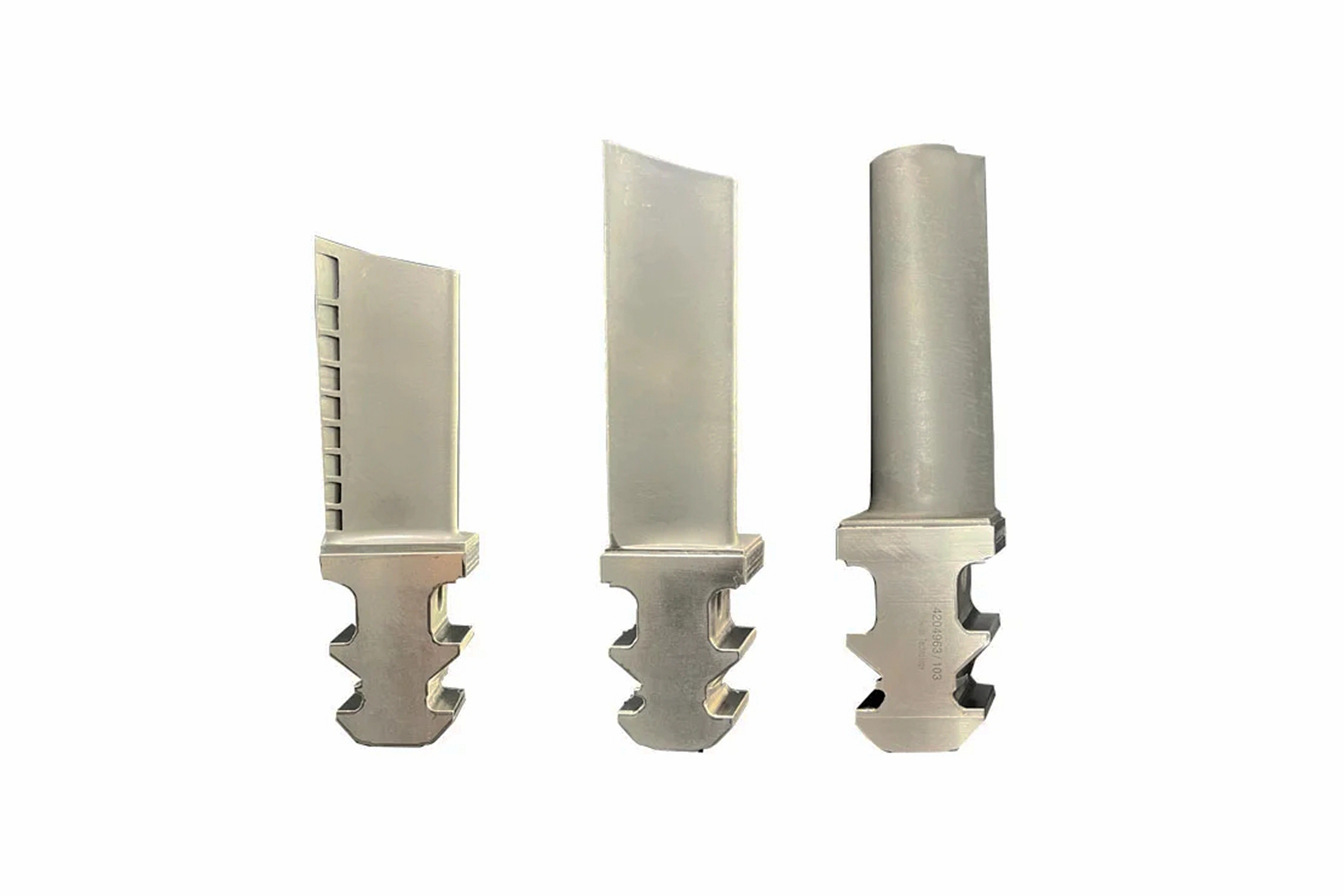
Tecnologia Central: Fundição Direcional do CMSX-2
Utilizamos solidificação direcional a vácuo em um forno Bridgman para produzir componentes em CMSX-2 com estrutura de grãos colunares controlada. A liga é fundida sob vácuo a ~1450°C e vazada em moldes cerâmicos pré-aquecidos a ~1100°C. A retirada do molde é conduzida a 1–3 mm/min para alcançar solidificação direcional ao longo do eixo [001], eliminando contornos de grãos transversais e aumentando a vida útil ao fluência sob tensão.
Características do Material da Liga CMSX-2
O CMSX-2 é uma superliga DS à base de níquel reforçada por uma alta fração volumétrica da fase γ′ e elementos de endurecimento por solução sólida. Fornece excelente estabilidade microestrutural e resistência ao fluência sob gradientes térmicos elevados. As propriedades-chave incluem:
Propriedade | Valor |
|---|---|
Densidade | 8,7 g/cm³ |
Resistência à Tração (a 980°C) | ≥1100 MPa |
Resistência à Ruptura por Fluência (1000h @ 982°C) | ≥180 MPa |
Limite de Temperatura de Operação | Até 1100°C |
Resistência à Fadiga (R=0,1, 10⁷ ciclos) | ≥550 MPa |
Resistência à Oxidação | Excelente |
Estrutura de Grãos | Solidificada Direcionalmente [001] |
A estrutura de grãos direcional do CMSX-2 fornece resistência anisotrópica para componentes da seção quente sob cargas mecânicas e térmicas.
Estudo de Caso: Projeto de Seção Quente de Motor Aeroespacial
Contexto do Projeto
Um fabricante de motores comerciais necessitava de palhetas de turbina de primeiro estágio e palhetas guia de bocal para um grande motor turbofan operando acima de 1050°C. O CMSX-2 foi selecionado por sua microestrutura DS, oferecendo resistência ao fluência e redução na iniciação da fadiga. Entregamos peças tratadas por HIP, revestidas e usinadas por CNC de acordo com os padrões AMS 5400 com controle de qualidade certificado NADCAP.
Aplicações Típicas de Motores de Alta Temperatura
Pás de Turbina DS de Primeiro Estágio: As pás de CMSX-2 resistem ao fluência e à fadiga térmica em temperaturas de entrada da turbina superiores a 1050°C.
Palhetas Guia de Bocal (ex.: CF6, PW4000): Palhetas fundidas direcionalmente garantem estabilidade dimensional e minimizam a fissuração nos contornos de grãos sob carga sustentada.
Palhetas de Suporte da Estrutura: Aerofólios estruturais operando sob alta tensão cíclica, exigindo longa vida à fadiga e resistência ao choque térmico.
Dutos de Transição Térmica: Peças fundidas DS estáticas expostas a transições de fluxo quente com risco reduzido de corrosão nos contornos de grãos ou microfissuração.
Essas peças suportam o desempenho e a segurança de longo prazo em motores a jato modernos e plataformas de propulsão militar.
Soluções de Fabricação para Componentes em CMSX-2
Processo de Fundição Modelos de cera são montados para fundição direcional e investidos em cascas cerâmicas. A fusão a vácuo e a solidificação direcional Bridgman a ~1450°C permitem o alinhamento colunar dos grãos [001]. A retirada do molde é rigidamente controlada para eliminar contornos de grãos de baixo ângulo e prevenir a formação de grãos errantes.
Pós-processamento O Prensagem Isostática a Quente (HIP) a 1190°C e 100 MPa remove microvazios e aumenta a resistência à fadiga. Tratamentos térmicos de solubilização e envelhecimento são aplicados para desenvolver uniformidade da fase γ′ e resistência ao fluência.
Usinagem Final A usinagem CNC é realizada para acabamento de faces de acoplamento, raízes das pás e abas de alinhamento. A EDM é usada para refinar bordas de fuga e contornos de fluxo. A perfuração profunda forma canais de resfriamento de precisão.
Tratamento de Superfície Revestimentos de barreira térmica (TBC) são aplicados via métodos EB-PVD ou APS para isolar contra gases de combustão. Revestimentos de difusão de alumineto são aplicados para melhorar a resistência à oxidação e corrosão.
Testes e Inspeção Cada componente passa por inspeção por raios-X, varredura dimensional CMM, testes de tração e fluência e avaliação metalográfica para verificar orientação cristalina, consistência de fase e conformidade dimensional.
Principais Desafios de Fabricação
Controlar a solidificação direcional para eliminar grãos errantes em geometrias complexas de pás.
Manter o alinhamento [001] e a orientação dos grãos durante a retirada do molde.
Garantir a repetibilidade dimensional e metalúrgica entre lotes de produção.
Resultados e Verificação
Orientação dos grãos verificada usando difração de raios-X Laue e metalografia.
Precisão dimensional dentro de ±0,05 mm confirmada por inspeção CMM 3D.
Resistência à ruptura por fluência ≥180 MPa a 982°C confirmada via teste de 1000 horas.
Nenhuma instabilidade de fase ou degradação dos contornos de grãos após 1000 ciclos térmicos a 1100°C.
Perguntas Frequentes
O que torna o CMSX-2 adequado para peças de motor de alta temperatura fundidas direcionalmente?
Como vocês previnem a formação de grãos errantes durante a solidificação direcional?
Componentes de CMSX-2 podem ser produzidos com canais de resfriamento internos?
Que tipos de tratamentos de superfície são compatíveis com o CMSX-2?
Quais métodos de inspeção são usados para garantir a orientação de grãos de eixo único e a integridade da fundição?
