
Componentes de Turboalimentador Forjados com Ligas Nimonic para Maior Durabilidade
Introdução
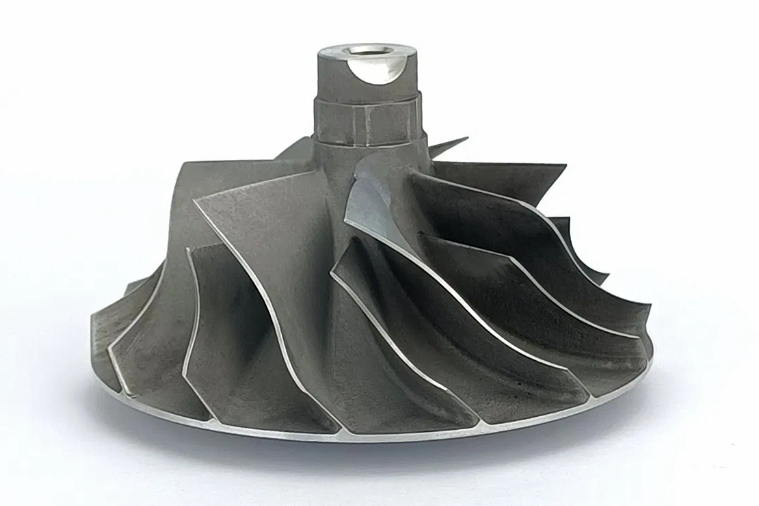
As ligas Nimonic, com sua excelente resistência em altas temperaturas, resistência à oxidação e durabilidade à fadiga, são ideais para a fabricação de componentes críticos de turboalimentadores. A Neway AeroTech oferece serviços de forjamento de precisão para ligas Nimonic, entregando peças de turboalimentador de alto desempenho com tolerâncias dimensionais rigorosas (±0,05 mm) e excelente resistência à fadiga térmica.
Utilizando tecnologias avançadas de forjamento, tratamento térmico e usinagem CNC, garantimos que os componentes de turboalimentador em Nimonic alcancem desempenho mecânico superior e confiabilidade operacional mesmo sob os ciclos térmicos e pressões extremas encontrados nos sistemas modernos de turboalimentador.
Principais Desafios de Fabricação para Componentes de Turboalimentador
Forjar peças de turboalimentador a partir de Nimonic 90 e Nimonic 80A apresenta desafios técnicos críticos:
Manuseio de peças de trabalho de alta resistência (resistência à tração ≥1050 MPa) durante o forjamento de precisão.
Alcançar tolerâncias dimensionais rigorosas (±0,05 mm) para conjuntos rotativos.
Controle do tamanho e orientação do grão para maximizar a resistência à fadiga térmica e ao fluência.
Produção de acabamentos superficiais (Ra ≤3,2 µm) essenciais para o desempenho aerodinâmico e de vedação de alta eficiência.
Processo de Forjamento de Precisão para Peças de Turboalimentador em Nimonic
O processo de forjamento para componentes de turboalimentador em Nimonic envolve:
Preparação do Tarugo: Tratamento térmico de homogeneização para garantir uma microestrutura inicial consistente.
Forjamento de Matriz de Precisão: Forjamento a 1050–1120°C com taxas de deformação controladas para otimização da microestrutura.
Forjamento Isotérmico (para peças de alta tensão): Minimiza gradientes térmicos e melhora a uniformidade do grão para resistência superior à fadiga.
Resfriamento Controlado: Resfriamento em forno ou ar controlado para evitar tensões residuais e distorção.
Tratamento Térmico Pós-Forjamento: Tratamento de solubilização tipicamente a 1080–1120°C seguido de envelhecimento controlado para melhorar o desempenho à tração, fadiga e fluência.
Usinagem CNC Final: Alcançando tolerâncias dimensionais de ±0,01 mm e acabamentos superficiais tão finos quanto Ra ≤1,6 µm.
Comparação de Métodos de Fabricação para Componentes de Turboalimentador
Método de Fabricação | Precisão Dimensional | Acabamento Superficial (Ra) | Resistência à Fadiga Térmica | Resistência em Alta Temperatura | Eficiência de Custo |
|---|---|---|---|---|---|
Forjamento de Precisão | ±0,05 mm | ≤3,2 µm | Superior | Excelente | Média |
Fundição por Cera Perdida a Vácuo | ±0,1 mm | ≤3,2 µm | Boa | Boa | Média |
Usinagem CNC (a partir de Barra) | ±0,01 mm | ≤0,8 µm | Moderada | Moderada | Alta |
Estratégia de Seleção de Método de Fabricação
A escolha do método para componentes de turboalimentador é baseada na resistência térmica, resistência e eficiência de produção:
Forjamento de Precisão: A melhor opção para produzir rodas de turbina, anéis de bocal e conjuntos rotativos com alta resistência à fadiga e precisão dimensional. Componentes em Nimonic forjados superam as alternativas fundidas em vida útil à fadiga e resistência ao fluência em 30–40%.
Fundição por Cera Perdida a Vácuo: Adequada para geometrias internas complexas e componentes de desempenho médio, equilibrando custo e propriedades mecânicas.
Usinagem CNC: Reservada para protótipos ou peças extremamente precisas com lotes pequenos devido aos custos mais altos.
Matriz de Desempenho de Liga Nimonic
Material da Liga | Temperatura Máx. de Serviço (°C) | Resistência à Tração (MPa) | Resistência ao Fluência | Resistência à Oxidação | Aplicações Típicas |
|---|---|---|---|---|---|
950 | 1200 | Excelente | Superior | Rodas de turboalimentador, bocais de turbina | |
850 | 1050 | Boa | Superior | Rodas de compressor, componentes de turbina | |
870 | 930 | Excelente | Excelente | Coletores de escape, conjuntos de turbo | |
750 | 820 | Moderada | Boa | Aplicações industriais de turbo | |
870 | 960 | Excelente | Excelente | Sistemas aeroespaciais e de turboalimentador |
Estratégia de Seleção de Liga para Peças de Turboalimentador
Selecionar a liga Nimonic correta garante desempenho superior e vida útil:
Nimonic 90: Ideal para rodas de turbina de turboalimentador operando em temperaturas de até 950°C que requerem máxima resistência à tração e fadiga.
Nimonic 80A: Preferida para rodas de compressor e componentes da seção quente que necessitam de resistência (1050 MPa) e resistência à oxidação.
Nimonic 263: Selecionada para peças do sistema de escape e conjuntos de turbo expostos a carregamento térmico cíclico.
Nimonic 75: Usada em aplicações industriais menos exigentes que requerem resistência moderada à temperatura e fadiga.
Nimonic PE16: Mais adequada para sistemas avançados de turboalimentador em aplicações aeroespaciais e automotivas de alto desempenho.
Principais Técnicas de Pós-processamento
O pós-processamento garante propriedades otimizadas:
Prensagem Isostática a Quente (HIP): Aumenta a densidade e a resistência à fadiga eliminando defeitos internos.
Usinagem CNC de Precisão: Alcança tolerâncias finais de ±0,01 mm e acabamentos superficiais Ra ≤0,8 µm.
Tratamento Térmico: Tratamentos de solubilização e envelhecimento para melhorar a resistência à tração, fluência e fadiga.
Acabamento Superficial: Polimento, jateamento e revestimento para melhorar a eficiência aerodinâmica e a vida útil ao desgaste.
Métodos de Teste e Garantia de Qualidade
Os rigorosos processos de QA da Neway AeroTech incluem:
Máquina de Medição por Coordenadas (CMM): Verificação dimensional dentro de ±0,005 mm.
Teste Não Destrutivo por Raios-X: Inspeção de defeitos internos para integridade de fundição e forjamento.
Microscopia Metalográfica: Avaliação da estrutura de grão e fases.
Teste de Tração: Validação das propriedades de resistência e alongamento.
Todos os procedimentos de qualidade estão em conformidade com os padrões de fabricação aeroespacial AS9100.
Estudo de Caso: Rodas de Turboalimentador em Nimonic 90 Forjadas com Precisão
A Neway AeroTech entregou rodas de turboalimentador em Nimonic 90 forjadas com precisão para aplicações automotivas de alto desempenho, alcançando:
Temperatura de Serviço: Operação contínua de até 950°C
Precisão Dimensional: ±0,03 mm alcançado
Vida Útil à Fadiga: Aumentada em 38% após HIP e tratamento térmico
Certificação: Totalmente em conformidade com os padrões de qualidade aeroespacial AS9100
Perguntas Frequentes
Por que as ligas Nimonic são preferidas para componentes de turboalimentador?
Como o forjamento de precisão melhora o desempenho dos componentes do turboalimentador?
Que precisão dimensional é alcançada em peças forjadas em Nimonic?
Quais graus de liga Nimonic são mais adequados para rodas de turboalimentador?
Quais padrões de qualidade seus componentes de turboalimentador atendem?
