
Fornecedor de Forjamento de Precisão de Superliga Ti-6.5Al-1Mo-1V-2Zr TA15 para Rodas de Turbina
Introdução
Ti-6.5Al-1Mo-1V-2Zr (TA15) é uma liga de titânio de alta resistência que oferece excelente resistência ao fluência, estabilidade em altas temperaturas e resistência à fadiga. Com uma resistência à tração de cerca de 980 MPa e uma faixa de temperatura de serviço de até 500°C, o TA15 é ideal para a fabricação de rodas de turbina usadas em motores aeroespaciais, turbinas de geração de energia e sistemas turbo industriais avançados.
Na Neway AeroTech, somos especializados em forjamento de precisão de rodas de turbina TA15, garantindo propriedades mecânicas superiores, estruturas de grão fino e alta precisão dimensional para ambientes exigentes de alta velocidade e alta temperatura.
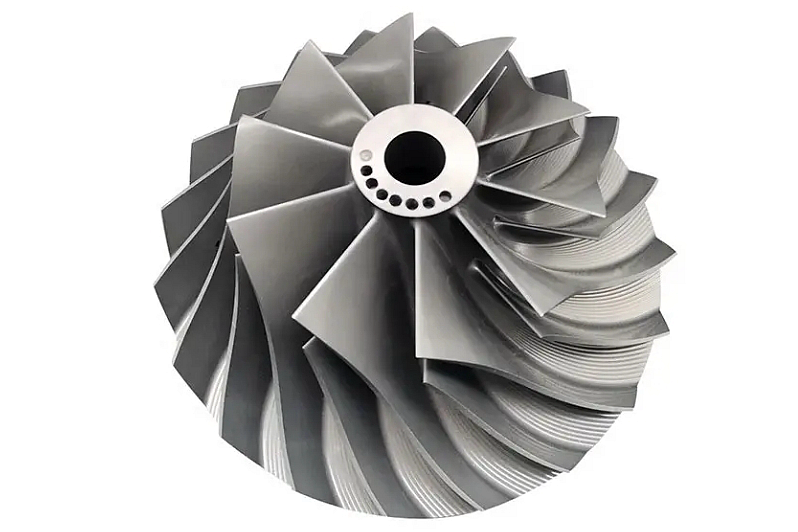
Principais Desafios de Fabricação para Rodas de Turbina TA15
Controle preciso da composição química (base Ti com 6,5% Al, 1% Mo, 1% V, 2% Zr) para consistência térmica e mecânica.
Obtenção de estruturas de forjamento de grão fino para aumentar a resistência ao fluência e a vida à fadiga.
Manutenção de tolerâncias dimensionais rigorosas (±0,02 mm) críticas para a eficiência da turbina.
Garantia de excelentes acabamentos superficiais (Ra ≤1,6 µm) para desempenho aerodinâmico.
Processo de Forjamento de Precisão para Rodas de Turbina TA15
O processo de produção por forjamento inclui:
Preparação do Tarugo: Tarugos TA15 refundidos por arco a vácuo (VAR) garantindo uniformidade e limpeza química.
Pré-aquecimento: Forjamento realizado a ~950°C–1000°C para garantir fluxo e recristalização ideais.
Forjamento de Matriz de Precisão: Prensas de matriz fechada de alta tonelagem moldam geometrias de rodas de turbina quase líquidas.
Resfriamento Controlado: Taxa de resfriamento gerenciada para manter estruturas de fase α+β finas para resistência e tenacidade.
Tratamento Térmico: Tratamento de solução e envelhecimento para otimizar o desempenho mecânico.
Usinagem Final: Acabamento CNC atinge perfis aerodinâmicos precisos e requisitos de balanceamento.
Análise Comparativa de Métodos de Fabricação para Rodas de Turbina
Processo | Qualidade do Acabamento Superficial | Precisão Dimensional | Propriedades Mecânicas | Resistência a Altas Temperaturas | Nível de Custo |
|---|---|---|---|---|---|
Forjamento de Precisão + CNC | Excelente (Ra ≤1,6 µm) | Muito Alta (±0,02 mm) | Excepcional (~980 MPa) | Alta (~500°C) | Moderado |
Fundição por Cera Perdida a Vácuo | Boa (Ra ≤3 µm) | Alta (±0,05 mm) | Muito Boa (~950 MPa) | Alta (~450°C) | Moderado |
Usinagem CNC a partir de Tarugo | Excelente (Ra ≤0,8 µm) | Muito Alta (±0,01 mm) | Excelente (~980 MPa) | Alta (~500°C) | Alto |
Estratégia de Fabricação Ideal para Rodas de Turbina TA15
Forjamento de precisão: Melhor para aplicações que exigem rodas de turbina de grão fino e alta resistência operando até 500°C.
Fundição por cera perdida a vácuo: Adequada para componentes menos críticos e de menor carga.
Usinagem CNC a partir de tarugo: Reservada para projetos de rodas de turbina altamente personalizados e de baixo volume com tolerâncias ultra-rigorosas.
Visão Geral do Desempenho da Liga TA15
Propriedade | Valor | Relevância da Aplicação |
|---|---|---|
Resistência à Tração | ~980 MPa | Durabilidade da roda de turbina de alta velocidade e alta carga |
Limite de Escoamento | ~890 MPa | Resiste à deformação sob condições de pico de tensão |
Temperatura Máxima de Operação | ~500°C | Mantém propriedades mecânicas em ambientes quentes |
Resistência à Fadiga | ~520 MPa | Prolonga a vida útil do componente sob carregamento cíclico |
Densidade | 4,48 g/cm³ | Leve, melhorando a resposta e eficiência da turbina |
Vantagens do Uso do TA15 para Rodas de Turbina
Alta relação resistência/peso reduz a inércia rotacional e melhora a capacidade de resposta da turbina.
Resistência superior à fadiga e ao fluência garante intervalos de serviço mais longos sob operações de alta velocidade.
Excelente estabilidade em altas temperaturas mantém o desempenho nas temperaturas de entrada da turbina (~500°C).
Boa forjabilidade e usinabilidade permitem a produção eficiente de geometrias complexas de rodas de turbina.
Técnicas de Pós-processamento para Rodas de Turbina TA15
Prensagem Isostática a Quente (HIP): Densifica a estrutura, eliminando microdefeitos e aumentando a vida à fadiga em 15–20%.
Tratamento de Solução e Envelhecimento (STA): Otimiza a distribuição da fase α+β para resistência e resistência ao fluência.
Usinagem CNC de Precisão: Finaliza perfis aerodinâmicos dentro de tolerâncias de ±0,01 mm.
Polimento Superficial e Jateamento: Melhora o acabamento superficial para Ra ≤0,8 µm e aumenta a vida à fadiga.
Inspeção e Garantia de Qualidade para Rodas de Turbina
Máquina de Medição por Coordenadas (CMM): Garante precisão dimensional de ±0,02 mm para superfícies aerodinâmicas.
Teste Ultrassônico (UT): Detecta defeitos internos, vazios ou inclusões de forma não destrutiva.
Teste por Líquido Penetrante (PT): Identifica fissuras superficiais finas (até 0,002 mm) para evitar falhas precoces.
Análise Metalográfica: Verifica a conformidade do tamanho de grão e distribuição de fase com os padrões aeroespaciais.
Aplicações da Indústria e Estudo de Caso
As rodas de turbina TA15 fabricadas pela Neway AeroTech são amplamente utilizadas em motores aeroespaciais, turbinas a gás industriais e sistemas de energia avançados. Em um projeto aeroespacial recente, as rodas de turbina TA15 forjadas demonstraram um aumento de 22% na vida útil em alta temperatura em comparação com ligas de titânio convencionais, estendendo os intervalos de manutenção e melhorando a eficiência geral do motor.
Perguntas Frequentes
Quais tolerâncias dimensionais a Neway AeroTech pode alcançar para rodas de turbina TA15?
Por que o forjamento de precisão é preferido para a fabricação de rodas de turbina TA15?
Como o desempenho da liga TA15 se compara ao das ligas de titânio tradicionais sob condições de turbina?
Quais indústrias normalmente usam rodas de turbina TA15?
Como a Neway AeroTech garante a qualidade mecânica e a consistência dos componentes forjados TA15 para turbina?
