
अधिकतम दक्षता के लिए सटीक मशीनीकृत स्टेलाइट 4 मिश्रधातु टरबाइन गाइड रिंग्स
परिचय
स्टेलाइट 4 एक कोबाल्ट-क्रोमियम-टंगस्टन मिश्रधातु है जो उत्कृष्ट घिसाव प्रतिरोध, 900°C तक की थर्मल थकान शक्ति, और आक्रामक वातावरण में असाधारण जंग प्रतिरोध प्रदान करती है। इसकी उच्च कठोरता (47–51 HRC) और तन्य शक्ति (~960 MPa) इसे निरंतर उच्च-गति, अपरदनकारी प्रवाह स्थितियों के तहत काम करने वाली टरबाइन गाइड रिंग्स के लिए आदर्श बनाती है।
न्यूवे एयरोटेक में, हम स्टेलाइट 4 टरबाइन गाइड रिंग्स के निर्माण के लिए सटीक सीएनसी मशीनीकरण लागू करते हैं, जिससे अधिकतम परिचालन दक्षता के लिए कड़े सहनशीलता (±0.01 mm) और उत्कृष्ट सतह परिष्करण (Ra ≤0.8 µm) प्राप्त होते हैं।
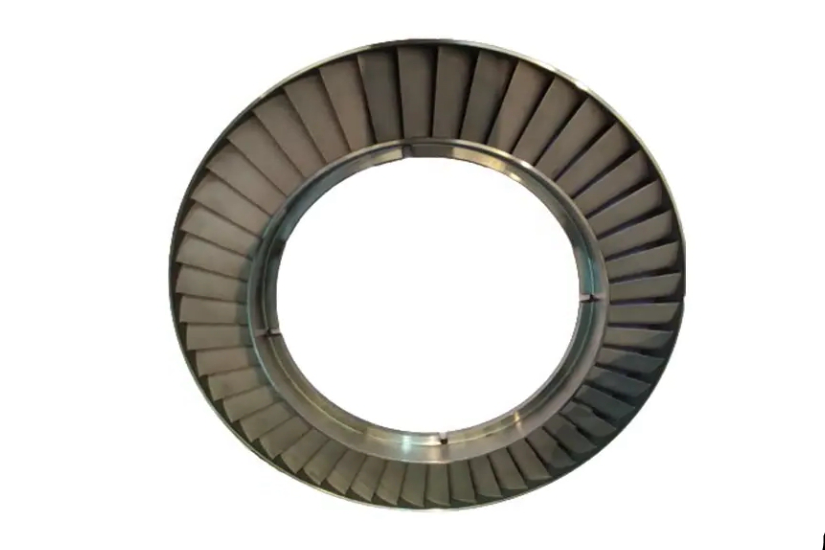
स्टेलाइट 4 टरबाइन गाइड रिंग मशीनीकरण में तकनीकी चुनौतियाँ
कड़े आयामी सहनशीलता बनाए रखना वायुगतिकीय दक्षता के लिए ±0.01 mm के भीतर।
कठोर स्टेलाइट 4 सामग्री का मशीनीकरण (कठोरता ~47–51 HRC) माइक्रोक्रैक उत्पन्न किए बिना।
कम सतह खुरदरापन प्राप्त करना (Ra ≤0.8 µm) वायु प्रवाह अशांति को कम करने के लिए।
घिसाव और थर्मल थकान का प्रतिरोध निरंतर उच्च-तापमान एक्सपोजर (~900°C) के तहत।
टरबाइन गाइड रिंग्स के लिए सटीक मशीनीकरण प्रक्रिया
सटीक स्टेलाइट 4 टरबाइन गाइड रिंग्स के निर्माण में शामिल हैं:
सामग्री तैयारी: वैक्यूम इन्वेस्टमेंट कास्ट या फोर्ज्ड स्��ेलाइट 4 ब्लैंक्स को मशीनीकरण के लिए तैयार किया जाता है।
रफ मशीनीकरण: नियंत्रित सामग्री हटाने के लिए उच्च-कठोरता सीएनसी उपकरण और पीसीबीएन टूलिंग का उपयोग किया जाता है।
हीट ट्रीटमेंट: कठोरता और आंतरिक तनाव वितरण को अनुकूलित करने के लिए चुनिंदा रूप से लागू किया जाता है।
सेमी-फिनिशिंग: न्यूनतम अवशिष्ट तनावों के साथ नियर-नेट आयामों तक सावधानीपूर्वक कंटूरिंग।
सटीक फिनिशिंग: अंतिम आयाम, सतह परिष्करण और ज्यामितीय सहनशीलता प्राप्त करने के लिए फाइन टर्निंग, मिलिंग और ग्राइंडिंग।
गुणवत्ता नियंत्रण: सीएमएम निरीक्षण और गैर-विनाशकारी परीक्षण सूक्ष्म संरचनात्मक अखंडता सत्यापित करने के लिए।
स्टेलाइट 4 घटकों के लिए मशीनीकरण विधि तुलना
मशीनीकरण विधि | सतह परिष्करण गुणवत्ता | आयामी सटीकता | टूल लाइफ | स्टेलाइट 4 के लिए उपयुक्त | उत्पादन दक्षता |
|---|---|---|---|---|---|
सटीक सीएनसी मशीनीकरण | उत्कृष्ट (Ra ≤0.8 µm) | बहुत उच्च (±0.01 mm) | मध्यम | हाँ | उच्च |
ईडीएम | अच्छा (Ra ~2 µm) | उच्च (±0.02 mm) | उच्च | सीमित | कम |
ग्राइंडिंग और पॉलिशिंग | उत्कृष्ट (Ra ≤0.4 µm) | बहुत उच्च (±0.005 mm) | उच्च | हाँ | मध्यम |
पारंपरिक मशीनीकरण | खराब (Ra ~6–12 µm) | कम (±0.1 mm) | कम | नहीं | कम |
टरबाइन गाइड रिंग्स के लिए इष्टतम विनिर्माण रणनीतियाँ
सटीक सीएनसी मशीनीकरण: टरबाइन अनुप्रयोगों के लिए Ra ≤0.8 µm सतह परिष्करण और ±0.01 mm आयामी सटीकता प्राप्त करता है।
ग्राइंडिंग और पॉलिशिंग: Ra ≤0.4 µm अल्ट्रा-स्मूथ सतहें उत्पन्न करता है, गाइड रिंग्स के लिए वायुगतिकीय दक्षता को अनुकूलित करता है।
ईडीएम मशीनीकरण: जटिल विशेषताओं को ±0.02 mm सटीकता के साथ आकार देता है लेकिन धीमी हटाने दरों के साथ।
[पारंपरिक मशीनीकरण]: अत्यधिक टूल वियर और अपर्याप्त सटीकता के कारण स्टेलाइट 4 के लिए उपयुक्त नहीं है।
स्टेलाइट 4 मिश्रधातु प्रदर्शन अवलोकन
गुण | मान | अनुप्रयोग प्रासंगिकता |
|---|---|---|
कठोरता | 47–51 HRC | उत्कृष्ट घिसाव और अपघर्षण प्रतिरोध |
अधिकतम परिचालन तापमान | ~900°C | उत्कृष्ट थर्मल थकान प्रतिरोध |
जंग प्रतिरोध | उत्कृष्ट | आक्रामक रासायनिक वातावरण का सामना करता है |
तन्य शक्ति | ~960 MPa | लोड-बेयरिंग स्थितियों के तहत उच्च शक्ति |
थर्मल विस्तार गुणांक | ~13.8 µm/m·°C | उच्च तापमान पर स्थिर आयामी व्यवहार |
टरबाइन गाइड रिंग्स के लिए स्टेलाइट 4 का उपयोग करने के लाभ
उत्कृष्ट घिसाव प्रतिरोध अपरदनकारी प्रवाह स्थितियों के तहत घटक जीवन को बढ़ाता है।
उच्च-तापमान स्थिरता ~900°C तक यांत्रिक गुणों को बनाए रखती है।
उत्कृष्ट जंग प्रतिरोध आक्रामक दहन गैसों से सुरक्षा करता है।
आयामी स्थिरता उच्च-गति टरबाइनों में वायुगतिकीय स्थिरता सुनिश्चित करती है।
टरबाइन गाइड रिंग्स के लिए पोस्ट-प्रोसेसिंग तकनीकें
हॉट आइसोस्टेटिक प्रेसिंग (HIP): ~1160°C और 100 MPa पर सामग्री को सघन करता है, माइक्रोसरंध्रता को समाप्त करता है।
थर्मल बैरियर कोटिंग (TBC): थर्मल थकान को कम करने के लिए सिरेमिक कोटिंग (~250 µm) लगाता है।
गैर-विनाशकारी परीक्षण (NDT): घटकों को नुकसान पहुंचाए बिना सतह और आंतरिक अखंडता का निरीक्षण करता है।
सटीक सीएनसी फिनिशिंग: वायुगतिकीय प्रदर्शन के लिए अंतिम आयाम ±0.01 mm और Ra ≤0.8 µm प्राप्त करता है।
गाइड रिंग्स के लिए निरीक्षण और गुणवत्ता आश्वासन
कोऑर्डिनेट मेजरिंग मशीन (CMM): महत्वपूर्ण वायुगतिकीय और असेंबली सतहों के लिए ±0.01 mm सहनशीलता सत्यापित करती है।
अल्ट्रासोनिक परीक्षण (UT): सतह क्षति के बिना उच्च संवेदनशीलता के साथ आंतरिक रिक्तियों और समावेशन का पता लगाता है।
डाई पेनेट्रेंट परीक्षण (PT): 0.002 mm चौड़ाई तक की सतह दरारों और सूक्ष्म दोषों को उजागर करता है।
मेटलोग्राफिक विश्लेषण: एएसटीएम मानकों के तहत सूक्ष्म संरचना की जांच करता है और अनाज शोधन की पुष्टि करता है।
उद्योग अनुप्रयोग और केस स्टडी
न्यूवे एयरोटेक द्वारा निर्मित स्टेलाइट 4 टरबाइन गाइड रिंग्स का व्यापक रूप से एयरोस्पेस इंजन, बिजली उत्पादन टरबाइन और औद्योगिक टर्बो-मशीनरी में उपयोग किया जाता है। एक हालिया एयरोस्पेस परियोजना में, सटीक-मशीनीकृत स्टेलाइट 4 गाइड रिंग्स ने पारंपरिक निकल-आधारित मिश्रधातु विकल्पों की तुलना में 35% लंबी सेवा जीवन प्रदर्शित किया, जिससे टरबाइन परिचालन दक्षता में काफी सुधार हुआ और रखरखाव लागत कम हुई।
अक्सर पूछे जाने वाले प्रश्न
न्यूवे एयरोटेक स्टेलाइट 4 टरबाइन गाइड रिंग्स के लिए कौन सी आयामी सहनशीलता प्राप्त कर सकता है?
उच्च-तापमान टरबाइन अनुप्रयोगों के लिए स्टेलाइट 4 आदर्श क्यों है?
सीएनसी मशीनीकरण स्टेलाइट 4 गाइड रिंग्स के प्रदर्शन को कैसे सुधारता है?
कौन से उद्योग आमतौर पर स्टेलाइट 4 टरबाइन घटकों का उपयोग करते हैं?
न्यूवे एयरोटेक स्टेलाइट 4 गाइड रिंग्स की गुणवत्ता और स्थायित्व कैसे सुनिश्चित करता है?
