
Revestimento Térmico Resistente ao Calor por Plasma TBC para Pás de Cristal Único
Introdução
As pás de turbina de cristal único (SX), fabricadas a partir de superligas avançadas como CMSX-4, PWA 1484 e Rene N5, são a espinha dorsal dos motores a jato modernos e das turbinas a gás industriais. Apesar de seu desempenho superior em fluência e fadiga, essas pás requerem proteção superficial adicional para sobreviver à exposição prolongada a gases de combustão superiores a 1150°C. Nossos revestimentos de barreira térmica (TBCs) aplicados por plasma fornecem uma camada isolante crítica que aumenta a resistência térmica e prolonga a vida útil das pás de turbina de cristal único operando nas seções quentes de turbinas avançadas.
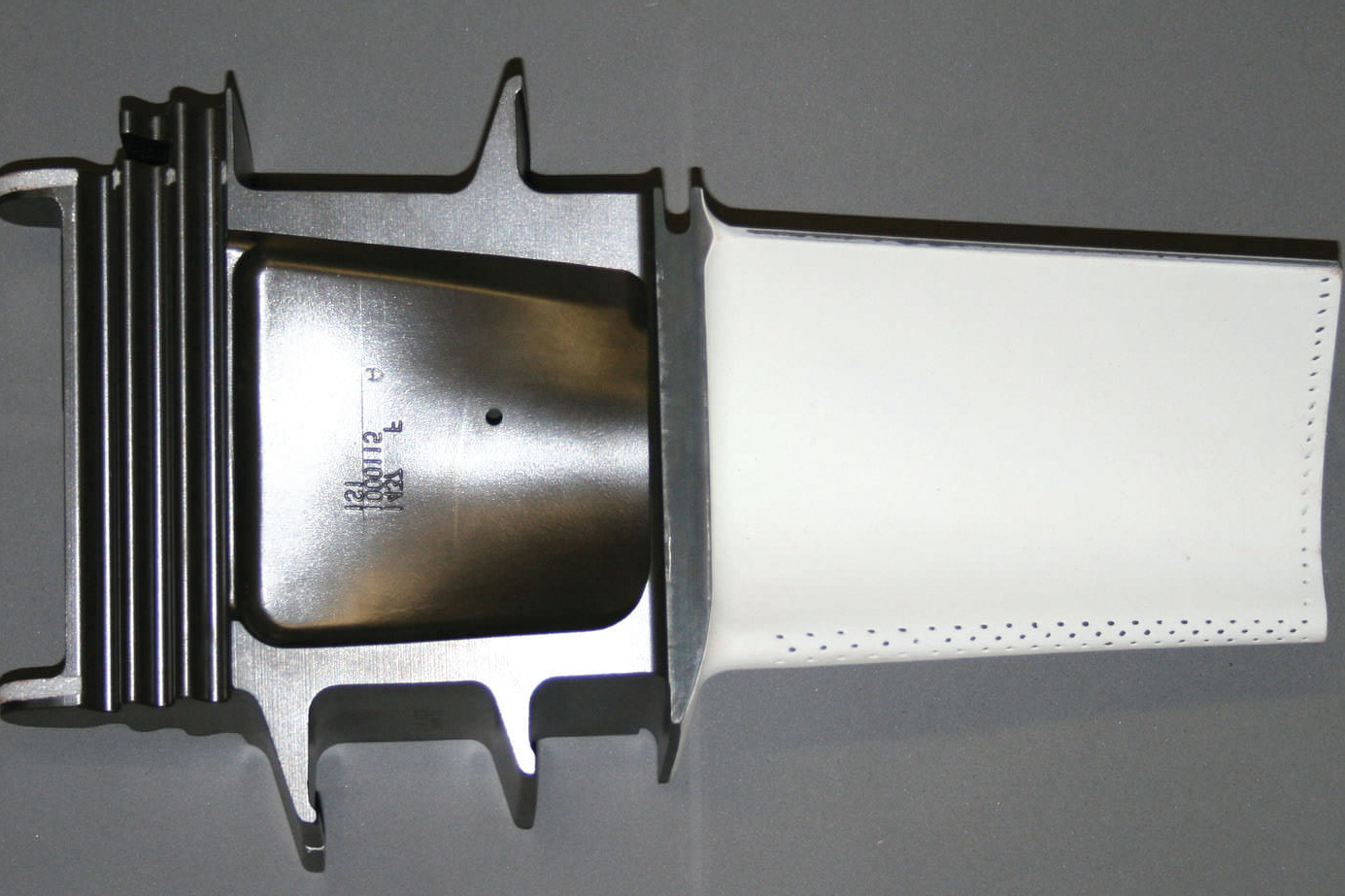
Por que o TBC é Essencial para Pás de Cristal Único
Embora as pás SX eliminem a fluência nos limites de grão e melhorem a integridade mecânica em alta temperatura, a superfície da liga permanece vulnerável a:
Oxidação e corrosão a quente de gases de combustão de alta velocidade
Fadiga térmica devido a flutuações cíclicas de temperatura
Trincamento superficial e esfoliação causados por gradientes térmicos
Os TBCs aplicados por plasma minimizam esses riscos reduzindo a temperatura do metal e protegendo o substrato de ambientes corrosivos.
Estrutura do Sistema TBC
Um sistema TBC completo consiste em duas camadas primárias:
Camada | Material | Função |
|---|---|---|
Camada de Ligação | MCrAlY ou PtAl (ex.: NiCoCrAlY) | Promove adesão e fornece resistência à oxidação |
Camada Superior | Zircônia Estabilizada com Ítria (YSZ) 7–8% em peso | Fornece isolamento térmico e conformidade à deformação |
Para componentes de cristal único, o controle preciso sobre a espessura do revestimento, a limpeza da interface e a tensão residual é essencial para evitar falhas prematuras.
Substratos de Superliga Compatíveis
Aplicamos sistemas TBC a uma variedade de ligas de cristal único, incluindo:
CMSX-4 – pás do primeiro estágio em motores comerciais e militares
PWA 1484 – pás e palhetas de HPT para plataformas de motores Pratt & Whitney
Rene N5 e N6 – ligas SX usadas em núcleos de motores de alto empuxo
TMS-138 – ligas de quarta geração para pás de turbina de temperatura ultra-alta
Cada pá passa por preparação de superfície personalizada e aplicação de revestimento resistente ao calor para atender às especificações OEM e NADCAP.
Visão Geral do Processo de Projeção por Plasma
1. Preparação da Superfície
Desengraxamento, jateamento abrasivo e limpeza removem a oxidação e promovem a adesão da camada de ligação.
2. Aplicação da Camada de Ligação
Uma camada de ligação MCrAlY ou alumineto de platina é aplicada via HVOF ou projeção por plasma de baixa pressão para formar uma camada de interface de óxido termicamente crescido (TGO).
3. Aplicação da Camada Superior (YSZ)
A camada superior cerâmica (tipicamente 150–300 μm) é depositada via Projeção por Plasma Atmosférico (APS) ou Deposição Física por Vapor por Feixe de Elétrons (EB-PVD), dependendo dos requisitos do fabricante OEM do motor.
4. Condicionamento Pós-Revestimento
Tratamento térmico ou selagem podem ser realizados para estabilizar o sistema de revestimento, melhorar a tolerância à deformação e atender aos critérios de durabilidade na partida da turbina.
Benefícios do TBC para Pás SX
Benefício | Vantagem de Desempenho |
|---|---|
Temperatura do Metal Mais Baixa | Reduz a temperatura superficial em 100–200°C, estendendo a vida útil em fluência |
Resistência à Fadiga Térmica | Reduz gradientes térmicos, prevenindo trincamento e delaminação |
Proteção contra Oxidação e Corrosão | Atrasa a degradação do substrato em ambientes de gás quente |
Aumento da Eficiência do Motor | Permite maior temperatura de entrada da turbina (TIT) para empuxo aprimorado |
Economia de Manutenção | Estende a vida útil da pá e os intervalos de revisão |
Desempenho e Garantia de Qualidade
Todos os revestimentos são validados de acordo com padrões OEM de motor, como GE C50TF26, PWA 36945 e Rolls-Royce RPS 661. Os testes incluem:
Precisão da Espessura do Revestimento (±10 μm)
Teste de Adesão (ASTM C633)
Teste de Choque Térmico & Ciclo Térmico (>1000 ciclos a 1150°C)
Análise Microestrutural (MEV)
Avaliação de Porosidade e Camada TGO
Nossa instalação está em conformidade com NADCAP e equipada para fornecer revestimentos de grau aeroespacial com rastreabilidade completa.
Exemplos Típicos de Aplicação
Pás HPT CMSX-4 GE90 – TBC aplicado via APS para motores comerciais de longo curso
Palhetas do Primeiro Estágio PWA 1484 F135 – Sistema TBC EB-PVD para sistemas de propulsão militar
Pontas de Pás Rene N5 Trent XWB – O revestimento fornece blindagem térmica em aeronaves de empuxo ultra-alto
Pás TMS-138 Classe HL Siemens – Pás de turbina de potência industrial revestidas para operação >1200°C
Perguntas Frequentes
Qual é a espessura recomendada de TBC para pás de turbina SX?
Como o YSZ é aplicado usando APS vs. EB-PVD?
O TBC pode ser reparado ou reaplicado após exposição em serviço?
Quais fatores afetam a vida útil do TBC em pás de cristal único?
Quais padrões de revestimento você atende para aplicações TBC aeroespaciais?
