
Fábrica de Anéis de Bocal Personalizados em Superliga Rene para Geração de Energia
Introdução às Superligas Rene para Anéis de Bocal de Turbina
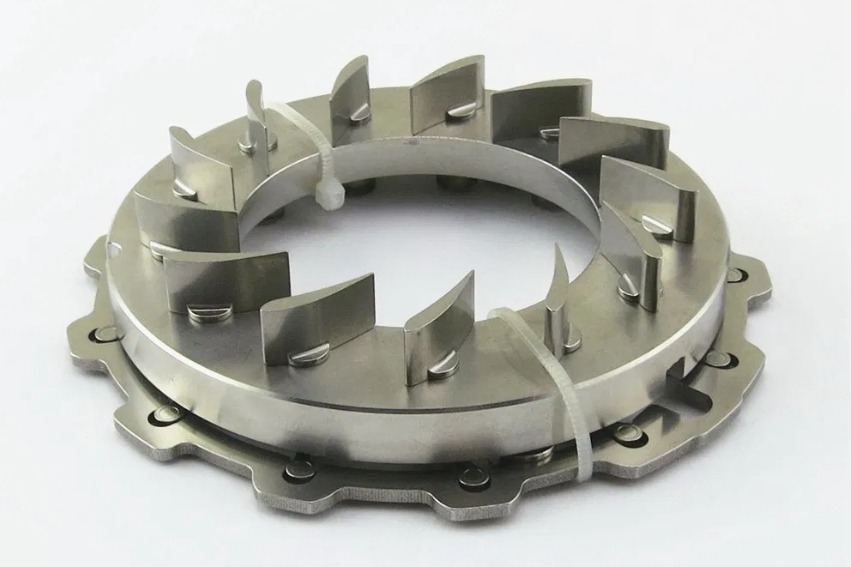
As superligas Rene oferecem resistência excepcional em altas temperaturas, resistência superior à fluência e durabilidade de oxidação excepcional, tornando-as altamente adequadas para anéis de bocal em turbinas de geração de energia. Na Neway AeroTech, somos especializados na fabricação de precisão de anéis de bocal personalizados em liga Rene usando processos avançados, incluindo fundição por cera perdida a vácuo e fundição de monocristal de superliga.
Com expertise focada no setor de geração de energia, nossos componentes em liga Rene garantem desempenho máximo, confiabilidade e vida operacional estendida em ambientes de turbina exigentes e de alta temperatura.
Desafios de Fabricação na Produção de Anéis de Bocal em Liga Rene
A fabricação de anéis de bocal a partir de ligas Rene apresenta desafios técnicos distintos:
Resistência à Fluência: Manter a integridade estrutural em temperaturas de operação de até 1100°C.
Precisão de Geometria Complexa: Alcançar tolerâncias dimensionais apertadas (±0,15 mm) e características intrincadas de canais de resfriamento internos.
Dificuldade de Usinagem: Abordar o rápido encruamento e a baixa condutividade térmica das ligas Rene requer ferramentas especializadas.
Controle de Oxidação e Corrosão: Garantir a longevidade do componente em condições de turbina altamente oxidativas.
Processos Detalhados de Fabricação de Anéis de Bocal em Liga Rene
Fundição por Cera Perdida a Vácuo
Modelos de cera altamente precisos replicam geometrias intrincadas do anel de bocal.
Moldes cerâmicos criados via múltiplas camadas refratárias; remoção da cera via autoclave (~180°C).
Ligas Rene fundidas sob vácuo (<0,01 Pa) para pureza e integridade excepcionais.
Taxas de resfriamento controladas (~40°C/hora) minimizam tensões residuais, garantindo precisão dimensional precisa.
Fundição de Monocristal
A solidificação direcional controla a orientação dos grãos, eliminando contornos de grão para resistência superior à fluência.
Gradientes térmicos precisos (~30–50°C/cm) garantem estruturas de monocristal uniformes.
Solidificação lenta (20–35°C/hora) reduz a porosidade, melhorando a integridade microestrutural interna.
Visão Comparativa dos Processos de Fabricação Rene
Processo | Precisão Dimensional | Acabamento Superficial | Eficiência de Produção | Capacidade de Complexidade |
|---|---|---|---|---|
Fundição por Cera Perdida a Vácuo | ±0,15 mm | Ra 3,2–6,3 µm | Moderada | Alta |
Fundição de Monocristal | ±0,20 mm | Ra 6,3–12,5 µm | Moderada | Alta |
Usinagem CNC | ±0,01 mm | Ra 0,8–3,2 µm | Moderada | Moderada |
Impressão 3D SLM | ±0,05 mm | Ra 6,3–12,5 µm | Alta | Muito Alta |
Estratégia de Seleção de Processo de Fabricação para Anéis de Bocal Rene
Fundição por Cera Perdida a Vácuo: Ideal para produção de médio volume, oferecendo tolerâncias precisas (±0,15 mm) e canais internos complexos.
Fundição de Monocristal: Melhor escolha para máxima resistência à fluência e desempenho, adequada para anéis de bocal de turbina avançados que requerem estruturas de monocristal.
Usinagem CNC: Ideal para acabamento preciso com precisão dimensional (±0,01 mm) e acabamentos superficiais finos.
Impressão 3D SLM: Recomendada para prototipagem rápida e geometrias de resfriamento interno intrincadas com precisão de ±0,05 mm.
Matriz de Desempenho de Material para Anéis de Bocal em Liga Rene
Material | Resistência à Tração (MPa) | Limite de Escoamento (MPa) | Temp. Máx. de Serviço (°C) | Resistência à Oxidação | Aplicação |
|---|---|---|---|---|---|
1400 | 1000 | 980 | Excepcional | Anéis de bocal de turbina | |
1300 | 850 | 950 | Excelente | Pás e palhetas de turbina | |
1250 | 820 | 1050 | Superior | Segmentos de bocal de turbina de alta temperatura | |
1200 | 850 | 1100 | Excepcional | Pás de turbina de monocristal | |
1180 | 800 | 980 | Superior | Estágios avançados de anéis de bocal | |
1150 | 780 | 980 | Excepcional | Palhetas de turbina de alto desempenho |
Estratégia de Seleção de Material para Anéis de Bocal Rene
Rene 41: Ideal para anéis de bocal de turbina devido à resistência à tração superior (1400 MPa) e capacidade de serviço de até 980°C.
Rene 80: Recomendado para pás e palhetas de bocal de turbina com excelente resistência (1300 MPa) em temperaturas em torno de 950°C.
Rene 77: Preferido para segmentos de bocal que requerem resistência superior à fluência em alta temperatura a 1050°C.
Rene N5: Mais adequado para pás de turbina de monocristal avançadas, oferecendo resistência excepcional (1200 MPa) em temperaturas de 1100°C.
Rene 88: Ideal para estágios críticos de anéis de bocal que exigem alta resistência à fluência (1180 MPa) a 980°C.
Rene 142: Adequado para palhetas de turbina, proporcionando excelente resistência à oxidação e resistência a 980°C.
Tecnologias Essenciais de Pós-processamento para Anéis de Bocal em Liga Rene
Prensagem Isostática a Quente (HIP): Melhora as propriedades mecânicas eliminando a porosidade a ~1200°C e pressão de ~150 MPa.
Revestimento de Barreira Térmica (TBC): Reduz as temperaturas superficiais do componente (~200°C), prolongando significativamente a vida útil.
Usinagem por Descarga Elétrica (EDM): Fornece usinagem de precisão de canais de resfriamento internos com tolerâncias de ±0,005 mm.
Tratamento Térmico: Otimiza as microestruturas, aumentando a resistência mecânica, resistência à fluência e estabilidade dimensional das ligas Rene.
Estudo de Caso da Indústria: Anéis de Bocal de Monocristal Rene N5
A Neway AeroTech fabricou anéis de bocal de turbina personalizados de monocristal Rene N5 empregando técnicas de fundição de monocristal e HIP, alcançando resistência à fluência notável, precisão dimensional (±0,20 mm) e resistência à oxidação de longo prazo em temperaturas de operação de até 1100°C.
Nossa expertise em tecnologia de monocristal e controles de qualidade rigorosos atendem aos rigorosos padrões da indústria, aumentando significativamente a confiabilidade e eficiência da turbina.
Perguntas Frequentes sobre Fabricação de Anéis de Bocal de Turbina Rene
Qual é o seu prazo de produção típico para anéis de bocal Rene personalizados?
Vocês apoiam a produção de protótipos e baixo volume de anéis de bocal em liga Rene?
Quais certificações da indústria e padrões de qualidade se aplicam aos seus componentes em liga Rene?
Quais métodos de pós-processamento você recomenda para melhorar a longevidade do anel de bocal Rene?
Você pode fornecer consultoria técnica sobre seleção de liga Rene e otimização de design de anel de bocal?
