
Fornecedor de Anéis de Bocal Personalizados em Superliga Hastelloy para Geração de Energia
Introdução à Superliga Hastelloy para Anéis de Bocal de Geração de Energia
As superligas Hastelloy oferecem resistência excepcional à corrosão, propriedades mecânicas superiores e estabilidade notável sob condições térmicas extremas, tornando-as ideais para anéis de bocal de turbinas de geração de energia. Na Neway AeroTech, fornecemos anéis de bocal Hastelloy personalizados com precisão utilizando técnicas avançadas de fabricação, incluindo fundição por cera perdida a vácuo e fundição de cristais equiaxiais de superliga.
Com expertise especializada adaptada às demandas do setor de geração de energia, garantimos que nossos componentes Hastelloy consistentemente excedam os padrões da indústria, oferecendo desempenho confiável de longo prazo e vida útil estendida sob condições operacionais de alta temperatura.
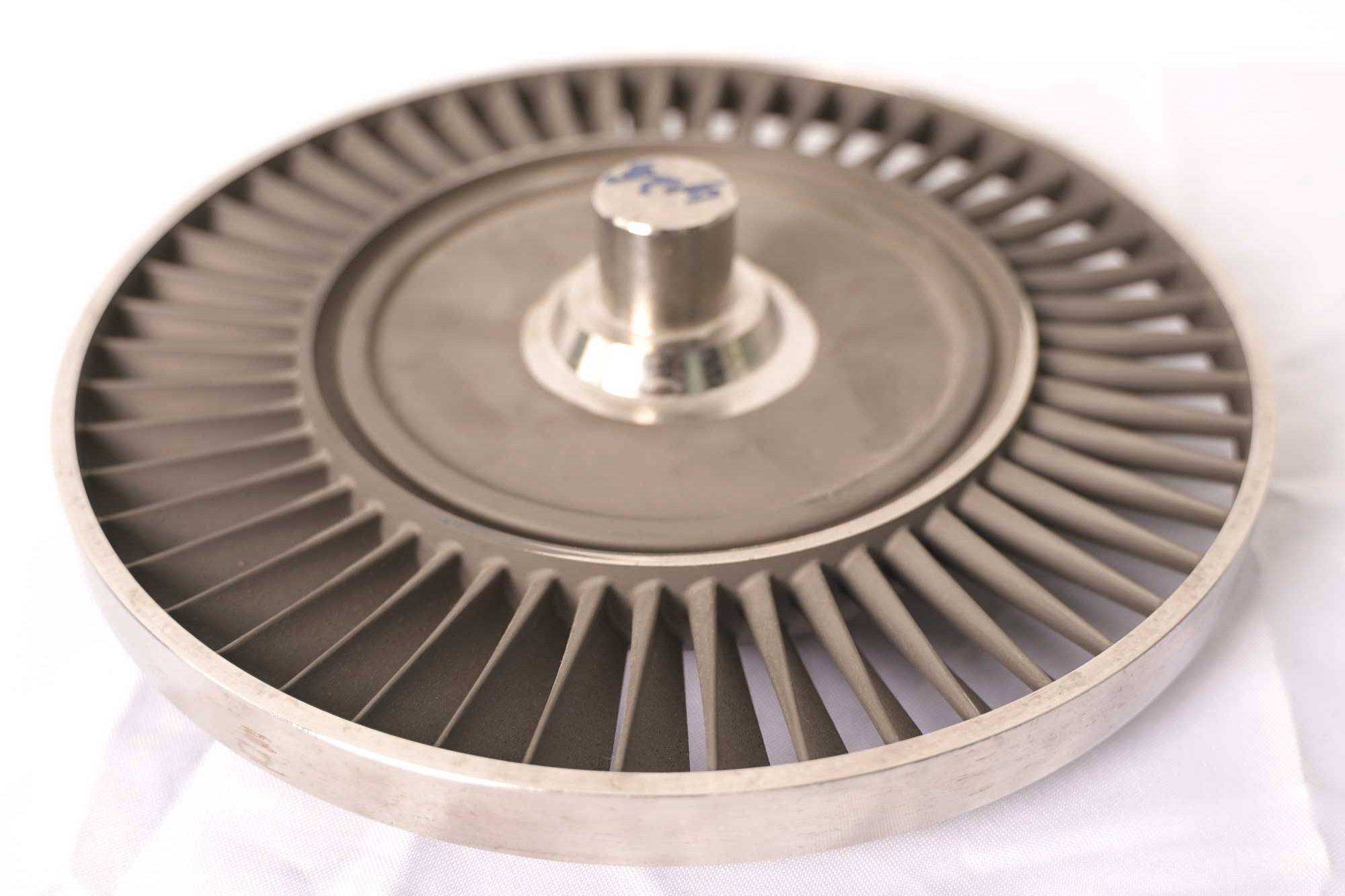
Principais Desafios de Fabricação na Produção de Anéis de Bocal Hastelloy
A produção de anéis de bocal a partir de ligas Hastelloy apresenta desafios de fabricação específicos, incluindo:
Estabilidade em Alta Temperatura: Garantir estabilidade dimensional e integridade mecânica acima de 900°C.
Corrosão e Oxidação: Garantir resistência à oxidação severa e corrosão em ambientes de combustão agressivos.
Geometrias Complexas: Fundir com precisão canais de resfriamento intrincados com tolerâncias dimensionais apertadas (±0,15 mm).
Problemas de Usinabilidade: Superar altas taxas de encruamento, exigindo ferramentas especializadas e estratégias de usinagem.
Processos Detalhados de Fabricação de Anéis de Bocal Hastelloy
Fundição por Cera Perdida a Vácuo
Modelos de cera precisos replicam projetos intrincados de anéis de bocal, incluindo estruturas internas complexas de resfriamento.
Moldes cerâmicos são construídos através de revestimentos refratários; a cera é removida por autoclave (~180°C).
As ligas Hastelloy são fundidas sob condições de vácuo (<0,01 Pa) para eliminar impurezas.
Resfriamento controlado (aproximadamente 40°C/hora) reduz tensões internas e mantém a precisão dimensional.
Fundição de Cristais Equiaxiais
Hastelloy fundido é solidificado sob gradientes térmicos controlados (~20–40°C/cm) para formar estruturas de grãos uniformes e isotrópicas.
O processo garante propriedades mecânicas consistentes em todo o componente.
Defeitos internos minimizados através de um gerenciamento cuidadoso de resfriamento e solidificação (25–35°C/hora).
Visão Comparativa dos Processos de Fabricação Hastelloy
Processo | Precisão Dimensional | Acabamento Superficial | Eficiência de Produção | Capacidade de Complexidade |
|---|---|---|---|---|
Fundição por Cera Perdida a Vácuo | ±0,15 mm | Ra 3,2–6,3 µm | Moderada | Alta |
Fundição de Cristais Equiaxiais | ±0,20 mm | Ra 6,3–12,5 µm | Moderada | Moderada |
Usinagem CNC | ±0,01 mm | Ra 0,8–3,2 µm | Moderada | Moderada |
Impressão 3D SLM | ±0,05 mm | Ra 6,3–12,5 µm | Alta | Muito Alta |
Seleção Estratégica de Processos de Fabricação para Anéis de Bocal
Fundição por Cera Perdida a Vácuo: Ideal para fabricar geometrias internas complexas com precisão (±0,15 mm), adequada para volumes moderados.
Fundição de Cristais Equiaxiais: Ótima para componentes que requerem propriedades mecânicas uniformes e estruturas de grãos isotrópicas, com tolerâncias em torno de ±0,20 mm.
Usinagem CNC: Recomendada para acabamento de precisão, alcançando excelente precisão dimensional (±0,01 mm).
Impressão 3D SLM: Adequada para prototipagem rápida ou canais internos complexos, mantendo a precisão dentro de ±0,05 mm.
Matriz de Desempenho de Materiais para Anéis de Bocal Hastelloy
Material | Resistência à Tração (MPa) | Limite de Escoamento (MPa) | Temperatura Máxima de Serviço (°C) | Resistência à Corrosão | Aplicação Típica |
|---|---|---|---|---|---|
900 | 350 | 1200 | Excepcional | Anéis de bocal de turbina | |
830 | 390 | 1030 | Excepcional | Revestimentos de câmara de combustão | |
760 | 350 | 1000 | Superior | Palhetas de turbina de alta corrosão | |
870 | 400 | 1040 | Excelente | Componentes de turbina de alto desempenho | |
800 | 360 | 980 | Superior | Componentes do sistema de exaustão | |
860 | 350 | 980 | Excelente | Anéis de bocal de turbina nuclear |
Seleção Ótima de Material Hastelloy para Anéis de Bocal
Hastelloy X: Ideal para anéis de bocal de turbina devido à excepcional estabilidade térmica e resistência à oxidação a 1200°C.
Hastelloy C-276: Recomendado para câmaras de combustão com resistência superior à corrosão em altas temperaturas (1030°C).
Hastelloy B-2: Preferido para palhetas de turbina expostas a ambientes corrosivos agressivos, operando até 1000°C.
Hastelloy C-22: Ótimo para componentes de turbina exigentes devido à excelente resistência (870 MPa) e resistência à corrosão em alta temperatura até 1040°C.
Hastelloy G-30: Adequado para componentes do sistema de exaustão que requerem resistência confiável à corrosão em temperaturas de até 980°C.
Hastelloy N: Ideal para anéis de bocal de energia nuclear, oferecendo excelente resistência à tração (860 MPa) e alta resistência à corrosão induzida por radiação.
Tecnologias Essenciais de Pós-processamento para Anéis de Bocal Hastelloy
Prensagem Isostática a Quente (HIP): Reduz a porosidade e aumenta a resistência à fadiga sob pressões (~150 MPa) e temperaturas (~1150°C).
Revestimento de Barreira Térmica (TBC): Reduz significativamente a temperatura superficial (~200°C), estendendo a vida útil do componente.
Usinagem por Descarga Elétrica (EDM): Cria com precisão canais internos e passagens de resfriamento, mantendo tolerâncias de ±0,005 mm.
Tratamento Térmico: Otimiza as microestruturas Hastelloy, melhorando a resistência e a estabilidade dimensional em temperaturas elevadas.
Aplicação Industrial e Estudo de Caso: Fabricação de Anel de Bocal de Turbina Hastelloy X
A Neway AeroTech forneceu anéis de bocal de turbina Hastelloy X personalizados para turbinas de geração de energia, aproveitando a fundição por cera perdida a vácuo e HIP para oferecer resistência excepcional ao fluência, precisão dimensional (±0,15 mm) e resistência notável à corrosão a 1200°C.
Nossa experiência especializada e gerenciamento rigoroso da qualidade atendem aos padrões críticos da indústria de geração de energia, garantindo confiabilidade operacional e longevidade dos componentes.
Perguntas Frequentes sobre Anéis de Bocal de Turbina Hastelloy
Quais prazos de produção típicos você oferece para anéis de bocal Hastelloy?
Você pode lidar com produção em pequenos lotes e prototipagem para componentes de turbina Hastelloy?
Quais padrões e certificações da indústria seus produtos Hastelloy atendem?
Quais técnicas de pós-processamento melhoram o desempenho e a longevidade dos anéis de bocal Hastelloy?
Você fornece assistência na seleção de materiais e consultoria técnica para o projeto de anéis de bocal?
