
Fabricante de Álabes de Turbina Marina de Fundición de Superaleación Ti-8Al-1Mo-1V (Grado 20)
Introducción
El Ti-8Al-1Mo-1V (Grado 20) es una aleación de titanio casi alfa desarrollada para aplicaciones de alta temperatura y resistentes a la corrosión que requieren una excepcional resistencia a la fluencia y una resistencia moderada. Como fabricante de fundición de superaleaciones con experiencia, producimos álabes de turbina de Ti-8Al-1Mo-1V de precisión mediante fundición de inversión al vacío, logrando una precisión dimensional de ±0,05 mm y una porosidad inferior al 1%.
Estas fundiciones son ideales para sistemas de turbinas marinas donde los componentes deben soportar operaciones a largo plazo en entornos calurosos y de alta salinidad, resistiendo al mismo tiempo la oxidación, la erosión y la distorsión.
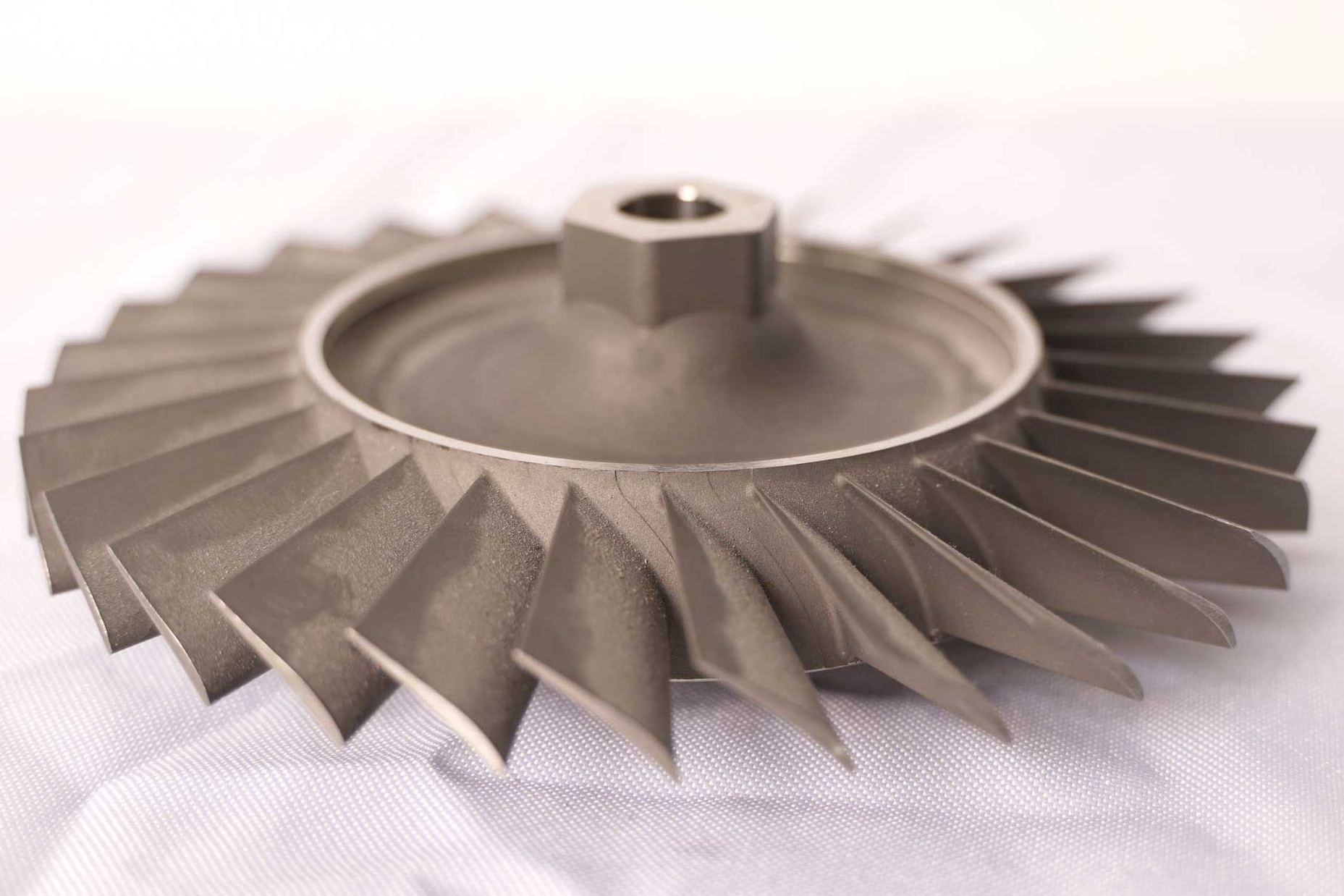
Tecnología Central: Fundición de Inversión al Vacío de Ti-8Al-1Mo-1V
Utilizamos la fundición de inversión al vacío para producir componentes de Ti-8Al-1Mo-1V con un excelente acabado superficial, integridad interna y control de la oxidación. La aleación se funde a ~1630 °C y se cuela en moldes de carcasa cerámica de 8–10 capas precalentados a ~1000 °C. La solidificación controlada (tasa de enfriamiento: 30–70 °C/min) da como resultado tamaños de grano equiaxiales uniformes (0,5–2 mm) con mínima contracción o formación de capa alfa.
Características del Material del Ti-8Al-1Mo-1V (Grado 20)
El Ti-8Al-1Mo-1V es una aleación casi alfa diseñada para uso a largo plazo a temperaturas elevadas (hasta 500 °C), con buena resistencia a la fluencia, tolerancia a la corrosión y estabilidad térmica. Las propiedades clave incluyen:
Propiedad | Valor |
|---|---|
Densidad | 4,45 g/cm³ |
Resistencia a la Tracción Última | ≥875 MPa |
Límite Elástico | ≥820 MPa |
Alargamiento | ≥12% |
Resistencia a la Fluencia (1000 h @ 500 °C) | ≥160 MPa |
Límite de Temperatura de Operación | Hasta 500 °C |
Resistencia a la Corrosión | Excelente en entornos marinos |
Estas propiedades hacen del Ti-8Al-1Mo-1V una opción adecuada para álabes de turbina expuestos a rocío salino continuo, humedad y temperaturas de operación elevadas.
Estudio de Caso: Proyecto de Álabe de Turbina Marina
Antecedentes del Proyecto
Un fabricante de propulsión naval requería álabes de turbina de alta resistencia y resistentes al calor para un buque marino impulsado por turbina de gas. Se seleccionó el Ti-8Al-1Mo-1V por su capacidad para resistir la oxidación y la corrosión a temperaturas elevadas. Suministramos álabes fundidos al vacío que cumplen con las especificaciones de material MIL-STD, con densificación por HIP y acabado CNC para consistencia aerodinámica y precisión dimensional.
Aplicaciones Típicas de Álabes de Turbina Marina
Álabes de Turbina de Gas de Alta Presión (p. ej., LM2500 Marina): Álabes expuestos a entornos de gas caliente en módulos de propulsión a bordo donde el control de la fluencia térmica y la oxidación son críticos.
Rotores de Turbina de Interenfriador: Álabes ligeros y resistentes a la corrosión que operan en zonas de escape cargadas de humedad dentro de sistemas de gas marinos de ciclo combinado.
Álabes de Turbocompresor para Motores Navales: Fundiciones resistentes a la fatiga diseñadas para turbinas de gas auxiliares marinas que operan a velocidades de rotación variables.
Álabes de Microturbina Impulsados por Chorro de Agua: Álabes pequeños y de alta precisión con perfiles de flujo optimizados para sistemas de propulsión integrados en vehículos marinos autónomos.
Estos álabes proporcionan integridad estructural, eficiencia de peso y vida útil a largo plazo en condiciones oceánicas adversas.
Soluciones de Fabricación para Álabes de Turbina Marina
Proceso de Fundición Los modelos de cera se ensamblan en moldes de carcasa cerámica. La aleación se cuela al vacío a ~1630 °C, con precalentamiento del molde a 1000 °C para asegurar el llenado completo del molde. La solidificación se optimiza para prevenir la porosidad por contracción y mantener un tamaño de grano fino en todo el perfil aerodinámico.
Post-procesamiento Se realiza el Prensado Isostático en Caliente (HIP) a 920 °C y 100 MPa para eliminar microvacíos y mejorar la vida a fatiga. A continuación, se realiza un envejecimiento por solución para optimizar la microestructura y el rendimiento frente a la fluencia.
Mecanizado Posterior Las áreas críticas se acaban mediante mecanizado CNC para lograr contornos aerodinámicos e interfaces de raíz. Se aplica EDM para tolerancias ajustadas y detalles del borde de fuga. La perforación de agujeros profundos crea vías de refrigerante y canales de reducción de peso.
Tratamiento Superficial El granallado mejora la resistencia a la fatiga. Los recubrimientos opcionales de cerámica o aluminuro proporcionan una mayor resistencia a la oxidación para condiciones marinas extremas. La pasivación superficial garantiza un rendimiento anticorrosivo a largo plazo.
Pruebas e Inspección Cada álabe se somete a END por rayos X, inspección por MMC y pruebas mecánicas a temperatura elevada. El análisis metalográfico confirma la estructura de grano adecuada, la distribución de la fase alfa y el espesor de la capa de oxidación.
Desafíos Principales de Fabricación
Fundir perfiles aerodinámicos delgados y de alta relación de aspecto sin distorsión ni formación de capa alfa.
Cumplir con una tolerancia de ±0,05 mm para la geometría de la raíz, la cubierta y el borde de ataque.
Garantizar la resistencia a la oxidación a alta temperatura y a la corrosión por agua de mar durante largos períodos.
Resultados y Verificación
Precisión dimensional dentro de ±0,05 mm confirmada por MMC 3D.
Porosidad <1% verificada mediante análisis de rayos X e HIP.
Resistencia mecánica ≥875 MPa y resistencia a la fluencia ≥160 MPa a 500 °C.
Excelente resistencia a la corrosión confirmada por pruebas de rocío salino cíclico ASTM G44.
Preguntas Frecuentes
¿Por qué el Ti-8Al-1Mo-1V (Grado 20) es ideal para álabes de turbina marina?
¿Qué tolerancias de fundición y acabados superficiales pueden lograr?
¿Cómo se controla la capa alfa durante la fundición de titanio?
¿Puede su taller personalizar álabes de turbina para diseños de propulsión específicos?
¿Qué estándares de calidad y métodos de inspección se aplican para garantizar el cumplimiento marino?
