
Servicio de Prensado Isostático en Caliente (HIP) para Piezas Fundidas de Superaleación
Procesamiento HIP para Mejorar la Integridad de las Piezas Fundidas de Superaleación
El Prensado Isostático en Caliente (HIP) es un tratamiento posterior a la fundición crítico utilizado para mejorar la densidad, la resistencia a la fatiga y la fiabilidad general de las piezas fundidas de superaleación de alto rendimiento. Diseñado para eliminar la porosidad interna y homogeneizar la microestructura, el HIP es esencial para álabes de turbina, álabes guía, anillos estructurales y piezas de combustor fabricados con Inconel, aleaciones Rene, serie CMSX y Hastelloy.
Neway AeroTech ofrece un servicio completo de procesamiento HIP para componentes fundidos de superaleación. Nuestra instalación opera ciclos HIP a temperaturas de hasta 1300°C y presiones de hasta 200 MPa en atmósfera de argón. Todos los procedimientos HIP están estrictamente controlados según los requisitos AMS 2774, ASTM B964 y de los fabricantes de equipos originales (OEM) aeroespaciales.
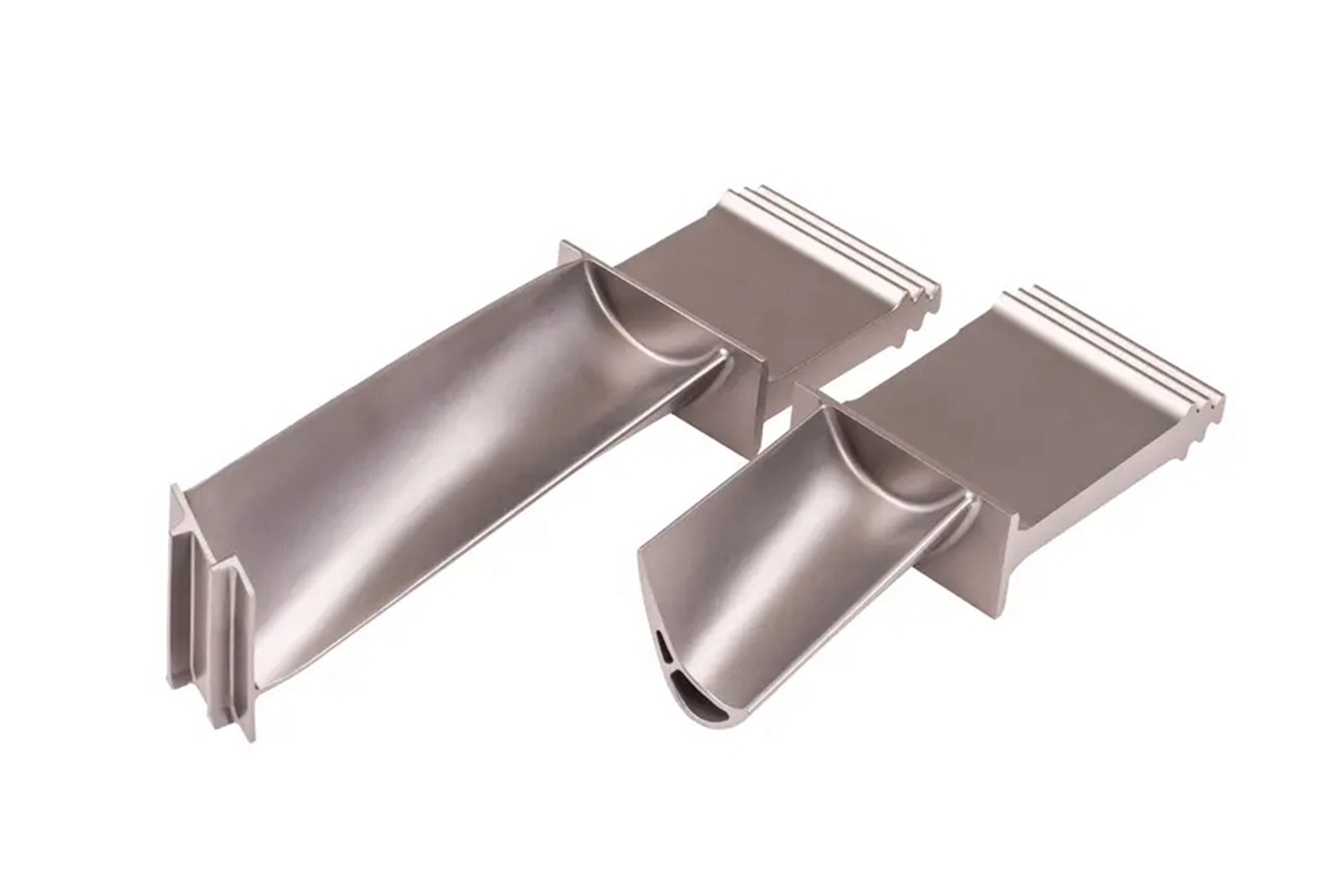
Por qué el HIP es Esencial para las Piezas Fundidas de Superaleación
El HIP mejora significativamente la integridad mecánica al eliminar los huecos de fundición y sanar las microfisuras dentro de la matriz de la superaleación.
Elimina la porosidad interna y la microcontracción causadas por la geometría compleja y el enfriamiento durante la fundición a la cera perdida al vacío
Mejora la resistencia a la fatiga al homogeneizar los límites de grano y reducir las concentraciones de tensión interna
Mejora la vida útil a fluencia para componentes rotativos y estáticamente cargados a alta temperatura
Permite el postprocesado por soldadura y mecanizado CNC con un comportamiento material estable
El HIP a menudo se realiza después de la fundición y antes del tratamiento térmico final o del recubrimiento superficial.
Superaleaciones Comúnmente Tratadas con HIP
Aleación | Temperatura Máx. HIP (°C) | Presión Máx. (MPa) | Aplicación Típica |
|---|---|---|---|
1210 | 100 | Álabes guía de tobera, segmentos de estator | |
1230 | 120 | Raíces de álabes de turbina, segmentos de cubierta | |
1175 | 110 | Componentes de combustor, bridas | |
1260 | 140 | Álabes de primera etapa, conjuntos de álabes guía |
Las aleaciones se tratan con HIP según las especificaciones de material del OEM y los perfiles de carga de la aplicación.
Estudio de Caso: HIP de Piezas Fundidas de Álabes de Primera Etapa en CMSX-4
Antecedentes del Proyecto
Un OEM de turbinas envió un lote de 120 álabes de CMSX-4 monocristalinos para HIP después de la fundición a la cera perdida. El HIP se realizó a 1260°C, 140 MPa, durante 4 horas en gas inerte. El análisis de microestructura mostró un cierre de porosidad >98% y una extensión de la vida a fatiga de 2.5× el rendimiento de referencia.
Modelos de Componentes Procesados con HIP Típicos y Aplicaciones
Modelo | Descripción | Aleación | Industria |
|---|---|---|---|
BLD-718 | Álabe de turbina de alta presión con raíz de 22 mm | Inconel 713C | |
VNG-420 | Álabe guía de tobera con redondeos radiales | Rene 80 | |
CDR-320 | Anillo difusor de combustión con 8 puertos | Hastelloy X | |
STA-610 | Perfil aerodinámico de primera etapa fundido a partir de monocristal | CMSX-4 |
Todos los componentes pasaron la inspección dimensional por rayos X, SEM y CMM después del tratamiento HIP.
Desafíos Abordados por el HIP en Piezas Fundidas de Superaleación
Eliminación de microcontracción mejora la capacidad de inspección por ultrasonidos y el rendimiento a fatiga de alto ciclo
Los huecos y cavidades internas se densifican completamente bajo presión de gas de 100–200 MPa
La porosidad en la costura de soldadura proveniente de la reparación de álabes se cierra antes del perfilado CNC
La reducción de anisotropía en piezas equiaxiales aumenta la estabilidad dimensional después del mecanizado
Mejora de la adhesión del recubrimiento debido a una mayor estabilidad superficial y una menor exposición a inclusiones de óxido
Parámetros y Ventajas del Proceso HIP
Temperaturas de hasta 1300°C permiten la sanación de granos en aleaciones con alto contenido de gamma prima sin distorsión de fase
Presiones entre 100–200 MPa en argón permiten una densificación completa en la raíz, la cubierta y las cavidades de refrigeración
Duración de ciclos de 2 a 6 horas dependiendo del espesor de pared de la pieza fundida y la química de la aleación
Vida a fatiga aumentada en 2–3× en álabes de turbina y perfiles aerodinámicos sometidos a cargas térmicas cíclicas
Refinamiento de microestructura post-HIP confirmado por SEM y microscopía óptica dentro de los límites de aceptación de AMS 2774
Resultados y Verificación
Ejecución del HIP
Las piezas fundidas se trataron con HIP en argón a 1260°C, 140 MPa durante 4 horas. Las tasas de enfriamiento se controlaron por debajo de 10°C/min para evitar fisuras.
Procesamiento Post-HIP
Las piezas se sometieron a tratamiento térmico según AMS 5662 o especificación del OEM. Seguidamente, se realizó el mecanizado CNC final y, opcionalmente, el recubrimiento TBC según los requisitos del sistema de turbina.
Inspección
Las pruebas de rayos X confirmaron la eliminación completa de la porosidad. La inspección CMM validó la conformidad con tolerancias estrechas. El análisis SEM no mostró fisuras, sí una estructura dendrítica uniforme y límites de grano restaurados.
Preguntas Frecuentes
¿Qué grados de superaleación se benefician más del procesamiento HIP?
¿Cómo mejora el HIP la vida a fatiga y a fluencia en piezas fundidas?
¿Se puede combinar el HIP con soldadura y mecanizado CNC?
¿Qué inspecciones post-HIP son estándar en piezas aeroespaciales?
¿Es adecuado el HIP para componentes de turbina monocristalinos o equiaxiales?
