
Fabricante de Discos de Turbina para Generación de Energía mediante Fundición a la Cera Perdida en R...
Introducción
Rene 80 es una superaleación a base de níquel diseñada específicamente para aplicaciones de discos de turbina de alta temperatura y alto estrés. Proporciona una resistencia a la fluencia excepcional, resistencia a la fatiga y estabilidad a la oxidación hasta 1050°C. Como fabricante líder de fundición a la cera perdida, nos especializamos en la producción de discos de turbina Rene 80 para turbinas de gas para generación de energía, ofreciendo tolerancias de precisión (±0,05 mm), estructura de grano controlada y porosidad inferior al 1%.
Nuestros discos Rene 80 fundidos al vacío están construidos para una durabilidad a largo plazo y alto rendimiento en ciclos en operaciones de turbinas de carga base y de punta.
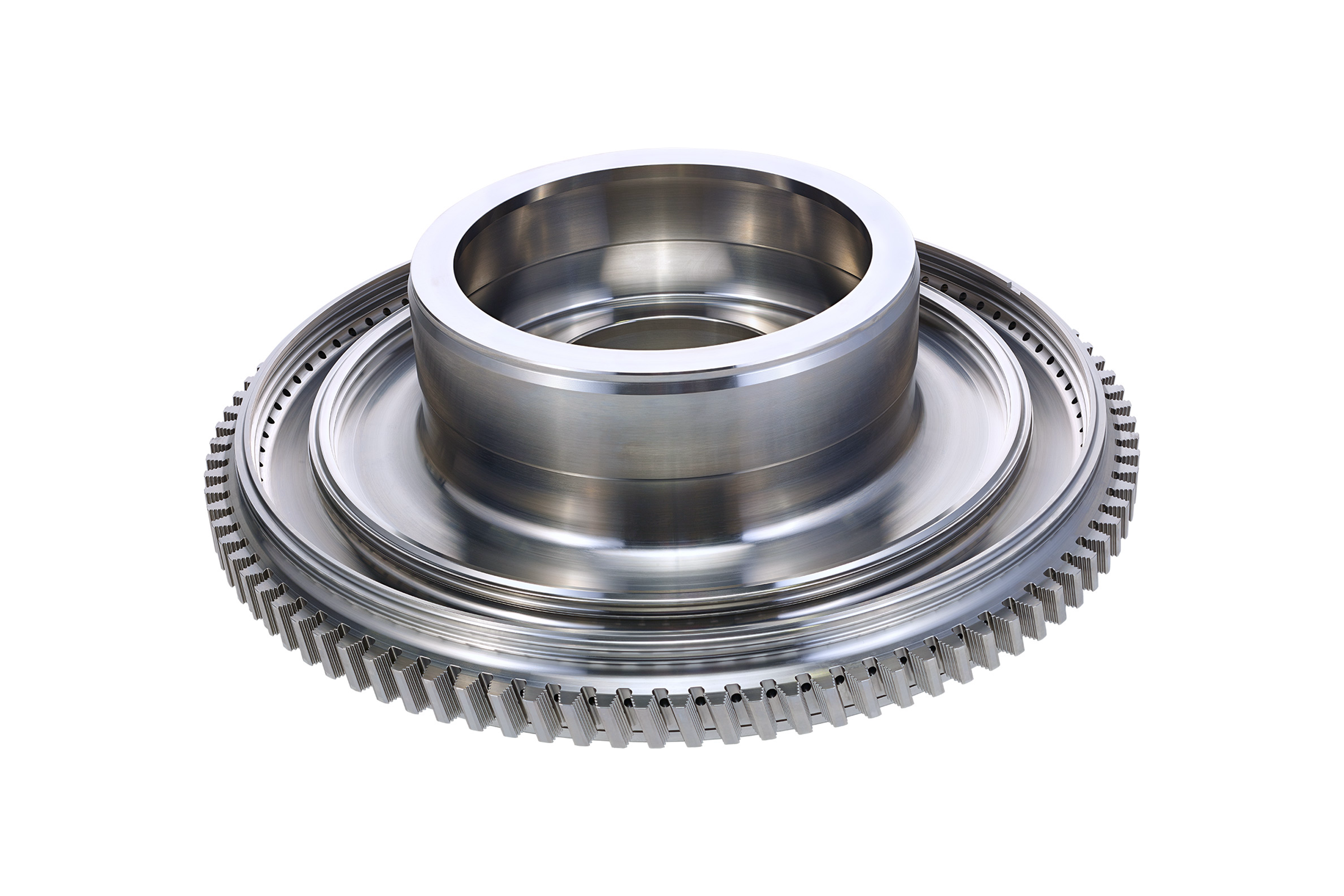
Tecnología Central: Fundición a la Cera Perdida de Rene 80
Nuestro proceso de fundición de precisión al vacío para Rene 80 implica fundir y verter la aleación en condiciones de vacío (~10⁻³ torr) a ~1450°C en moldes cerámicos de caparazón (8–10 capas), precalentados a ~1100°C. La solidificación controlada (tasa de enfriamiento: 30–80°C/min) asegura una estructura de grano equiaxial refinada (0,5–2 mm), minimizando tensiones térmicas y eliminando grietas por calor. El proceso logra una precisión dimensional dentro de ±0,05 mm.
Características del Material de la Aleación Rene 80
Rene 80 es una superaleación a base de níquel reforzada con γ′ con excelentes propiedades mecánicas a alta temperatura, resistencia a la oxidación y estabilidad estructural. Se utiliza ampliamente en discos de turbina, álabes y toberas. Las propiedades clave incluyen:
Propiedad | Valor |
|---|---|
Densidad | 8,75 g/cm³ |
Resistencia Máxima a la Tracción (a 870°C) | ≥1200 MPa |
Límite Elástico (a 870°C) | ≥1000 MPa |
Alargamiento | ≥10% |
Resistencia a la Rotura por Fluencia (1000h @ 982°C) | ≥200 MPa |
Límite de Temperatura de Operación | Hasta 1050°C |
Resistencia a la Oxidación | Excelente |
Rene 80 mantiene la integridad bajo cargas rotacionales de alta velocidad, ciclos térmicos y largas duraciones de servicio en entornos de turbina hostiles.
Estudio de Caso: Producción de Disco de Turbina Rene 80
Antecedentes del Proyecto
Un OEM global de energía requería discos de turbina de alto rendimiento para una turbina de gas de 50 MW que opera a temperaturas de entrada de turbina de 1000–1050°C. Se seleccionó Rene 80 por su probada resistencia a la rotura por fluencia y estabilidad térmica a largo plazo. Entregamos discos fundidos al vacío, tratados con HIP y acabados con CNC que cumplen con los estándares dimensionales AMS 5383 y del OEM.
Aplicaciones Típicas en Generación de Energía
Discos de Turbina de Alta Presión (ej., Siemens V94.2, GE Frame 7E): Los discos Rene 80 soportan altas cargas centrífugas y gradientes térmicos en turbinas estacionarias y de punta.
Discos de Turbina de Baja Presión: Cubos estructurales que giran a temperaturas moderadas donde la resistencia a la oxidación y la resistencia mecánica son esenciales.
Discos de Transición de la Ruta de Gas Caliente: Estructuras rotativas intermedias que conectan los ejes de la turbina con los módulos del compresor o generador.
Interfaces de Montaje Disco-Álabe: Cubos complejos con geometría de cola de milano o de árbol de abeto que requieren ajuste de precisión y durabilidad a la fatiga.
Estos discos deben mantener la integridad mecánica y dimensional durante miles de ciclos de arranque-parada y variación de carga en turbinas de gas industriales.
Soluciones de Fabricación para Discos de Turbina Rene 80
Proceso de Fundición Los modelos de cera se ensamblan con precisión y se invierten en moldes cerámicos. La fusión y colada al vacío a ~1450°C eliminan la porosidad por gas. La solidificación controlada evita la segregación y asegura una formación uniforme de la fase γ′ en toda la sección transversal del disco.
Postprocesado El Prensado Isotérmico en Caliente (HIP) a 1190°C y 100 MPa consolida los microhuecos, mejorando la resistencia a la fatiga y la uniformidad estructural. El tratamiento térmico (solución + envejecimiento) mejora el rendimiento a la fluencia y a la tracción.
Mecanizado Posterior El mecanizado CNC se utiliza para acabar agujeros, patrones de pernos y ranuras del disco. La EDM permite la formación precisa de ranuras de refrigeración o características de sujeción. La perforación profunda crea pasajes de aceite y canales de alivio de tensiones.
Tratamiento de Superficie Los discos pueden recubrirse con recubrimientos de barrera térmica (TBC) para reducir la oxidación superficial y gestionar los gradientes térmicos. También están disponibles el pulido superficial y el granallado para mejorar la vida a la fatiga.
Pruebas e Inspección Todos los componentes se someten a END por rayos X, escaneo CMM, pruebas de tracción a alta temperatura y análisis metalográfico para verificar el tamaño de grano, distribución de fases y cumplimiento estructural.
Desafíos Centrales de Fabricación
Fundición de discos de gran diámetro con tolerancia ajustada y control de grano.
Prevenir el agrietamiento por fatiga térmica y la oxidación de los límites de grano durante ciclos a largo plazo.
Lograr una precipitación estable de γ′ para una resistencia a la fluencia de larga duración.
Resultados y Verificación
Precisión dimensional dentro de ±0,05 mm confirmada por CMM.
Porosidad reducida a <1% después del HIP, confirmada por inspección de rayos X.
Resistencia a la rotura por fluencia ≥200 MPa a 982°C validada mediante pruebas de estrés de 1000 horas.
Vida a la fatiga extendida >10⁶ ciclos bajo operación simulada de turbina.
Preguntas Frecuentes
¿Qué hace que Rene 80 sea ideal para fundir discos de turbina en generación de energía?
¿Cómo se controla la estructura de grano en fundiciones Rene 80 de gran diámetro?
¿Se pueden personalizar los cubos de los discos de turbina para diferentes configuraciones de rotor?
¿Qué opciones de post-mecanizado están disponibles para el acabado de discos?
¿Qué medidas de control de calidad aseguran el rendimiento en sistemas de turbina de alta temperatura?
