
Fábrica de HIP para Ruedas de Turbina de Aleación de Alta Temperatura
Densificación y Mejora de la Integridad para Fundiciones de Ruedas de Turbina
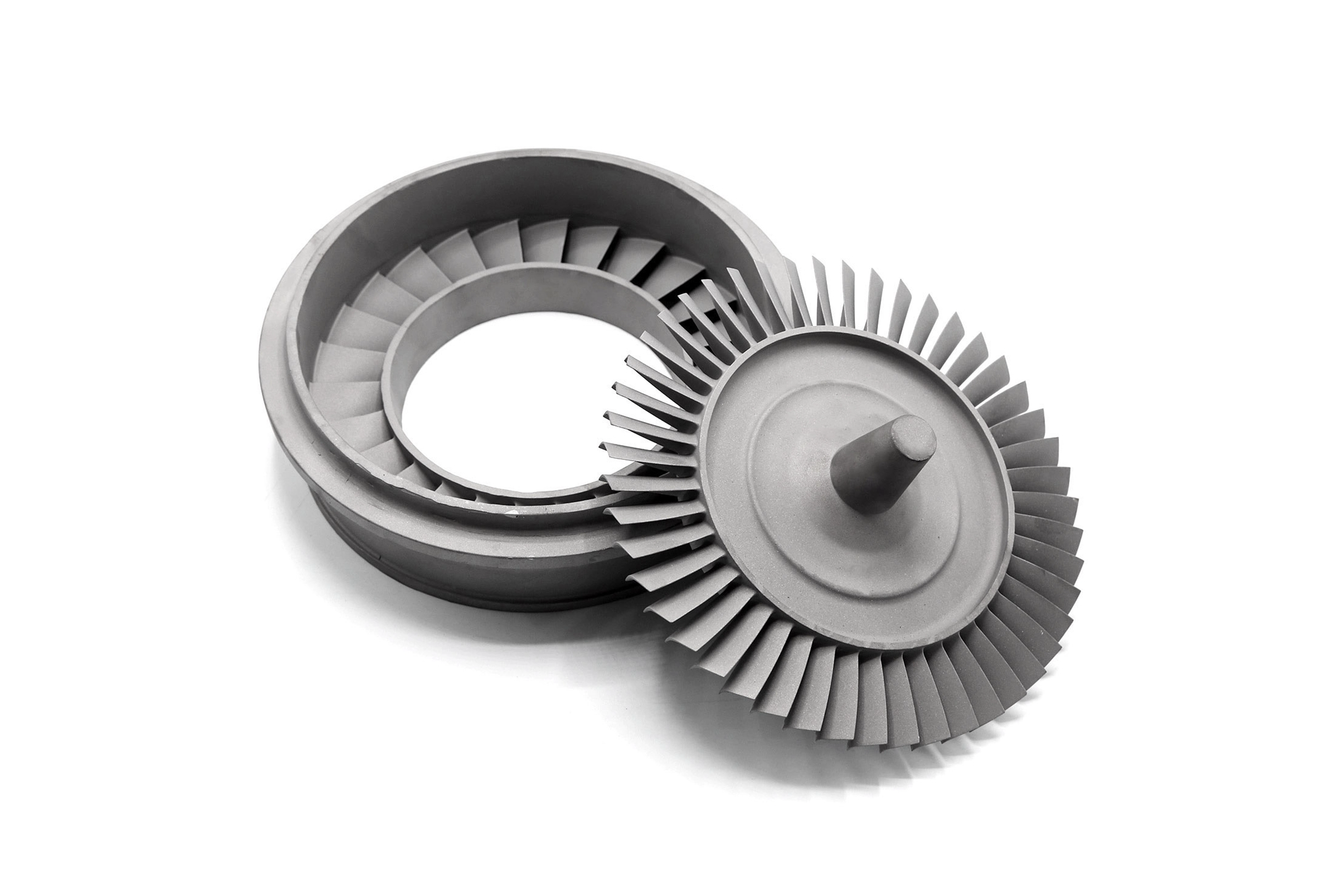
Las ruedas de turbina en turbinas de gas de alta temperatura operan bajo severas cargas centrífugas, gradientes térmicos y fatiga cíclica. Los defectos internos de fundición como la porosidad por contracción, microporos y segregación pueden reducir significativamente su durabilidad y confiabilidad. El Prensado Isostático en Caliente (HIP) es una solución probada para eliminar fallas internas y restaurar la continuidad estructural en ruedas de turbina fabricadas con superaleaciones de alto rendimiento.
Neway AeroTech es una fábrica de HIP dedicada para ruedas de turbina de superaleación de alta temperatura fabricadas mediante fundición a la cera perdida al vacío. Ofrecemos servicios de HIP de hasta 1300°C y 200 MPa, totalmente calificados para tratar ruedas fabricadas con Inconel, aleaciones Rene y Hastelloy.
Por qué el HIP es Crítico para el Rendimiento de la Rueda de Turbina
Las ruedas de turbina deben soportar estrés rotacional y choque térmico manteniendo precisión dimensional y resistencia a la fractura. El procesamiento HIP:
Elimina la porosidad por contracción y las microfisuras de la solidificación
Aumenta la vida útil a fatiga de bajo y alto ciclo
Mejora la consistencia microestructural para un mecanizado CNC post-HIP confiable
Prepara las ruedas para una soldadura TIG de precisión e integración de álabes
El HIP es esencial para lograr la aeronavegabilidad y el cumplimiento de las especificaciones del fabricante de turbinas.
Aleaciones Compatibles con HIP para Fundiciones de Ruedas de Turbina
Aleación | Temperatura Máx. (°C) | Temperatura HIP (°C) | Aplicaciones |
|---|---|---|---|
950 | 1210 | Ruedas de turbina industrial y de aviación | |
1040 | 1230 | Discos de turbina e impulsores | |
1175 | 1170 | Ruedas de turbina de gas de alta temperatura |
Todas las aleaciones se someten a HIP según AMS 2774 o los requisitos específicos del cliente para componentes de turbina.
Estudio de Caso: HIP de Rueda de Turbina Inconel 713C Equiaxial
Antecedentes del Proyecto
Un cliente del sector energético envió 96 ruedas de turbina Inconel 713C equiaxiales (Ø280 mm × 60 mm de espesor) para procesamiento HIP. La porosidad interna superaba el 1,2%. Después del HIP a 1210°C, 100 MPa durante 4 horas, la porosidad se redujo a <0,05% y la vida útil a fatiga aumentó 2,7 veces.
Modelos de Ruedas de Turbina e Industrias
Modelo de Rueda | Descripción | Aleación | Industria |
|---|---|---|---|
TW-280 | Rueda de turbina equiaxial con pasajes de flujo radial | Inconel 713C | |
RWD-450 | Disco de rueda rotor con cubo y agujero central | Rene 77 | |
HTW-310 | Rueda Hastelloy con manguito de eje integrado | Hastelloy X |
Todos los modelos fueron tratados con HIP, sometidos a tratamiento térmico y verificados con CMM antes de la instalación final de los álabes.
Beneficios del Proceso HIP para Ruedas de Turbina
Elimina >99% de la porosidad, asegurando la solidez estructural bajo operación de 15.000–30.000 rpm
Reduce la microsegregación, permitiendo una mejor tolerancia dimensional en el mecanizado post-HIP
Extiende la vida útil a fatiga 2–3 veces, especialmente en las áreas de contacto álabe-rueda con carga en los bordes
Estabiliza la integridad del núcleo, evitando la iniciación de grietas bajo ciclos de presión y temperatura
Permite una mejor soldabilidad para la unión álabe-cubo después de la consolidación HIP
Parámetros de Control del Proceso HIP
Rango de temperatura: 1170–1300°C, ajustado según la aleación y el espesor de la fundición
Presión: 100–200 MPa, ambiente de argón o gas inerte según AMS 2774
Tiempo de mantenimiento: 3–6 horas, dependiendo del tamaño de la pieza y la severidad de la porosidad
Tasa de enfriamiento: ≤10°C/min, para prevenir el sobreenvejecimiento o el estrés residual
Resultados y Verificación
Ejecución del HIP
Las ruedas de turbina se sometieron a HIP a 1210°C, 100 MPa durante 4 horas. El enfriamiento final se controló para prevenir desequilibrio de fases y agrietamiento.
Procesamiento Post-HIP
Las piezas se sometieron a tratamiento térmico a 980–1050°C y luego fueron mecanizadas CNC al perfil final. Se aplicó un revestimiento TBC opcional para la durabilidad de la sección caliente.
Inspección
La prueba de rayos X confirmó la densificación interna. El CMM verificó las dimensiones del agujero central y la brida. El análisis SEM mostró continuidad de la estructura granular y cierre de poros.
Preguntas Frecuentes
¿Qué aleaciones de ruedas de turbina son adecuadas para el tratamiento HIP?
¿Cómo mejora el HIP el rendimiento de la rueda de turbina en aplicaciones de alta velocidad?
¿Se puede aplicar el HIP después de la soldadura o el mecanizado?
¿Qué normas rigen el tratamiento HIP de componentes de turbina?
¿Cómo se inspeccionan las ruedas de turbina tratadas con HIP antes de la entrega?
