
Fundición de Piezas de Palas de Turbina de Gas de Cristal Único CMSX-4
Introducción
CMSX-4 es una superaleación de níquel de segunda generación de cristal único (SX) diseñada para palas de turbina de gas de alta temperatura, que ofrece una resistencia a la fluencia, resistencia a la fatiga y resistencia a la oxidación excepcionales hasta 1150°C. Como fundición líder en fundición de cristal único, nos especializamos en la fabricación de componentes de palas de turbina de gas CMSX-4 utilizando solidificación direccional avanzada al vacío, logrando una tolerancia dimensional de ±0,05 mm y orientación de cristal único [001] para piezas críticas de turbina de la sección caliente.
Nuestras piezas fundidas en CMSX-4 son confiables en turbinas de generación de energía y aeroespaciales, donde la eficiencia y confiabilidad del motor bajo condiciones operativas extremas son primordiales.
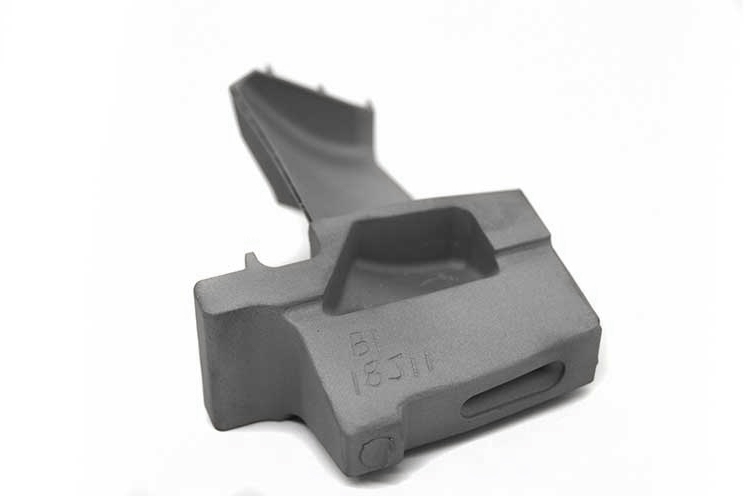
Tecnología Central: Fundición de Cristal Único de CMSX-4
Empleamos solidificación direccional al vacío en un horno Bridgman para fundir palas de turbina CMSX-4. La aleación se funde al vacío a ~1450°C y se vierte en moldes de caparazón cerámico (8–10 capas), precalentados a ~1100°C. La extracción del molde a 1–3 mm/min se controla con precisión para producir la orientación de cristal único [001], eliminando los límites de grano y mejorando la vida a la fluencia y la resistencia a la fatiga en entornos de turbina.
Características del Material de la Aleación CMSX-4
CMSX-4 es una superaleación de níquel de segunda generación con un alto volumen de fase γ′ y elementos de baja difusividad. Es ampliamente utilizada en aplicaciones de palas de turbina rotativas debido a su equilibrio de resistencia, resistencia a la oxidación y procesabilidad. Las propiedades clave incluyen:
Propiedad | Valor |
|---|---|
Densidad | 8,7 g/cm³ |
Resistencia Máxima a la Tracción (a 980°C) | ≥1100 MPa |
Resistencia a la Rotura por Fluencia (1000h @ 982°C) | ≥190 MPa |
Límite de Temperatura de Operación | Hasta 1150°C |
Resistencia a la Fatiga (R=0,1, 10⁷ ciclos) | ≥600 MPa |
Resistencia a la Oxidación | Excelente |
Estructura de Grano | Cristal Único [001] |
CMSX-4 ofrece un rendimiento probado en motores de turbina que requieren alta durabilidad bajo cargas térmicas y mecánicas extremas.
Estudio de Caso: Proyecto de Componente de Pala de Turbina CMSX-4
Antecedentes del Proyecto
Un fabricante de equipos originales (OEM) de generación de energía necesitaba palas de turbina de gas de primera etapa para una turbina de ciclo combinado industrial que opera continuamente por encima de 1100°C. Se seleccionó CMSX-4 por su rendimiento confiable de SX y estabilidad a la oxidación. Suministramos palas fundidas al vacío, tratadas con HIP y mecanizadas por CNC para cumplir con los estándares dimensionales y metalúrgicos ISO 9001, AS9100 y específicos del cliente.
Aplicaciones Típicas de Palas de Turbina de Gas
Palas de HPT de Primera Etapa (ej., GE Frame 7FA, Siemens SGT6-5000F): Palas rotativas expuestas a temperaturas de combustión extremas y gradientes térmicos.
Secciones de Punta de Palas de Turbina: Piezas fundidas de cristal único con cubiertas y puntas de perfil aerodinámico diseñadas para sellado de gas caliente y resistencia a la erosión.
Palas de la Zona de Transición de Combustión: Componentes CMSX-4 que conectan la salida del combustor con la entrada de la turbina, requiriendo resistencia a la oxidación y a la fatiga.
Palas de Turboshaft y Turbofan Aeroespaciales: Palas SX para motores comerciales y militares que operan con alta potencia y demanda de ciclo.
Estas palas son esenciales para maximizar la eficiencia del motor, el ciclo de vida y la relación empuje-peso tanto en aplicaciones industriales como aeroespaciales.
Soluciones de Fabricación para Palas de Turbina CMSX-4
Proceso de Fundición Los ensamblajes de cera se invierten en moldes cerámicos y se funden utilizando solidificación direccional Bridgman a ~1450°C. La extracción se controla con precisión para producir una estructura de cristal único [001] a lo largo de toda la longitud de la pala, incluyendo la raíz y el perfil aerodinámico.
Postprocesado Se utiliza Prensado Isostático en Caliente (HIP) a ~1190°C y 100 MPa para la densificación. Se aplican tratamientos térmicos de solución y envejecimiento para optimizar la uniformidad de la fase γ′ y el rendimiento a la fluencia.
Mecanizado Posterior El mecanizado CNC termina los perfiles de la raíz, los ajustes de la plataforma y las geometrías de las cubiertas. Se utiliza EDM para el detallado de bordes. La perforación profunda crea pasajes de enfriamiento y matrices de enfriamiento por película.
Tratamiento de Superficie Se aplican recubrimientos de barrera térmica (TBC) como YSZ mediante EB-PVD o APS para reducir la temperatura del metal y extender la vida útil. Los recubrimientos de aluminuro o Pt-aluminuro mejoran la protección contra la corrosión en caliente y la oxidación.
Pruebas e Inspección Todas las palas se someten a END por rayos X, medición CMM, pruebas mecánicas y evaluación metalográfica para confirmar la orientación, la estructura γ′ y la integridad superficial.
Desafíos Centrales de Fabricación
Mantener una orientación estricta [001] en toda la geometría del perfil aerodinámico.
Prevenir la formación de granos extraviados en los canales de enfriamiento y regiones de las cubiertas.
Lograr precisión en el enfriamiento interno y acabado superficial exterior para una alta eficiencia de flujo.
Resultados y Verificación
Orientación de cristal único [001] validada por difracción de Laue.
Precisión dimensional dentro de ±0,05 mm confirmada mediante CMM.
Rotura por fluencia ≥190 MPa a 982°C confirmada por ciclo de prueba de 1000 horas.
Estabilidad de la oxidación superficial y vida a la fatiga mantenida después de 1000+ ciclos térmicos a 1150°C.
Preguntas Frecuentes
¿Por qué CMSX-4 es la aleación preferida para palas de turbina de gas de cristal único?
¿Qué métodos de fundición direccional se utilizan para lograr la orientación [001]?
¿Pueden las palas CMSX-4 incluir canales de enfriamiento y cubiertas?
¿Qué recubrimientos son compatibles con CMSX-4 para aplicaciones de turbina?
¿Qué controles de calidad y certificaciones respaldan el cumplimiento aeroespacial de CMSX-4?
