
Recubrimiento Térmico Resistente al Calor por Plasma TBC para Paletas de Cristal Único
Introducción
Las paletas de turbina de cristal único (SX), fabricadas con superaleaciones avanzadas como CMSX-4, PWA 1484 y Rene N5, son la columna vertebral de los motores de reacción modernos y las turbinas de gas industriales. A pesar de su rendimiento superior en fluencia y fatiga, estas paletas requieren protección superficial adicional para sobrevivir a la exposición prolongada a gases de combustión que superan los 1150°C. Nuestros recubrimientos de barrera térmica (TBC) aplicados por plasma proporcionan una capa aislante crítica que mejora la resistencia térmica y prolonga la vida útil de las paletas de turbina de cristal único que operan en las secciones calientes de los motores de turbina avanzados.
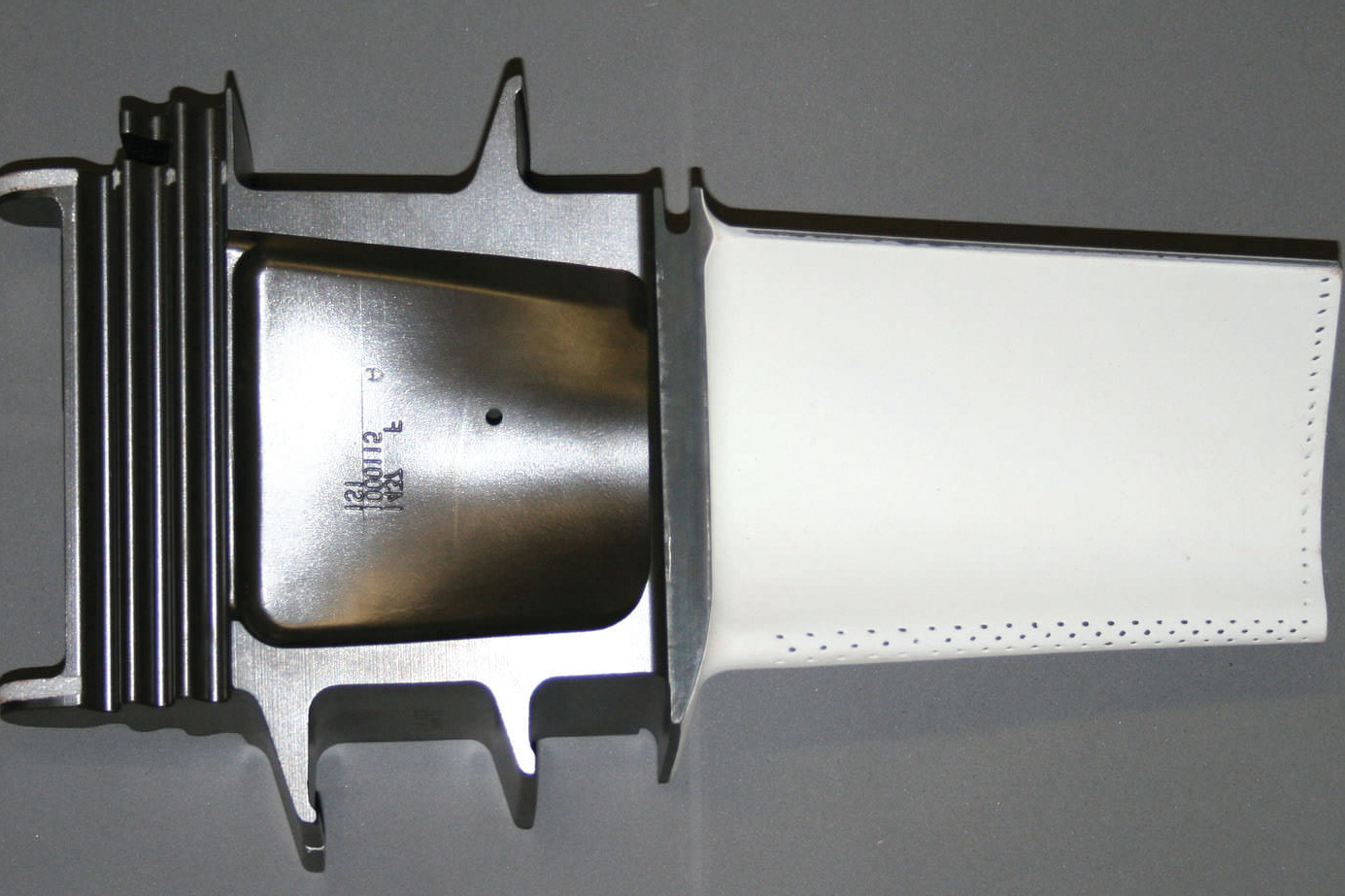
Por qué el TBC es Esencial para las Paletas de Cristal Único
Aunque las paletas SX eliminan la fluencia en los límites de grano y mejoran la integridad mecánica a alta temperatura, la superficie de la aleación sigue siendo vulnerable a:
Oxidación y corrosión en caliente por gases de combustión de alta velocidad
Fatiga térmica debido a fluctuaciones cíclicas de temperatura
Agrietamiento y desprendimiento superficial causados por gradientes térmicos
Los TBC aplicados por plasma minimizan estos riesgos al reducir la temperatura del metal y proteger el sustrato de ambientes corrosivos.
Estructura del Sistema TBC
Un sistema TBC completo consta de dos capas principales:
Capa | Material | Función |
|---|---|---|
Capa de Unión (Bond Coat) | MCrAlY o PtAl (ej., NiCoCrAlY) | Promueve la adhesión y proporciona resistencia a la oxidación |
Capa Superior (Top Coat) | Circonia estabilizada con itria (YSZ) 7–8% en peso | Proporciona aislamiento térmico y cumplimiento de deformación |
Para componentes de cristal único, el control preciso sobre el espesor del recubrimiento, la limpieza de la interfaz y el esfuerzo residual es esencial para prevenir fallos prematuras.
Sustratos de Superaleación Compatibles
Aplicamos sistemas TBC a una gama de aleaciones de cristal único que incluyen:
CMSX-4 – paletas de primera etapa en motores comerciales y militares
PWA 1484 – paletas y álabes de turbina de alta presión (HPT) para plataformas de motores Pratt & Whitney
Rene N5 y N6 – aleaciones SX utilizadas en núcleos de motores de alto empuje
TMS-138 – aleaciones de cuarta generación para paletas de turbina de temperatura ultra alta
Cada paleta se somete a una preparación superficial personalizada y aplicación de recubrimiento resistente al calor para cumplir con las especificaciones del OEM y NADCAP.
Descripción General del Proceso de Proyección por Plasma
1. Preparación de la Superficie
El desengrasado, granallado y limpieza eliminan la oxidación y promueven la adhesión de la capa de unión.
2. Aplicación de la Capa de Unión
Una capa de unión de MCrAlY o aluminuro de platino se aplica mediante HVOF o proyección por plasma a baja presión para formar una capa de interfaz de óxido térmicamente crecido (TGO).
3. Aplicación de la Capa Superior (YSZ)
La capa superior cerámica (típicamente 150–300 μm) se deposita mediante Proyección por Plasma Atmosférico (APS) o Deposición Física de Vapor por Haz de Electrones (EB-PVD), dependiendo de los requisitos del OEM del motor.
4. Acondicionamiento Posterior al Recubrimiento
Se puede realizar tratamiento térmico o sellado para estabilizar el sistema de recubrimiento, mejorar la tolerancia a la deformación y cumplir con los criterios de durabilidad del arranque de la turbina.
Beneficios del TBC para Paletas SX
Beneficio | Ventaja de Rendimiento |
|---|---|
Temperatura del Metal Más Baja | Reduce la temperatura superficial en 100–200°C, extendiendo la vida útil por fluencia |
Resistencia a la Fatiga Térmica | Reduce los gradientes térmicos, previniendo agrietamiento y delaminación |
Protección contra Oxidación y Corrosión | Retrasa la degradación del sustrato en ambientes de gas caliente |
Aumento de la Eficiencia del Motor | Permite una mayor temperatura de entrada a la turbina (TIT) para mejorar el empuje |
Ahorros en Mantenimiento | Extiende la vida útil de la paleta y los intervalos de revisión |
Rendimiento y Garantía de Calidad
Todos los recubrimientos se validan de acuerdo con los estándares del OEM del motor, como GE C50TF26, PWA 36945 y Rolls-Royce RPS 661. Las pruebas incluyen:
Precisión del Espesor del Recubrimiento (±10 μm)
Prueba de Adhesión (ASTM C633)
Prueba de Choque Térmico y Ciclado (>1000 ciclos a 1150°C)
Análisis Microestructural (SEM)
Evaluación de Porosidad y Capa TGO
Nuestra instalación cumple con NADCAP y está equipada para entregar recubrimientos de grado aeroespacial con trazabilidad completa.
Ejemplos de Aplicación Típicos
Paletas HPT CMSX-4 GE90 – TBC aplicado mediante APS para motores comerciales de largo alcance
Álabes de Primera Etapa PWA 1484 F135 – Sistema TBC EB-PVD para sistemas de propulsión militar
Puntas de Paleta Rene N5 Trent XWB – El recubrimiento proporciona protección térmica en aviones de ultra alto empuje
Paletas TMS-138 Clase HL de Siemens – Paletas de turbina de potencia industrial recubiertas para operación >1200°C
Preguntas Frecuentes
¿Cuál es el espesor TBC recomendado para paletas de turbina SX?
¿Cómo se aplica YSZ usando APS frente a EB-PVD?
¿Se puede reparar o reaplicar el TBC después de la exposición en servicio?
¿Qué factores afectan la vida útil del TBC en paletas de cristal único?
¿Qué estándares de recubrimiento cumplen para aplicaciones TBC aeroespaciales?
