
Why Inconel 713LC Is Used for Small Aero Engine Nozzle Guide Vanes
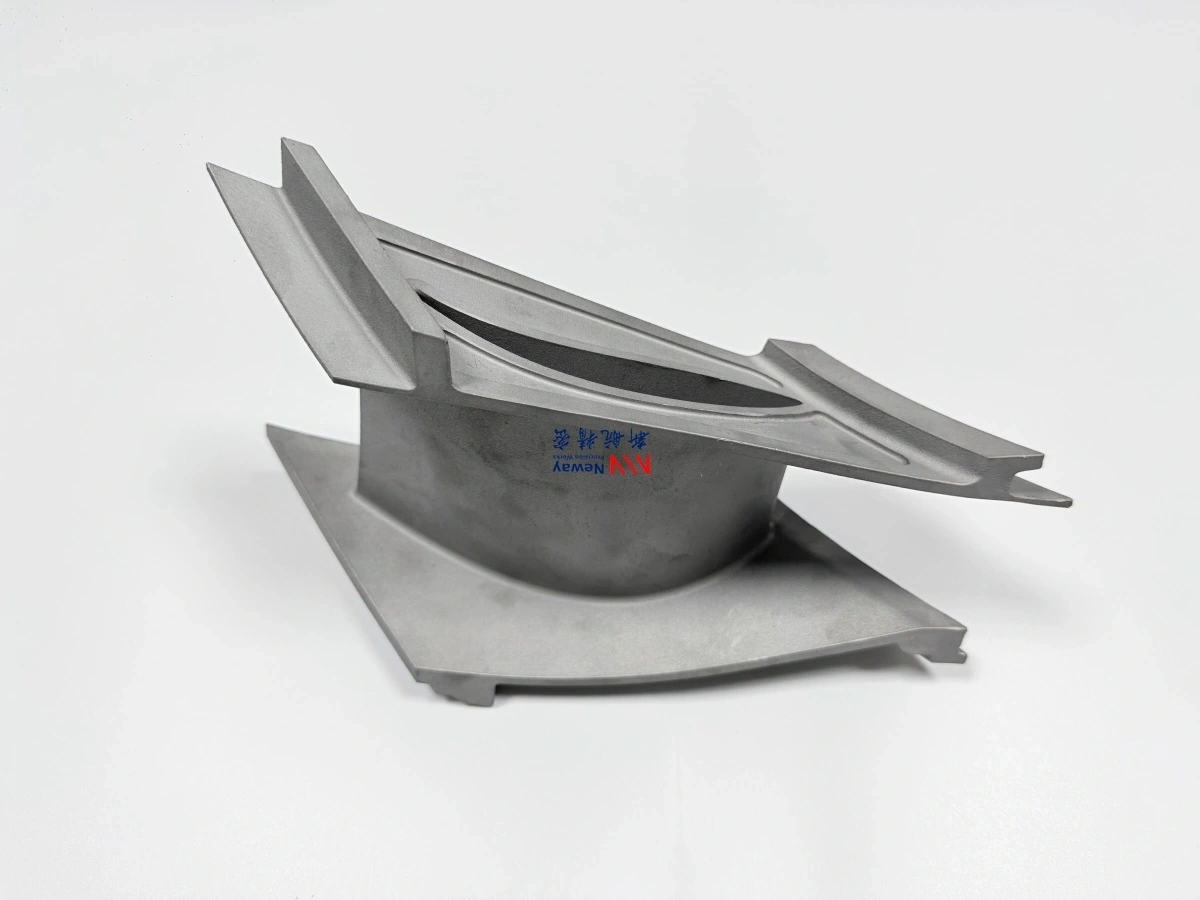
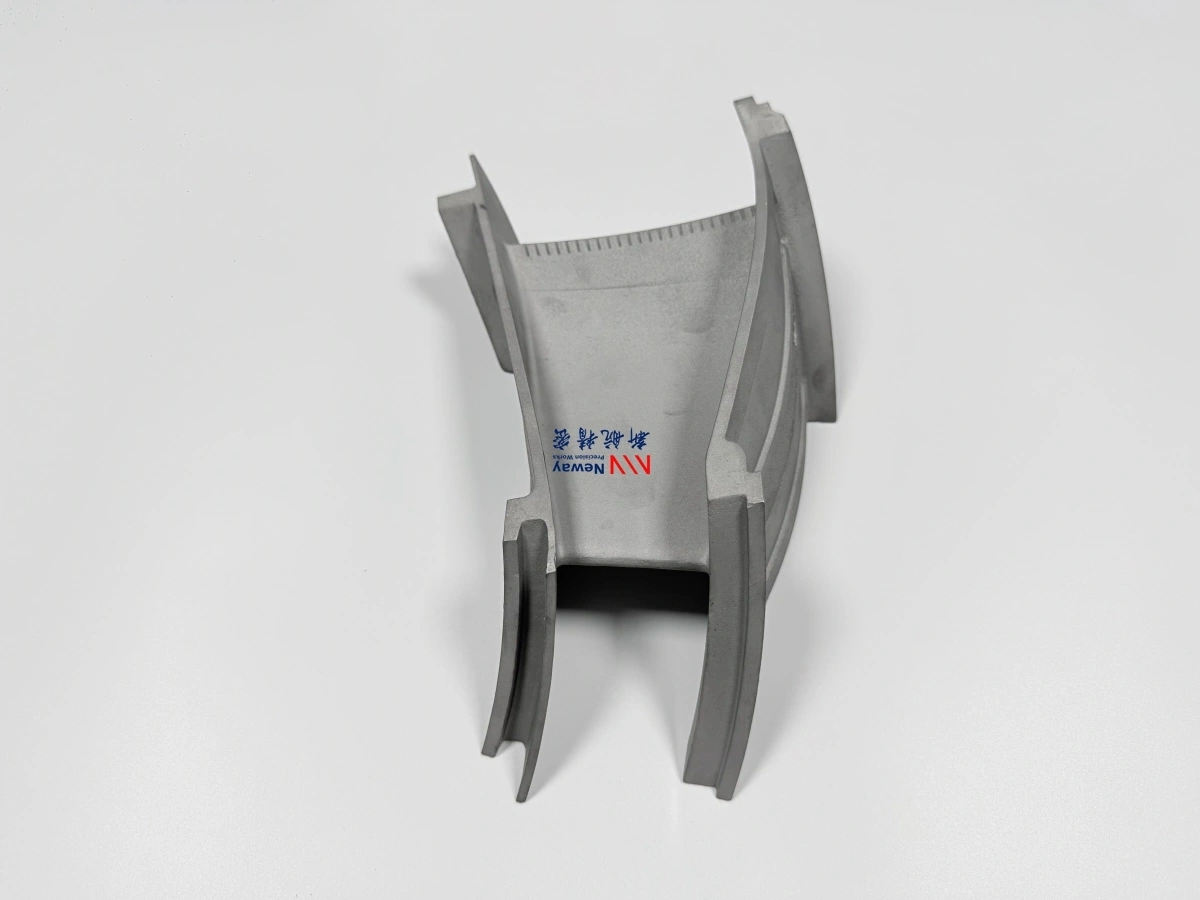
Inconel 713LC nozzle guide vanes are used in small aero engines because they combine high-temperature strength, oxidation resistance, casting suitability, and hot-section service stability. For UAV turbojet, UCAV turbine, small turbofan, and micro gas turbine engines, the nozzle guide vane is exposed to hot combustion gas, thermal cycling, vibration, and aerodynamic loading. Ordinary engineering materials usually cannot provide the required balance of temperature capability, geometry stability, and manufacturability.
For small aero engine NGV parts, material selection is not only about maximum temperature. Engineers must also consider airfoil geometry, casting feasibility, leading edge and trailing edge stability, throat area control, platform design, inspection requirements, and cost. This is why IN713LC is often selected instead of stainless steel, Inconel 625, Inconel 718, or cobalt-based alloys for cast turbine vane and nozzle guide vane applications.
NewayAeroTech supports Inconel alloy casting and post-processing for high-temperature aero engine components, including nozzle guide vanes, turbine vanes, nozzle hardware, and other hot-section parts. For broader material selection, Superalloys are usually required when the part must resist high temperature, oxidation, creep, and thermal fatigue.
What Is Inconel 713LC?
Inconel 713LC, also written as IN713LC, is a nickel-based casting superalloy developed for high-temperature turbine and hot-section applications. It is commonly associated with cast components such as nozzle guide vanes, turbine vanes, nozzle segments, turbocharger turbine wheels, and other parts exposed to hot gas flow.
The “LC” version generally refers to a low-carbon variant, which helps improve casting and performance control for specific high-temperature applications. For small aero engine nozzle guide vanes, IN713LC is attractive because it can be vacuum cast into complex near-net-shape geometry while maintaining high-temperature strength and oxidation resistance.
Compared with general-purpose alloys, IN713LC is more suitable for cast hot-section parts where the component must survive severe gas-path conditions while retaining airfoil shape, platform accuracy, and dimensional stability.
Why Nozzle Guide Vanes Need Cast Superalloys
A nozzle guide vane is not a simple structural bracket. It controls hot gas direction, turbine inlet angle, gas velocity, throat area, and stage matching. In small turbine engines, a small geometry deviation can affect turbine efficiency, temperature distribution, and engine stability.
NGV parts require cast superalloys because they must handle several difficult conditions at the same time:
High-temperature combustion gas exposure
Oxidation and hot corrosion risk
Thermal fatigue during engine start-stop cycles
Aerodynamic loading and vibration
Thin-wall airfoil geometry and narrow trailing edges
Platform, throat area, and flow channel dimensional control
Ordinary stainless steels may be easier to buy and machine, but they usually cannot provide the high-temperature strength and oxidation resistance required for hot gas path nozzle guide vanes. For this reason, nickel-based casting superalloys such as IN713LC are often preferred for small aero engine hot-section parts.
Why Not Use Ordinary Stainless Steel for NGV Parts?
Stainless steel can be useful for many structural, corrosion-resistant, and moderate-temperature components. However, small aero engine nozzle guide vanes operate in a much more severe environment than ordinary stainless steel parts.
The main limitations of stainless steel for NGV applications include:
Lower high-temperature strength compared with nickel-based superalloys
Higher risk of oxidation and scaling in hot gas path conditions
Poorer creep and thermal fatigue resistance at elevated temperature
Potential distortion of thin airfoil and platform geometry during service
Limited suitability for demanding turbine hot-section validation
For non-critical mockups, assembly checks, or low-temperature test fixtures, stainless steel may be acceptable. For functional turbine NGV parts exposed to hot gas, IN713LC is usually a more suitable material direction.
Inconel 713LC vs Inconel 718
Inconel 718 is a widely used nickel-based alloy with excellent strength, good processability, and broad aerospace application. It is commonly used for forged parts, machined components, fasteners, structural hardware, and medium-to-high-temperature parts. However, it is not always the best choice for cast nozzle guide vanes in the hottest gas path areas.
IN713LC is more focused on cast hot-section components. For small aero engine NGV parts, this matters because the vane usually includes curved airfoils, thin walls, platform transitions, and throat-area-controlled geometry. These features are more naturally produced by vacuum investment casting than by full machining from wrought material.
Comparison Item | Inconel 713LC | Inconel 718 |
|---|---|---|
Main strength | Cast hot-section turbine components | Forged, machined, and structural aerospace components |
NGV suitability | Strong fit for vacuum cast nozzle guide vanes | Useful in many engine parts, but not always ideal for cast NGV hot-section geometry |
Manufacturing route | Vacuum casting plus CNC finishing | Forging, machining, additive manufacturing, or casting depending on application |
Typical decision factor | Airfoil casting, hot gas path stability, and high-temperature service | Strength, availability, machinability, and broad aerospace use |
For nozzle guide vanes, Inconel 718 may be considered when the temperature, geometry, and manufacturing route allow it. However, when the project requires a cast hot-section airfoil with strong high-temperature capability, IN713LC is often the more relevant material.
Inconel 713LC vs Inconel 625
Inconel 625 is known for excellent corrosion resistance, oxidation resistance, and weldability. It is widely used in chemical processing, marine, aerospace, and high-temperature corrosion environments. However, corrosion resistance alone does not make it the best material for a small aero engine nozzle guide vane.
For NGV parts, the key requirements are high-temperature strength, thermal fatigue resistance, airfoil stability, and casting suitability. IN713LC is more closely aligned with these cast turbine hot-section requirements, while Inconel 625 is often selected where corrosion resistance and fabrication flexibility are more important.
Comparison Item | Inconel 713LC | Inconel 625 |
|---|---|---|
Primary advantage | High-temperature cast turbine performance | Corrosion resistance and weldability |
Best-fit applications | Nozzle guide vanes, turbine vanes, cast hot-section parts | Corrosion-resistant hardware, ducts, fabricated parts, moderate hot-section environments |
NGV decision factor | Better aligned with cast airfoil and hot gas path needs | May not provide the same hot-section strength focus for turbine vane service |
If the part is mainly exposed to corrosion and moderate heat, Inconel 625 may be a good choice. If the part is a functional turbine nozzle guide vane exposed to hot gas flow and aerodynamic loading, IN713LC is usually more suitable.
Inconel 713LC vs Cobalt-Based Alloys
Cobalt-based alloys can provide excellent hot corrosion resistance, wear resistance, and high-temperature stability in certain severe environments. They are used in turbine, valve, wear, and hot-section applications where specific service conditions justify their use.
For material comparison, Stellite alloy is a typical cobalt-based alloy family used where wear resistance, hot corrosion resistance, and surface durability are important. However, cobalt-based alloys may involve different cost, density, supply, casting behavior, and design considerations compared with IN713LC.
For small aero engine nozzle guide vanes, cobalt-based alloys may be considered when the service environment has especially severe hot corrosion, oxidation, or wear-related requirements. However, IN713LC is often a practical choice when the priority is nickel-based cast hot-section strength, airfoil casting suitability, and turbine vane manufacturing efficiency.
How Inconel 713LC Compares with Other Nickel Superalloy Families
IN713LC belongs to the broader nickel-based superalloy family, but it is not the only option for turbine hot-section parts. Other nickel alloy families may be selected depending on temperature, stress, corrosion environment, casting method, and required service life.
Nimonic alloy materials are also used in high-temperature applications and may be considered for turbine and aerospace components. Rene Alloys are commonly associated with advanced aero and turbine hot-section components where higher performance may be required. Hastelloy alloy materials are often considered when corrosion resistance and high-temperature chemical stability are important.
For NGV material selection, engineers should not choose a material only by alloy name. The correct choice depends on the engine temperature, stress level, casting geometry, coating requirement, inspection standard, and production quantity.
Casting Suitability of Inconel 713LC for Small NGV Parts
One of the key reasons IN713LC is used for small aero engine nozzle guide vanes is its suitability for vacuum investment casting. NGV parts often include thin airfoils, narrow leading and trailing edges, curved gas path surfaces, platform transitions, and small mounting features. Producing this geometry entirely by CNC machining can be costly, slow, and risky.
With vacuum casting, the near-net-shape vane body can be produced first, then CNC machining can finish critical assembly features. This route reduces unnecessary material removal and allows the airfoil and platform geometry to be formed more efficiently.
For cast IN713LC NGV parts, the manufacturing plan should control:
Wax pattern accuracy and ceramic shell stability
Airfoil profile shrinkage and deformation
Leading edge and trailing edge quality
Platform flatness and local transition geometry
Porosity, shrinkage, cracks, and inclusions
Machining allowance for datum and assembly features
Manufacturing Notes for IN713LC Nozzle Guide Vanes
IN713LC nozzle guide vane manufacturing should be treated as a complete process, not only a casting purchase. The part requires control over material, casting, heat treatment, CNC machining, surface condition, and inspection.
Important manufacturing notes include:
Casting defects such as shrinkage, porosity, and cracks must be controlled from the gating and shell design stage
Grain structure and heat treatment requirements should follow the customer’s material specification
Machining allowance must be added to installation surfaces, datum areas, and sealing faces
Airfoil surfaces should avoid unnecessary machining unless the drawing requires it
Leading and trailing edges should be protected during handling and finishing
Inspection should verify both internal casting quality and final aerodynamic geometry
For material verification, defect analysis, and process validation, Superalloy Material Testing and Analysis can support composition checks, defect review, dimensional inspection, and failure analysis when required by the customer’s project.
When Inconel 713LC Is a Good Choice for NGV Projects
IN713LC is a strong candidate when the project involves a cast hot-section vane exposed to high temperature, oxidation, and aerodynamic loading. It is especially relevant for small aero engine programs where the part has complex geometry but production quantity may not justify more expensive or specialized material systems.
IN713LC may be suitable when:
The part is a nozzle guide vane, turbine vane, nozzle segment, or hot gas path component
The geometry includes airfoil surfaces, platforms, and thin-wall features
The manufacturing route is vacuum casting plus CNC finishing
The engine requires better high-temperature performance than stainless steel can provide
Inconel 625 or Inconel 718 does not match the casting and hot-section requirements
The customer needs a practical balance between performance, manufacturability, and cost
RFQ Advice for Inconel 713LC NGV Material Selection
To confirm whether IN713LC is suitable for a small aero engine nozzle guide vane, the supplier needs more than the alloy name. The operating environment, drawing requirements, inspection criteria, and engine development stage all affect material and process recommendations.
A complete RFQ should include:
Engine type, such as UAV turbojet, small turbofan, UCAV turbine engine, or micro gas turbine
Part name, stage number, part number, and revision level
3D CAD file and 2D drawing with tolerances and datum references
Material requirement, such as Inconel 713LC / IN713LC or accepted alternatives
Operating temperature, gas environment, and expected duty cycle
Coating requirement, if the vane needs oxidation or thermal barrier protection
Required quantity for prototype, test batch, and future production
Inspection requirements such as FPI, X-ray, CT, CMM, profile inspection, or material testing
Required certificates, reports, and delivery schedule
If the customer is comparing IN713LC with Inconel 718, Inconel 625, stainless steel, or cobalt-based alloys, the quotation should include the reason for material selection. This helps avoid choosing a material that is easy to buy but not suitable for actual hot-section service.
FAQ
