
TBC Coating and Surface Control for Inconel 738LC Metallic Heat Shields in F-Class Gas Turbines
TBC coating is one of the most important post-processing steps for Inconel 738LC metallic heat shields used in F-class gas turbines. For SGT5-4000F and similar heavy-duty gas turbine platforms, MHS tiles operate close to combustion gas flow, thermal cycling, oxidation, vibration, and local mechanical constraint. In this environment, the base alloy, machined geometry, EDM surface quality, coating thickness, and inspection control must work together.
Metallic heat shields are not only cast superalloy parts. They are thermal protection components designed to reduce the heat load transferred to the parent turbine structure. A reliable MHS tile requires a stable cast substrate, accurate CNC-machined interfaces, controlled EDM features, suitable surface preparation, well-applied thermal barrier coating, and final inspection before delivery.
For power generation customers, spare parts buyers, and hot-section maintenance teams, coating quality directly affects service reliability. NewayAeroTech supports integrated manufacturing of TBC coated Inconel 738LC heat shield tiles by combining casting, CNC machining, EDM, heat treatment, coating coordination, and quality control within a complete process route.
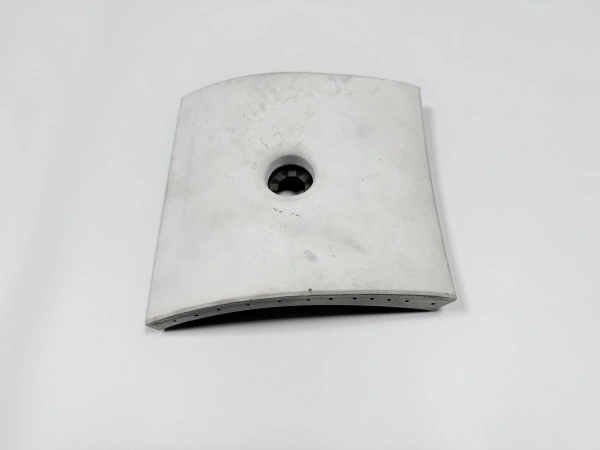
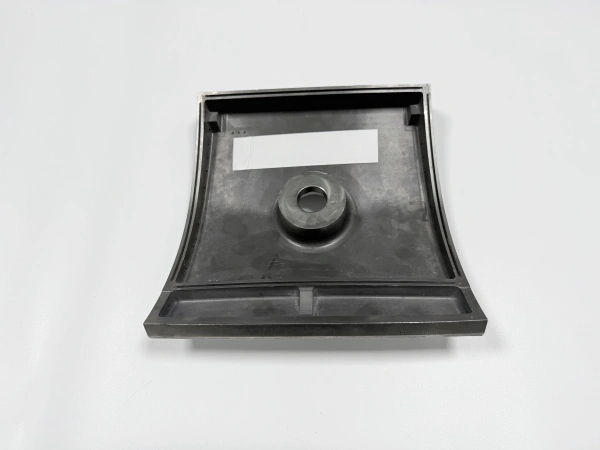
Why TBC Coated Metallic Heat Shields Matter in F-Class Gas Turbines
F-class gas turbines operate under high thermal load and repeated start-stop cycles. Hot-section components must resist oxidation, thermal fatigue, dimensional change, coating degradation, and local overheating. Metallic heat shields are installed to protect the surrounding combustion or hot gas path structure from direct gas exposure.
In SGT5-4000F applications, MHS tiles are commonly treated as replaceable protection components. Their function is not only to survive heat, but also to maintain correct fit, controlled clearance, surface condition, and coating integrity during service. If the coating fails, the underlying Inconel 738LC substrate can be exposed to higher temperature and faster degradation.
This is why TBC coating should be considered from the beginning of the manufacturing plan, not only as the final operation after casting. Coating thickness, masking zones, hole clearance, sealing edges, and machined interfaces all influence final assembly and service behavior.
Function of TBC on Metallic Heat Shield Tiles
Thermal barrier coating helps reduce the temperature experienced by the metallic substrate. For Inconel 738LC MHS tiles, this thermal protection can reduce oxidation, slow thermal fatigue damage, and improve the service life of the heat shield when the coating system is properly designed and controlled.
The main functions of TBC on metallic heat shields include:
Reducing heat transfer from combustion gas to the IN738LC base material
Improving resistance to oxidation and hot gas exposure
Helping reduce thermal fatigue caused by repeated heating and cooling cycles
Protecting selected hot-face surfaces from direct thermal attack
Supporting longer maintenance intervals when combined with proper inspection control
However, TBC is not a universal solution for poor substrate quality. If the cast base part has cracks, porosity, sharp damaged edges, EDM defects, oil contamination, or uncontrolled surface roughness, the coating may have poor adhesion or premature spalling risk.
Why IN738LC Still Needs TBC Protection
Inconel 738LC is a nickel-based casting superalloy designed for high-temperature applications. It offers strong hot corrosion resistance, oxidation resistance, and high-temperature stability compared with many general-purpose nickel alloys. For gas turbine heat shields, this makes IN738LC a suitable substrate material.
Even so, IN738LC still benefits from TBC protection in severe hot-section environments. Metallic heat shields may face hot gas impingement, local temperature gradients, repeated thermal cycling, and coating-related stress. Without proper coating, the substrate may experience faster oxidation, surface degradation, thermal fatigue cracking, or local overheating.
NewayAeroTech supports Inconel alloy manufacturing for high-temperature components where material selection, casting route, machining, coating, and inspection must be reviewed together. For broader hot-section applications, Superalloys provide the material foundation for turbine heat shields, vanes, blades, seal segments, and other high-temperature parts.
Material Comparison for Coated Hot-Section Components
IN738LC is not the only alloy used in high-temperature environments. Material selection depends on temperature, corrosion condition, mechanical load, casting feasibility, coating system, and final inspection requirements. For metallic heat shields, the alloy must support both hot-section service and manufacturability.
Hastelloy alloy materials are often associated with corrosion resistance and high-temperature chemical environments, while Nimonic alloy materials are also used in nickel-based high-temperature applications. However, for cast F-class gas turbine MHS tiles, IN738LC remains a practical candidate because it is closely aligned with cast static hot-section requirements.
Material Group | Typical Strength | Relevance to TBC Coated Heat Shields |
|---|---|---|
Inconel 738LC | High-temperature cast hot-section performance | Suitable substrate for cast metallic heat shields with TBC protection |
Hastelloy alloys | Corrosion and oxidation resistance in harsh environments | Useful comparison for heat and corrosion applications, but application fit must be reviewed |
Nimonic alloys | Nickel-based high-temperature capability | Relevant for turbine and high-temperature parts depending on design requirements |
Substrate Manufacturing Before TBC Coating
The performance of TBC coating depends heavily on the condition of the base component. Before coating, the Inconel 738LC MHS tile must have controlled casting quality, correct geometry, stable heat treatment condition, clean surface, and properly prepared coating areas.
For complex heat shield tiles, Special Alloy Casting is used to create the near-net-shape superalloy substrate. This casting route allows curved surfaces, ribs, bosses, and local structural features to be formed before precision machining. The casting stage must control shrinkage, cracks, porosity, deformation, and machining allowance.
If the substrate has uncontrolled defects, coating may only cover the problem temporarily. In real service, thermal cycling and gas flow can expose weak areas, leading to coating spalling, edge cracking, or early part rejection during maintenance inspection.
Surface Preparation Before TBC
Surface preparation is a key step before applying thermal barrier coating. The coating surface must be clean, stable, and suitable for bond coat adhesion. Poor preparation can reduce coating life even if the coating material itself is correct.
Typical pre-coating surface control may include:
Removing oil, grease, and machining contamination
Removing oxide scale or loose surface material
Cleaning EDM-processed holes, slots, and local features
Controlling surface roughness for coating adhesion
Protecting machined interfaces that must remain uncoated
Inspecting for cracks, burrs, dents, and sharp damaged edges before coating
Surface preparation should match the coating specification. If the customer requires a specific bond coat, ceramic top coat, thickness range, or acceptance standard, those requirements should be reviewed before machining and masking plans are finalized.
CNC and EDM Before Coating
Most precision features should be completed before TBC coating. This includes mounting surfaces, datum faces, contact areas, holes, slots, sealing edges, and local boundaries that affect assembly. Machining after coating should be avoided unless it is clearly planned, because post-coating rework may damage the coating system or expose the base alloy.
Superalloy CNC Machining is used before coating to control installation surfaces, positioning features, and final dimensional interfaces. For MHS tiles, CNC machining is usually focused on functional areas rather than the entire curved cast surface.
Superalloy Electrical Discharge Machining EDM is used where conventional cutting tools cannot efficiently process IN738LC. EDM is especially useful for narrow slots, small holes, sharp local features, and tool-access-limited areas near ribs or curved surfaces.
Edge and Hole Quality After EDM
EDM is valuable for difficult Inconel 738LC features, but EDM surface quality must be controlled before coating. Poor EDM control may leave recast layer, microcracks, burr-like edge defects, carbon residue, or local heat-affected surface conditions. These issues can increase coating risk and service failure risk.
For TBC coated MHS tiles, EDM quality control should focus on:
Slot width and local geometry accuracy
Hole size, roundness, and entry/exit edge condition
Recast layer control where required by the specification
Microcrack inspection on sensitive edges
Cleaning of EDM debris before surface preparation
Compatibility between EDM surface condition and coating adhesion
If holes or slots are partially blocked by coating buildup, airflow, clearance, or assembly conditions may be affected. Therefore, feature inspection should be performed before and after coating when the drawing requires strict control.
Coating Allowance and Dimensional Chain Control
TBC coating adds thickness to the part. This means coating is part of the dimensional chain, not only a surface finish. For metallic heat shields, coating thickness can affect assembly clearance, hole diameter, sealing edge geometry, contact surfaces, and thermal expansion gaps.
Before coating, engineers should define:
Coated and uncoated surfaces
Masking areas for mounting faces, datum surfaces, and holes
Coating thickness range and acceptable variation
Machining dimensions before coating
Final dimensions after coating
Inspection method for coated features and critical interfaces
A common risk is that the part passes CNC inspection before coating but becomes difficult to assemble after coating because coating buildup was not considered. For this reason, casting allowance, machining allowance, EDM feature size, masking strategy, and coating thickness must be planned together.
Heat Treatment and Thermal Stability
Heat treatment is also part of surface and service reliability control. Inconel 738LC castings may require heat treatment to stabilize the microstructure and achieve the required material condition before final finishing and coating.
Superalloy Heat Treatment can support precipitation strengthening, stress control, and thermal stability for high-temperature cast components. For MHS tiles, the heat treatment sequence should be coordinated with casting, machining, EDM, and coating to avoid distortion, residual stress issues, or surface conditions that may affect coating quality.
If heat treatment is not aligned with the full route, later operations may expose dimensional movement or coating adhesion problems. This is especially important for thin-wall or ribbed heat shield structures that are more sensitive to distortion.
Failure Risks of TBC Coated Metallic Heat Shields
TBC coated metallic heat shields can fail through several mechanisms when substrate condition, surface preparation, coating quality, or dimensional control is not properly managed. Understanding these risks helps prevent costly hot-section issues during operation or maintenance inspection.
Common failure risks include:
Coating spalling caused by poor adhesion, thermal cycling, or surface contamination
Oxidation of the base alloy after coating damage or local exposure
Thermal fatigue cracks starting from sharp edges, EDM defects, or local stress concentration
Edge lifting or coating loss near holes, slots, and sealing boundaries
Local overheating caused by insufficient coating coverage or blocked airflow features
Assembly interference caused by coating buildup on controlled surfaces
Premature rejection during outage inspection due to coating or dimensional defects
These risks show why a supplier must understand real hot-section service behavior. Manufacturing the casting is only the first step. The final coated MHS tile must be evaluated as a functional thermal protection component.
Inspection After TBC Coating
After coating, the part should be inspected again because the final coating condition determines whether the heat shield is ready for delivery. A part that meets pre-coating dimensions may still fail final inspection if the coating is uneven, poorly bonded, cracked, too thick, too thin, or present in the wrong areas.
NewayAeroTech supports Superalloy Material Testing and Analysis for high-temperature alloy parts where material quality, surface condition, coating inspection, and failure analysis may be required. For TBC coated MHS tiles, inspection planning should match the drawing and service requirement.
Inspection Item | What to Check | Why It Matters |
|---|---|---|
Coating thickness | Thickness range, local variation, edge buildup | Affects thermal protection, clearance, and dimensional fit |
Coating adhesion | Bond quality, spalling risk, surface preparation quality | Determines whether the coating can survive thermal cycling |
Visual condition | Cracks, chips, peeling, exposed substrate, uneven coverage | Identifies visible coating and handling defects before delivery |
Holes and slots | Blockage, size change, edge coating buildup | Prevents airflow, clearance, or assembly problems |
Critical dimensions | Mounting surfaces, sealing edges, datum areas, controlled gaps | Confirms final fit after coating, not only before coating |
Integrated Supplier Advantage for TBC Coated MHS Tiles
When casting, CNC machining, EDM, coating, and inspection are managed by different suppliers without strong coordination, responsibility gaps can appear. A casting supplier may not understand coating allowance. A machining supplier may not know which surfaces must be masked. A coating supplier may not understand final assembly interfaces. These gaps can create dimensional errors, coating defects, and delivery delays.
An integrated manufacturing approach reduces these risks by connecting each process decision:
Casting allowance is planned with machining and coating in mind
CNC datum control is aligned with final inspection requirements
EDM features are cleaned and checked before coating
Masking areas are defined according to functional surfaces
Coating thickness is considered in the final dimensional chain
Inspection is performed before and after coating
This is especially important for SGT5-4000F TBC coated metallic heat shields and similar F-class gas turbine heat shield components, where the part must satisfy both manufacturing requirements and real hot-section service expectations.
RFQ Checklist for TBC Coated Inconel 738LC Heat Shields
To quote TBC coated Inconel 738LC metallic heat shields accurately, customers should provide enough information for the supplier to evaluate substrate manufacturing, coating allowance, surface control, and inspection requirements.
A complete RFQ should include:
Turbine model, such as SGT5-4000F or another F-class gas turbine platform
Part name, part number, and revision level
3D CAD model and 2D drawing with tolerances and datum references
IN738LC material specification or acceptable equivalent standard
Required heat treatment condition
TBC coating specification, coating thickness, and acceptance criteria
Masking areas for holes, mounting faces, datum surfaces, and sealing edges
EDM hole or slot requirements, including recast layer or edge quality notes
Inspection requirements such as coating thickness, adhesion, visual inspection, CMM, FPI, X-ray, or CT
Required quantity, delivery target, outage schedule, and documentation requirements
If the customer has a used MHS tile instead of a full drawing, reverse engineering should define the base geometry, worn areas, coating thickness, original functional surfaces, and final inspection baseline before manufacturing begins.
FAQ
What Gas Turbine Models Use Metallic Heat Shields Like SGT5-4000F MHS Tiles?
What Is the Function of Metallic Heat Shields in SGT5-4000F Gas Turbines?
Why Is Inconel 738LC Used for SGT5-4000F Metallic Heat Shield Tiles?
How Are SGT5-4000F Metallic Heat Shields Manufactured from Casting Blank to Finished Tile?
What Should Be Controlled Before Applying TBC Coating to Inconel 738LC Metallic Heat Shield Tiles?
