Why Is Inconel 738LC Used for SGT5-4000F Metallic Heat Shield Tiles?
Why Is Inconel 738LC Used for SGT5-4000F Metallic Heat Shield Tiles?
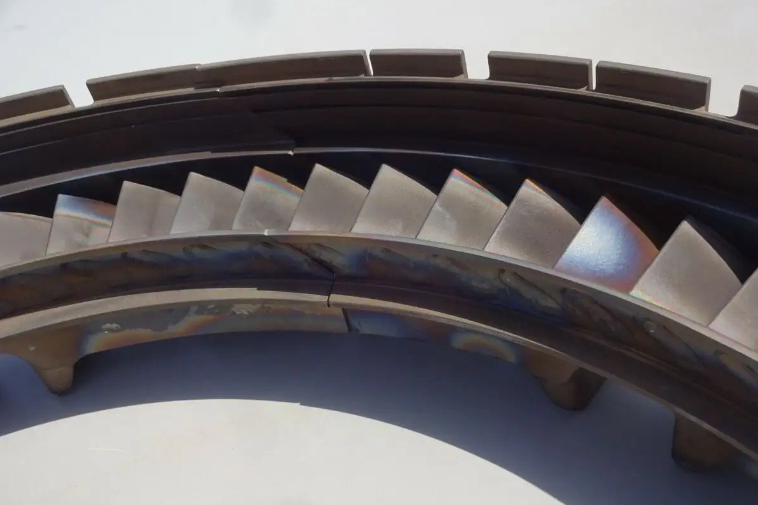
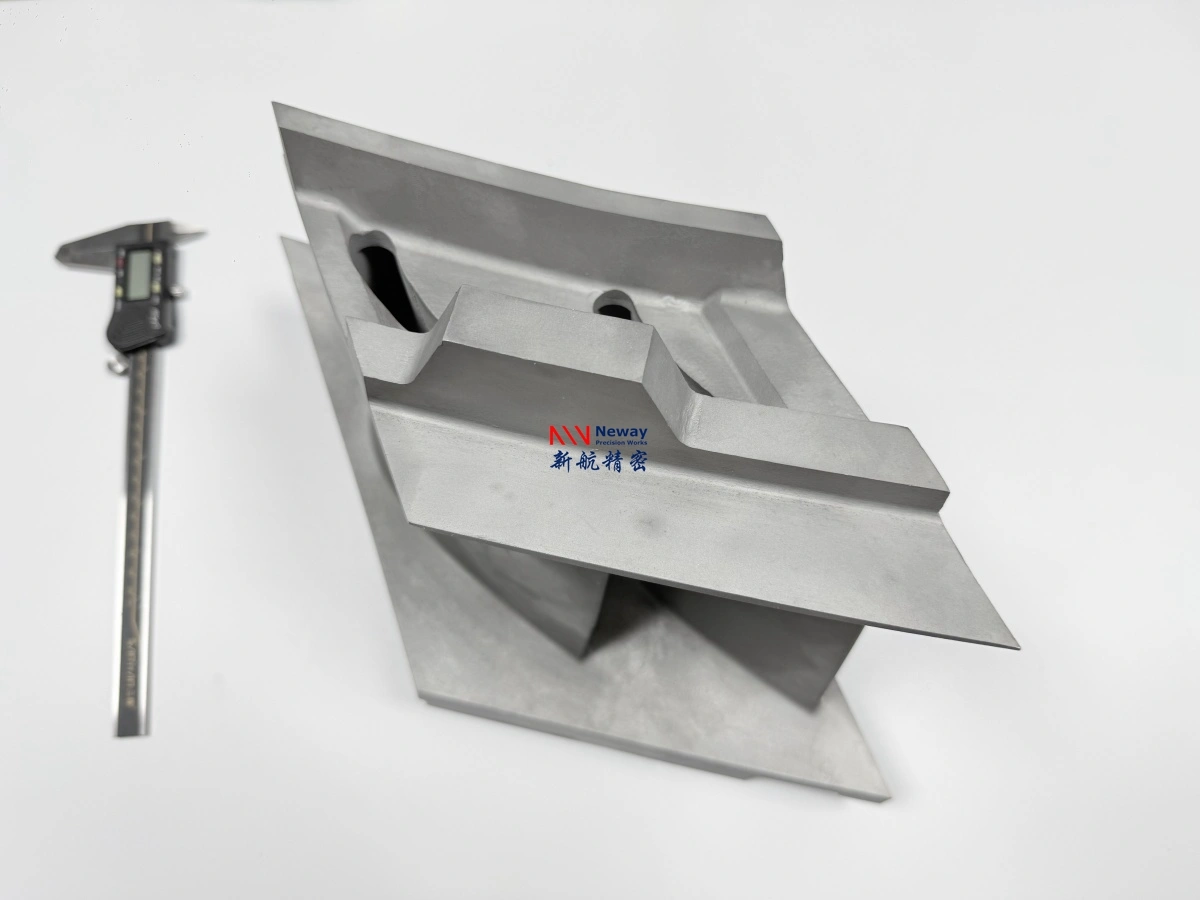
Inconel 738LC is used for SGT5-4000F metallic heat shield tiles because it is a nickel-based superalloy designed for high-temperature static hot-section components. Compared with ordinary stainless steel or general-purpose nickel alloys, IN738LC offers better high-temperature strength, oxidation resistance, creep resistance, and thermal fatigue performance in gas turbine environments.
For metallic heat shields, also called MHS tiles or metallic tiles, the material must withstand hot combustion gas, repeated thermal cycling, oxidation, coating-related thermal gradients, and dimensional stress. This is why high-temperature Superalloys and Inconel alloy casting routes are commonly considered for SGT5-4000F heat shield replacement and manufacturing projects.


1. Direct Answer: Why Is Inconel 738LC Used for MHS Tiles?
Inconel 738LC is used for SGT5-4000F metallic heat shield tiles because MHS components are static hot-section parts that require high-temperature stability, oxidation resistance, creep resistance, and thermal fatigue resistance. IN738LC is more suitable than ordinary stainless steel for this environment because stainless steel cannot provide the same long-term strength and oxidation resistance under severe gas turbine hot-section conditions.
Requirement for MHS Tiles | Why It Matters | How IN738LC Helps |
|---|---|---|
High-temperature strength | MHS tiles are exposed to hot gas and strong temperature gradients. | Maintains better strength than ordinary stainless steel at elevated temperatures. |
Oxidation resistance | Hot combustion gas can rapidly degrade unsuitable alloys. | Provides improved resistance to oxidation in turbine hot-section environments. |
Creep resistance | Long operating hours can cause permanent deformation under heat and stress. | Supports dimensional stability during high-temperature service. |
Thermal fatigue resistance | Start-stop cycles create repeated heating and cooling stress. | Helps reduce crack initiation caused by cyclic thermal loading. |
Casting suitability | MHS tiles often have complex curved surfaces, ribs, holes, and local features. | Can be manufactured through controlled superalloy casting routes. |
2. Why Does an MHS Tile Need IN738LC?
An MHS tile needs IN738LC because the component is installed in a hot-section area where it must protect surrounding turbine structures from high-temperature gas exposure. The tile is not only a simple cover plate. It must resist heat, oxidation, thermal fatigue, coating-related stress, and dimensional movement while maintaining fit with adjacent tiles and mounting features.
In SGT5-4000F applications, metallic heat shields may experience repeated start-stop cycles, part-load operation, full-load operation, and overhaul intervals. A lower-grade material may deform, oxidize, crack, or lose dimensional fit more quickly, creating leakage gaps, local hot spots, and increased maintenance risk.
3. Inconel 738LC vs Inconel 718 for Metallic Heat Shields
Inconel 718 is widely used because it offers strong mechanical properties, good processability, and good machining performance compared with many harder-to-process superalloys. However, for long-term static hot-section protection parts such as SGT5-4000F metallic heat shield tiles, the design focus is often high-temperature stability, oxidation resistance, and creep resistance rather than only room-temperature or medium-temperature strength.
Comparison Item | Inconel 738LC | Inconel 718 |
|---|---|---|
Typical role | Cast hot-section static parts, turbine protection components, high-temperature gas path hardware. | Structural parts, fasteners, aerospace components, machined high-strength parts. |
Hot-section suitability | Strong candidate for high-temperature static turbine components. | Useful in many demanding applications, but not always the first choice for higher-temperature static heat shield duty. |
Manufacturing focus | Vacuum casting, casting defect control, heat treatment, coating compatibility, and dimensional stability. | Machining, forging, additive manufacturing, heat treatment, and structural performance. |
Why choose it for MHS | Better aligned with high-temperature thermal protection and static hot-section service. | Better aligned with general high-strength structural applications where extreme hot gas exposure is less dominant. |
4. Inconel 738LC vs Inconel 625 for MHS Tiles
Inconel 625 is known for corrosion resistance, weldability, and broad industrial use. However, metallic heat shields in gas turbines are usually evaluated more by high-temperature strength, oxidation behavior, creep resistance, and thermal fatigue performance than by general corrosion resistance alone. For SGT5-4000F MHS tiles, IN738LC is often more aligned with the hot-section performance requirements.
Comparison Item | Inconel 738LC | Inconel 625 |
|---|---|---|
Main strength | High-temperature turbine hot-section performance. | Corrosion resistance and general nickel alloy versatility. |
MHS relevance | Suitable for static hot gas path protection parts. | May be suitable for some corrosive environments, but not always optimized for severe turbine hot-section creep and thermal fatigue demands. |
Service focus | Oxidation, thermal fatigue, high-temperature strength, and dimensional stability. | Corrosion, weldability, and moderate-to-high temperature industrial service. |
Buyer decision point | Preferred when original heat shield design specifies IN738LC or similar cast superalloy. | Consider only if the original specification allows substitution and service conditions are reviewed. |
5. Inconel 738LC vs Rene and CMSX Alloys
Rene Alloys and CMSX Series alloys are also important nickel-based superalloys for gas turbine hot-section components. They are often associated with higher-performance blade, vane, and single-crystal applications where creep strength, thermal efficiency, and directional or single-crystal properties may be critical.
For metallic heat shield tiles, the engineering requirement is different from rotating turbine blades or single-crystal airfoils. MHS tiles are usually static protective components where casting repeatability, thermal fatigue resistance, oxidation resistance, coating compatibility, repairability, and cost-performance balance are important. Therefore, IN738LC can be a practical material choice when the application does not require the more specialized performance level of single-crystal CMSX-type alloys.
Alloy Family | Typical Application Direction | How It Compares with IN738LC for MHS Tiles |
|---|---|---|
IN738LC | Cast static hot-section components and turbine protection parts. | Balanced choice for high-temperature MHS tiles requiring castability, oxidation resistance, and cost-performance balance. |
Rene alloys | High-performance turbine blades, vanes, and hot-section components. | May be selected for more demanding turbine hardware, but material choice depends on original design specification. |
CMSX alloys | Single-crystal turbine blades and high-performance airfoil applications. | Often used where single-crystal performance is required; may exceed typical MHS tile requirements. |
Nimonic alloys | Nickel-based high-temperature components, springs, rings, and turbine-related parts. | Useful nickel alloy family for comparison, but final selection depends on temperature, stress, oxidation, and original drawing requirements. |
Nimonic alloy materials can also be considered within the wider nickel-based superalloy family. However, direct substitution should not be made without reviewing the original material specification, service temperature, stress condition, coating system, and customer approval requirements.
6. Why Is IN738LC Suitable for Casting Metallic Heat Shield Tiles?
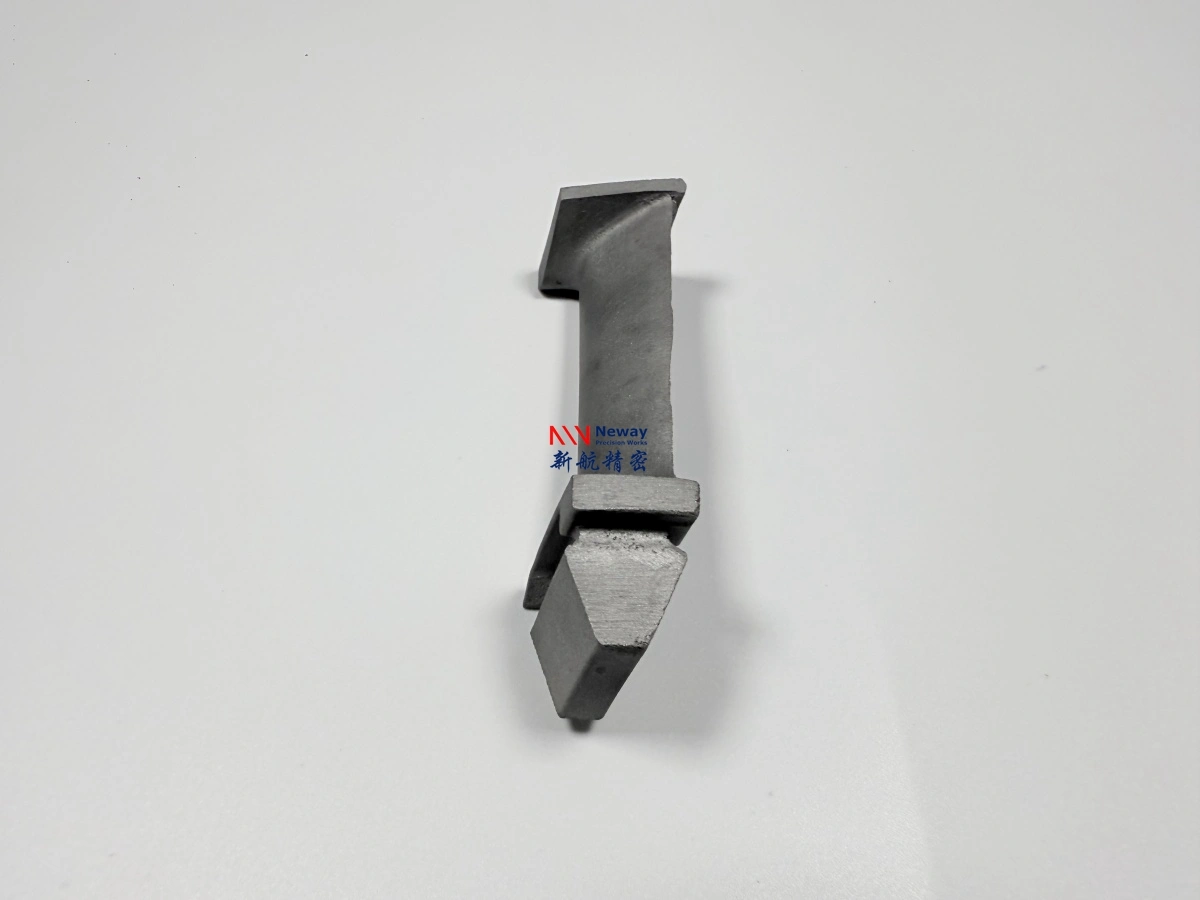
IN738LC is suitable for metallic heat shield tile manufacturing because MHS parts often include curved surfaces, thin sections, ribs, mounting features, sealing edges, and local details that are difficult to produce economically from wrought stock. Controlled casting can form the near-net heat shield body, while CNC machining and EDM can finish the critical installation and functional areas.
For custom IN738LC heat shield manufacturing, Special Alloy Casting supports the production of high-temperature alloy components with complex geometry. For static hot-section parts like MHS tiles, Equiaxed Crystal Casting can be considered when the design requires cast superalloy performance without directional or single-crystal requirements.
Casting Requirement | Why It Matters for MHS Tiles | Process Control Focus |
|---|---|---|
Near-net shape geometry | Reduces machining burden for complex curved heat shield surfaces. | Wax pattern accuracy, mold control, and shrinkage compensation. |
Wall thickness control | Affects thermal response, weight, distortion, and service durability. | Casting simulation, tooling correction, and dimensional inspection. |
Defect control | Porosity, shrinkage, and cracks can reduce hot-section reliability. | Vacuum casting control, X-ray/CT review where required, and process validation. |
Machining allowance | Critical holes, edges, and mounting surfaces usually need final machining. | Datum planning, fixture design, and machining allowance strategy. |
Repeatability | Replacement MHS tiles must fit consistently across maintenance batches. | Tooling feedback, first article inspection, and batch dimensional control. |
7. How Does TBC Improve IN738LC Heat Shield Performance?
Thermal barrier coating can improve IN738LC metallic heat shield performance by reducing the heat transferred into the metallic substrate. While IN738LC provides the high-temperature metallic strength and oxidation resistance, TBC helps lower the thermal load during hot gas exposure. This combination is especially useful for gas turbine MHS tiles exposed to repeated thermal cycles and severe combustion environments.
However, TBC is not only a surface layer added at the end. Coating performance depends on casting quality, surface preparation, roughness control, cleanliness, masking, coating thickness, and thermal-cycle compatibility. If the substrate has casting defects, poor dimensional stability, or incorrect surface condition, the coating may delaminate, crack, or spall earlier during service.
TBC-Related Factor | Why It Matters | Manufacturing Control |
|---|---|---|
Substrate quality | Defects or cracks in the base IN738LC can reduce coating reliability. | Casting defect control and inspection before coating. |
Surface preparation | Coating adhesion depends on clean and controlled surface condition. | Roughness, blasting, cleaning, and masking control. |
Dimensional allowance | Coating thickness can affect fit, edges, holes, and clearances. | Machining allowance and coating thickness planning. |
Thermal-cycle compatibility | Mismatch between coating and substrate can cause spallation. | Material-process-coating review before production. |
Final inspection | Coating defects can create local hot spots in service. | Visual inspection, thickness review, adhesion-related quality checks, and documentation. |
8. Why Not Use Ordinary Stainless Steel for MHS Tiles?
Ordinary stainless steel is not usually suitable for SGT5-4000F metallic heat shield tiles because the turbine hot-section environment is far more severe than typical industrial heat exposure. Stainless steel may offer useful corrosion resistance in many applications, but it generally cannot match IN738LC in high-temperature strength, creep resistance, oxidation resistance, and thermal fatigue performance under gas turbine hot gas path conditions.
Using an unsuitable lower-grade alloy may reduce part cost at the quotation stage, but it can increase service risk through distortion, cracking, oxidation, coating failure, or early replacement. For turbine MHS applications, material substitution should only be considered after reviewing operating temperature, original drawing requirements, coating system, inspection standard, and customer approval process.
9. What RFQ Details Are Needed for IN738LC Metallic Heat Shields?
For custom Inconel 738LC heat shield manufacturing, buyers should provide the turbine model, part number, drawings, 3D CAD or scan data, material specification, service temperature, coating requirement, inspection standard, and quantity. If the part is a replacement for an SGT5-4000F MHS tile, old part photos and damaged-part analysis can also help evaluate casting feasibility and reverse-engineering requirements.
RFQ Information | Recommended Input | Why It Matters |
|---|---|---|
Material standard | IN738LC specification, customer material standard, or approved equivalent requirement. | Confirms alloy chemistry, process route, and documentation needs. |
Service temperature | Maximum temperature, continuous temperature, and thermal-cycle condition. | Helps evaluate material, heat treatment, and coating suitability. |
Coating requirement | TBC, bond coat, oxidation-resistant coating, coating-free condition, or coating preparation only. | Affects surface roughness, masking, machining allowance, and final dimensions. |
Geometry data | 2D drawing, STEP file, X_T file, 3D scan, or old sample. | Defines casting tooling, shrinkage allowance, machining strategy, and inspection baseline. |
Inspection standard | Dimensional report, FPI, X-ray, CT, material report, FAI, or COC. | Determines quality-control cost, lead time, and documentation level. |
Quantity and project stage | Prototype, first article, maintenance batch, or repeat replacement demand. | Supports tooling strategy, process validation, and unit-cost planning. |
10. Summary
Inconel 738LC is used for SGT5-4000F metallic heat shield tiles because it provides the high-temperature strength, oxidation resistance, creep resistance, and thermal fatigue performance needed for static gas turbine hot-section protection parts. Compared with Inconel 718 and Inconel 625, IN738LC is more closely aligned with cast hot-section MHS applications where long-term thermal stability and oxidation resistance are critical.
For custom Inconel 738LC heat shield manufacturing, the material choice must be evaluated together with casting suitability, equiaxed crystal casting feasibility, machining allowance, TBC compatibility, inspection requirements, and final service conditions. Buyers should provide the material standard, operating temperature, coating requirement, drawings, old part data, and inspection scope so the supplier can define a reliable manufacturing route for SGT5-4000F metallic heat shield tiles.