What Is the Function of Metallic Heat Shields in SGT5-4000F Gas Turbines?
What Is the Function of Metallic Heat Shields in SGT5-4000F Gas Turbines?
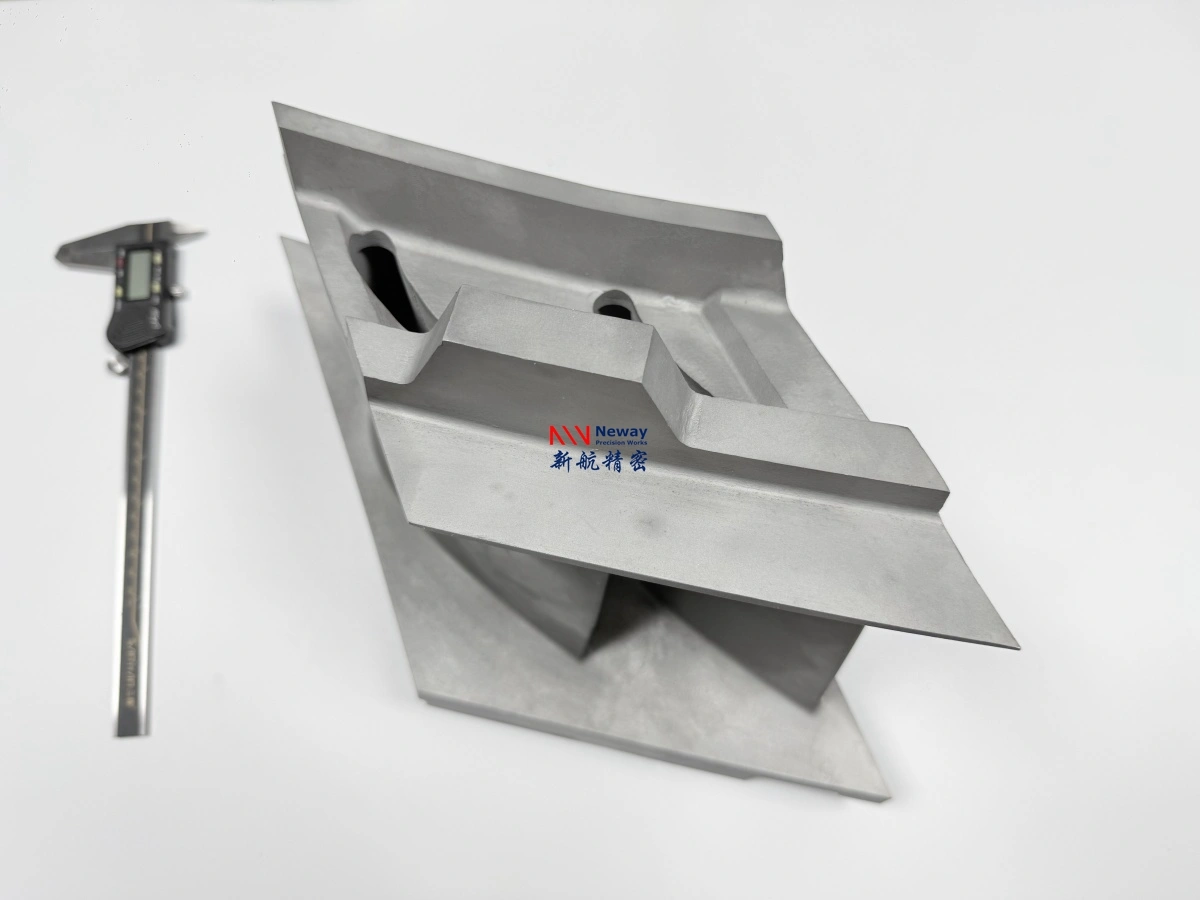
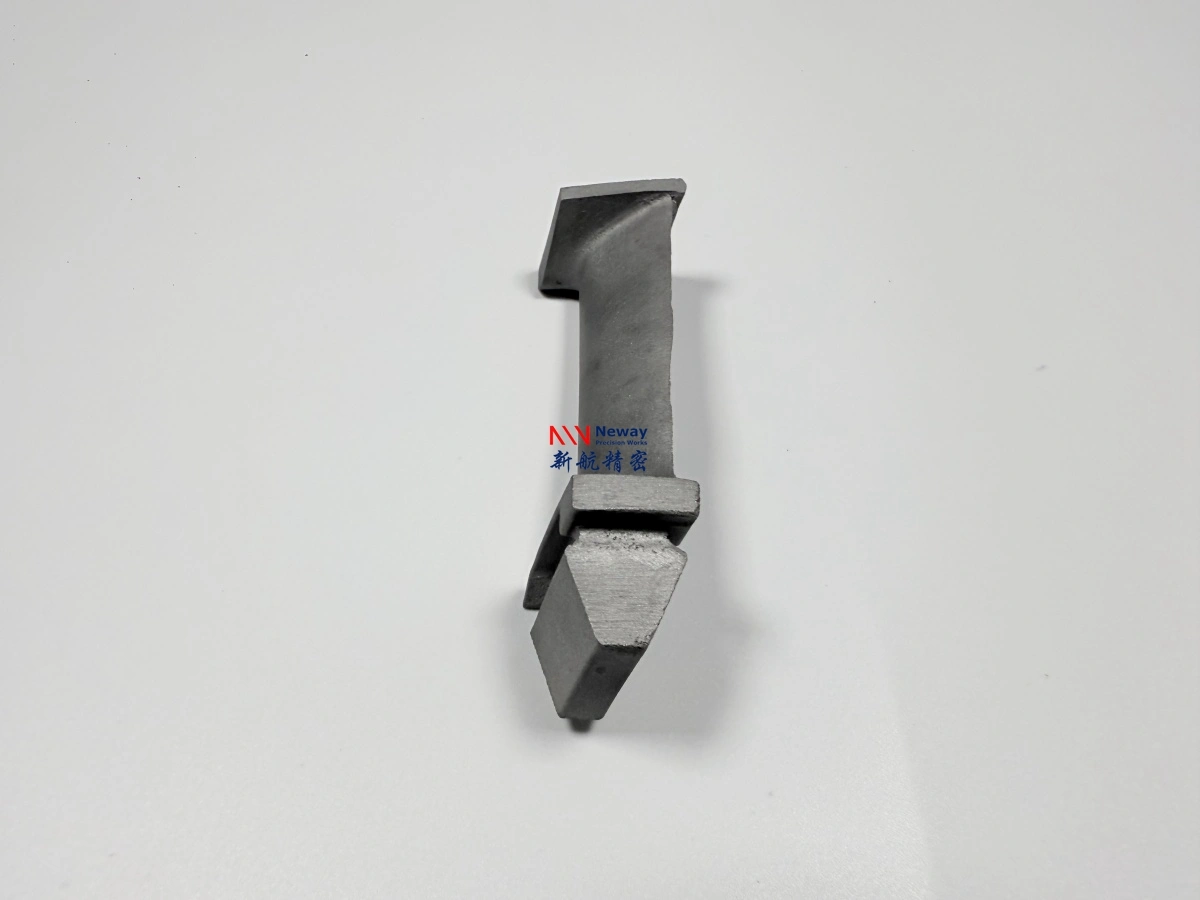
Metallic heat shields in SGT5-4000F gas turbines protect hot-section structures from direct high-temperature gas exposure, thermal shock, oxidation, and repeated thermal cycling. These components, often called MHS tiles or metallic tiles, act as replaceable protective barriers between the combustion gas path and the surrounding turbine hardware.
Because SGT5-4000F metallic tiles operate in severe thermal environments, they are commonly manufactured from high-temperature Superalloys such as Inconel alloy. Their final performance depends not only on material selection, but also on casting quality, machining accuracy, EDM features, heat treatment, coating preparation, and inspection control.


1. Direct Answer: What Do Metallic Heat Shields Do?
Metallic heat shields protect gas turbine hot-section structures by isolating high-temperature combustion gas, reducing heat transfer to the base structure, controlling local thermal load, and supporting safe operation during start-stop cycles. In SGT5-4000F gas turbines, MHS tiles help protect the combustor-side and hot gas path areas where thermal load, oxidation, and cyclic stress are severe.
Function | What It Means | Why It Matters in SGT5-4000F Turbines |
|---|---|---|
Thermal protection | Blocks direct hot gas exposure to surrounding structures. | Reduces overheating, distortion, and thermal damage. |
Oxidation resistance | Uses high-temperature alloy and coating systems to resist hot gas attack. | Improves durability in combustion environments. |
Thermal fatigue control | Withstands repeated heating and cooling during turbine operation. | Reduces cracking risk during start-stop and load-change cycles. |
Replaceable protection | Works as a serviceable hot-section component. | Allows damaged tiles to be replaced during maintenance instead of replacing larger structures. |
Dimensional interface | Maintains fit with adjacent tiles, mounting holes, sealing edges, and support features. | Prevents leakage paths, vibration issues, and local hot spots. |
2. How Do Metallic Heat Shields Provide Thermal Protection?
Metallic heat shields provide thermal protection by standing between the hot combustion gas stream and the turbine structure behind them. Instead of allowing high-temperature gas to directly attack the combustor casing, transition area, or adjacent hot gas path structure, the MHS tile absorbs, reflects, and manages part of the thermal load.
In an F-class gas turbine, the heat shield must remain stable under high gas temperature, rapid thermal gradients, and repeated operating cycles. If the tile is too thin, poorly supported, incorrectly coated, or dimensionally unstable, local overheating may occur behind the tile. This can accelerate oxidation, distortion, crack initiation, and downstream maintenance risk.
3. Why Are IN738LC and TBC Important for MHS Tiles?
Inconel 738LC is often considered for gas turbine hot-section components because it provides high-temperature strength, oxidation resistance, and creep resistance. For metallic heat shields, the alloy must tolerate hot gas exposure, thermal cycling, and dimensional stress while maintaining structural integrity.
Thermal barrier coating can further reduce the temperature transferred into the metallic substrate. However, TBC performance depends on base material quality, surface preparation, coating adhesion, and thermal-cycle compatibility. For this reason, MHS tiles should be treated as a complete material-process-coating system rather than only a cast metal part.
Element | Main Role | Risk If Poorly Controlled |
|---|---|---|
IN738LC substrate | Provides high-temperature mechanical strength and oxidation resistance. | Cracking, creep deformation, oxidation, or reduced service life. |
Heat treatment | Stabilizes microstructure and supports high-temperature performance. | Unstable properties, residual stress, or premature thermal fatigue. |
TBC system | Reduces heat transfer into the metallic base material. | Coating spallation, hot spots, oxidation, and substrate overheating. |
Surface preparation | Improves coating interface and repeatability. | Poor adhesion, local delamination, or early coating failure. |
Inspection | Confirms material quality, defects, dimensions, and coating-related risks. | Uncontrolled defects entering service. |
4. Why Are Metallic Heat Shields Designed as Replaceable Parts?
Metallic heat shields are often designed as replaceable hot-section parts because they operate in areas with severe thermal, oxidation, and vibration exposure. During turbine operation, MHS tiles may gradually experience coating wear, oxidation, cracking, local distortion, or edge damage. Making them replaceable helps simplify maintenance and protect more expensive surrounding turbine structures.
In maintenance and overhaul programs, damaged tiles can be removed, inspected, replaced, or reverse engineered. This makes MHS components important for lifecycle management, especially when the original part is costly, has long lead time, or is difficult to source from the original supply chain.
5. What Dimensional Role Do MHS Tiles Play?
Metallic heat shields are not only thermal protection parts. They also have an important dimensional role. Each tile must fit correctly with adjacent tiles, mounting holes, sealing edges, support structures, cooling gaps, and local assembly features. Poor dimensional control can create leakage gaps, interference, vibration, or uneven thermal exposure.
For replacement SGT5-4000F metallic tiles, Superalloy CNC Machining is critical for controlling mounting surfaces, sealing faces, edge profiles, holes, slots, and datum features. Machining strategy should be planned together with casting shrinkage, deformation allowance, and final inspection requirements.
Dimensional Feature | Function | Manufacturing Control |
|---|---|---|
Mounting holes | Position the tile and support secure installation. | Hole location, diameter, depth, and edge condition. |
Sealing edges | Help control hot gas leakage between adjacent tiles. | Profile accuracy, flatness, and edge finish. |
Back-side support surfaces | Control contact with carrier or support structure. | Machined datum, contact area, and distortion control. |
Tile-to-tile gaps | Allow thermal expansion while preventing excessive hot gas leakage. | Dimensional tolerance and assembly clearance review. |
Slots or local features | Support attachment, cooling, stress relief, or installation requirements. | CNC machining, EDM, or feature-specific inspection. |
6. What Failure Modes Can Occur in Metallic Heat Shields?
Metallic heat shields can fail through cracking, warping, oxidation, coating delamination, local overheating, hole or slot blockage, edge wear, and thermal fatigue. These failure modes are often connected. For example, poor coating adhesion can create local hot spots, which can accelerate oxidation and thermal cracking in the metallic substrate.
Failure Mode | Possible Cause | Manufacturing or Inspection Response |
|---|---|---|
Cracking | Thermal fatigue, casting defects, residual stress, or local overheating. | Control casting quality, heat treatment, FPI, and thermal-cycle review. |
Warping or distortion | Uneven thermal load, thin-wall deformation, or casting shrinkage. | Tooling compensation, machining datum control, and dimensional inspection. |
TBC spallation | Poor surface preparation, thermal mismatch, or coating fatigue. | Surface preparation control and coating quality inspection. |
Oxidation | Hot gas exposure, coating damage, or unsuitable alloy condition. | Material selection, coating review, and oxidation-related inspection. |
Blocked holes or slots | Coating overspray, debris, oxidation product, or manufacturing residue. | EDM/CNC feature control, cleaning, and final visual inspection. |
Local overheating | Incorrect fit, leakage gap, missing coating, or damaged tile surface. | Assembly interface review, dimensional report, and coating inspection. |
7. How Do Heat Treatment and Material Testing Support Reliability?
Superalloy Heat Treatment helps control microstructure, relieve process-related stress, and support high-temperature performance in MHS components. For cast IN738LC heat shields, the correct thermal process can influence strength, stability, creep behavior, and resistance to thermal fatigue.
Superalloy Material Testing and Analysis is also important for failure analysis, old-part verification, and replacement-part validation. Chemical composition, microstructure, hardness, defect inspection, and surface condition review can help confirm whether the material and process route are suitable for hot-section service.
8. How Does Manufacturing Affect the Function of MHS Tiles?
The function of a metallic heat shield is directly affected by every manufacturing step. Material selection affects oxidation and creep resistance. Casting affects internal integrity and wall thickness. CNC machining affects fit and sealing. EDM affects small features, slots, and difficult-to-machine details. TBC affects thermal insulation and hot gas protection.
Manufacturing Step | Impact on MHS Function | Key Control Point |
|---|---|---|
Superalloy selection | Determines high-temperature strength, oxidation resistance, and thermal fatigue behavior. | Confirm IN738LC or approved equivalent material specification. |
Casting | Forms the heat shield body and controls wall thickness, geometry, and internal soundness. | Shrinkage, porosity, cracking, deformation, and repeatability. |
Heat treatment | Stabilizes material properties for high-temperature service. | Controlled temperature, holding time, cooling method, and documentation. |
CNC machining | Controls mounting features, sealing surfaces, and assembly interfaces. | Datum strategy, tolerance control, surface finish, and dimensional report. |
EDM | Produces holes, slots, or complex local features in hard superalloy material. | Feature accuracy, recast layer control, edge condition, and cleaning. |
TBC preparation | Supports coating adhesion and thermal insulation performance. | Surface roughness, masking, cleanliness, and coating interface quality. |
Final inspection | Confirms that the replacement tile meets dimensional and material requirements. | Dimensional inspection, defect inspection, material verification, and documentation. |
9. What Should Buyers Provide for an MHS Function Review?
For a functional review of SGT5-4000F metallic heat shields, buyers should provide the turbine model, part number, installation location, old part photos, drawings, 3D scan data, material requirement, coating condition, observed failure mode, and quantity. These details help the supplier evaluate whether the replacement part should focus on thermal protection, fit correction, coating recovery, reverse engineering, or complete remanufacturing.
Buyer Input | Recommended Details | Why It Helps |
|---|---|---|
Turbine model | SGT5-4000F or similar heavy-duty gas turbine model. | Clarifies service environment and component location. |
Part number or installation area | OEM reference, assembly position, or tile location. | Helps identify interface and function. |
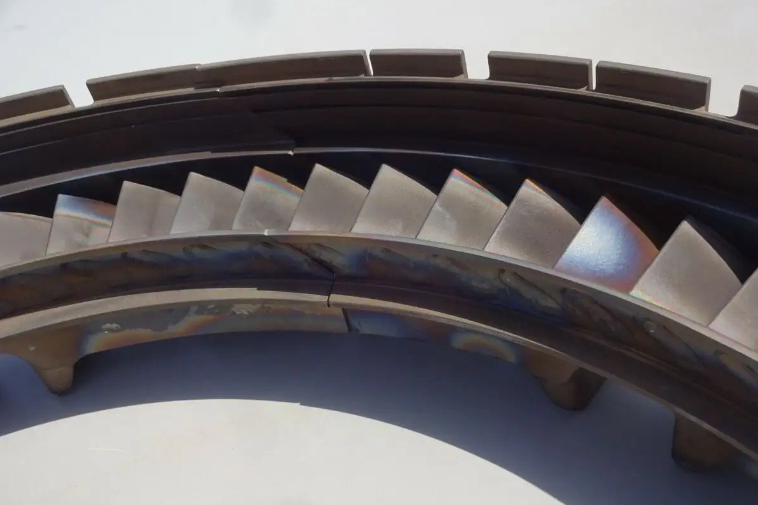
Old part photos | Front side, back side, edges, holes, coating, cracks, and worn areas. | Supports failure-mode and manufacturability review. |
Drawing or 3D scan | 2D drawing, STEP file, X_T file, STL scan, or blue-light scan data. | Defines geometry, tolerance, and reverse-engineering baseline. |
Material and coating requirement | IN738LC, equivalent superalloy, TBC requirement, or original specification. | Determines casting, heat treatment, coating, and testing route. |
Failure condition | Crack, oxidation, coating loss, warping, blocked slot, or overheating mark. | Helps identify whether the issue is material, coating, fit, or operation related. |
10. Summary
The main function of metallic heat shields in SGT5-4000F gas turbines is to protect hot-section structures from high-temperature gas, oxidation, thermal gradients, and thermal fatigue. MHS tiles also serve as replaceable life-management parts that help maintain turbine reliability during inspection and overhaul cycles.
For gas turbine metallic heat shield supply, the manufacturing process must control material selection, casting integrity, heat treatment, CNC machining, EDM features, TBC preparation, dimensional fit, and inspection documentation. A reliable MHS tile is not only a superalloy casting; it is a complete hot-section protection component designed to manage heat, fit, service life, and maintenance risk.