How Are SGT5-4000F Metallic Heat Shields Manufactured from Casting Blank to Finished Tile?
How Are SGT5-4000F Metallic Heat Shields Manufactured from Casting Blank to Finished Tile?
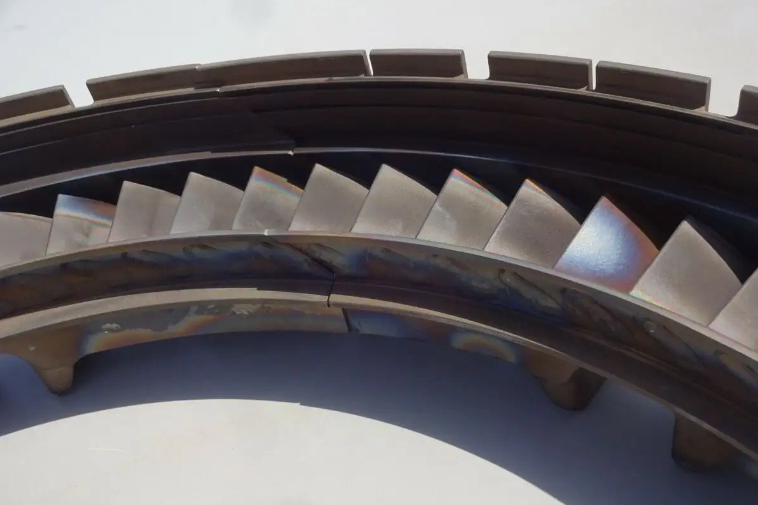
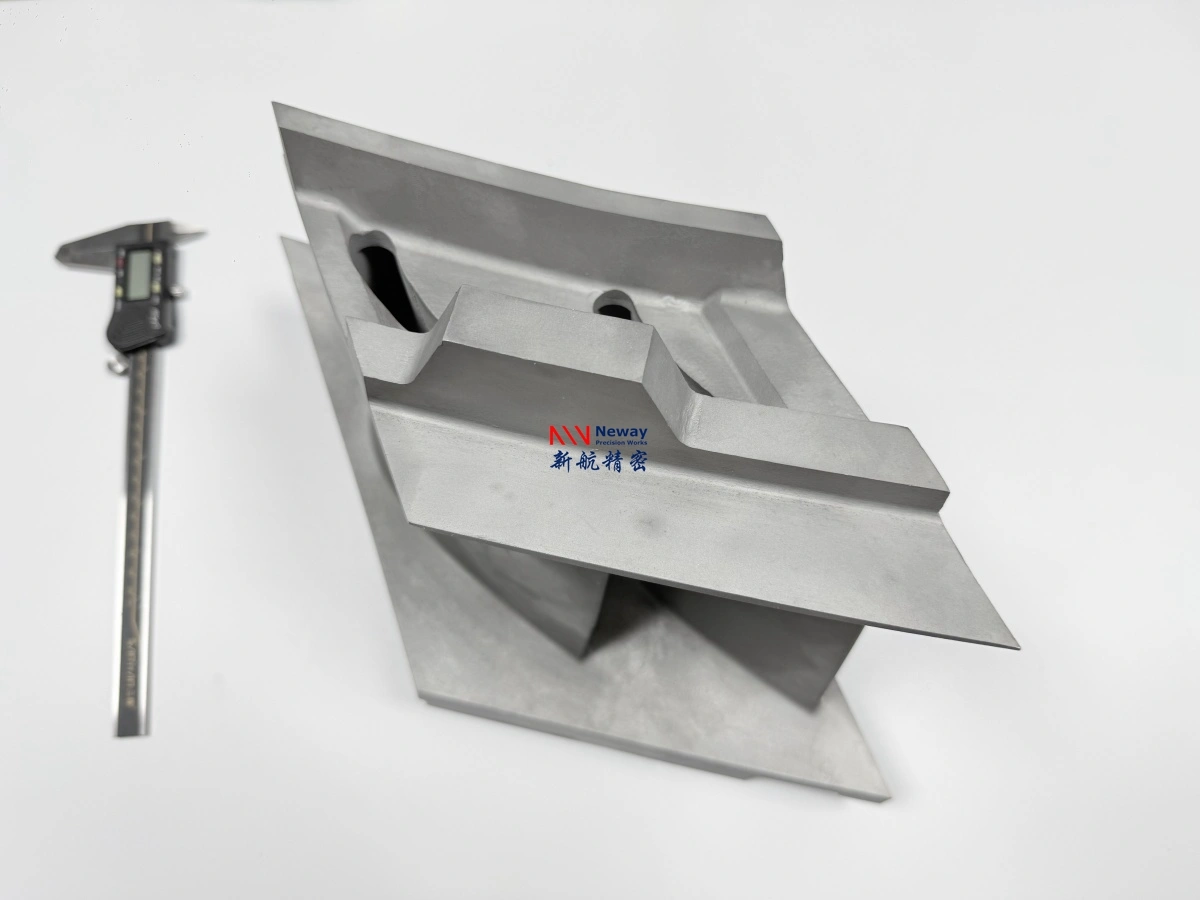
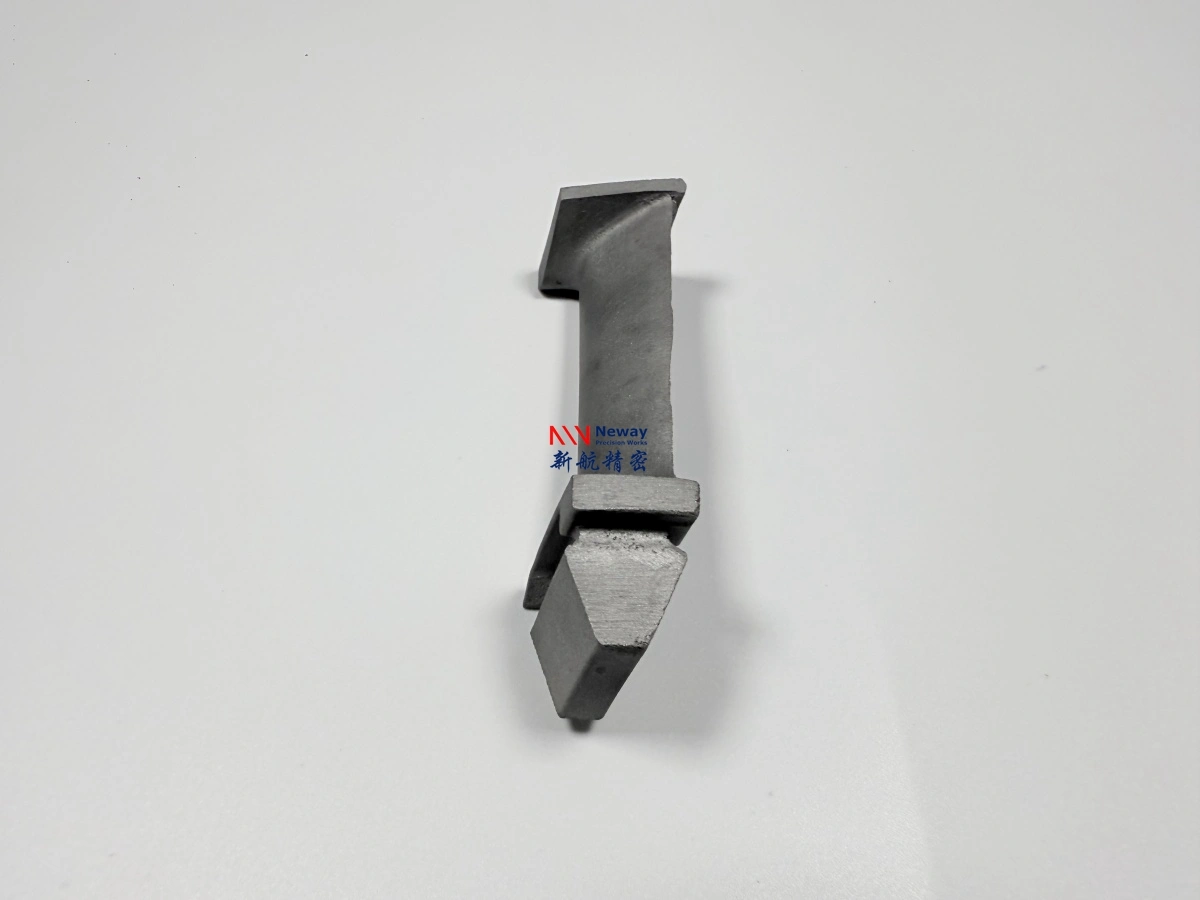
SGT5-4000F metallic heat shields are typically manufactured through a controlled route that includes superalloy casting blank production, heat treatment or stabilization, CNC machining, EDM, TBC coating, final inspection, and delivery documentation. Each step affects the final tile’s thermal protection function, dimensional fit, coating reliability, and service performance in the gas turbine hot section.
For SGT5-4000F MHS tiles made from nickel-based materials such as Inconel 738LC, the process should be treated as a complete hot-section manufacturing chain rather than a simple casting job. Material selection, casting quality, machining datum control, EDM feature accuracy, coating preparation, and inspection records must be planned together to support reliable turbine maintenance and replacement.


1. Direct Answer: How Are SGT5-4000F Metallic Heat Shields Manufactured?
SGT5-4000F metallic heat shields are manufactured by producing a near-net superalloy casting blank, stabilizing the material through heat treatment when required, machining critical installation and sealing features, using EDM for difficult slots or local details, applying TBC or coating preparation, and inspecting the finished tile before delivery.
Manufacturing Step | Main Purpose | Key Quality Focus |
|---|---|---|
Casting blank | Forms the main curved tile body, backside structures, ribs, and near-net geometry. | Shrinkage control, wall thickness, surface condition, porosity, cracks, and deformation. |
Heat treatment / stabilization | Adjusts microstructure, relieves process stress, or supports high-temperature performance. | Temperature control, holding time, cooling method, and batch traceability. |
CNC machining | Finishes mounting surfaces, sealing edges, datum areas, holes, and critical interfaces. | Datum alignment, tolerance control, surface finish, and repeatable fixture positioning. |
EDM | Produces narrow slots, hard-to-machine features, small holes, or complex local details. | Feature accuracy, recast layer control, edge quality, and residue removal. |
TBC coating | Provides a thermal barrier layer to reduce heat transfer into the metallic substrate. | Surface preparation, coating thickness, masking, adhesion, and coating uniformity. |
Final inspection | Verifies geometry, defects, coating quality, and functional features before delivery. | Dimensional report, FPI, X-ray/CT if required, coating review, and documentation. |
2. How Is the Casting Blank Produced?
The casting blank forms the main body of the SGT5-4000F metallic heat shield. It usually includes the hot-side curved surface, back-side support structures, local ribs, edge profiles, and near-net geometry that will later be finished by machining and coating preparation.
For Inconel 738LC or similar nickel-based Superalloys, casting blank quality is critical because defects or deformation at this stage can affect every downstream process. Inconel alloy casting must control shrinkage, porosity, cracking, wall thickness, and datum allowance before the part enters CNC machining.
Casting Blank Feature | Manufacturing Purpose | Control Requirement |
|---|---|---|
Hot-side curved surface | Forms the exposed thermal protection face of the MHS tile. | Smooth surface transition, controlled shape, and stable coating base. |
Back-side support structure | Interfaces with the carrier, casing, or mounting support. | Contact surface allowance, distortion control, and positional stability. |
Ribs and local reinforcement | Improves stiffness and supports thermal-mechanical durability. | Consistent fill, no shrinkage concentration, and controlled wall transition. |
Near-net edge profile | Reduces machining burden and preserves design geometry. | Tooling compensation, edge allowance, and deformation feedback. |
Machining allowance | Provides material for final CNC and EDM finishing. | Enough allowance for correction without excessive machining cost. |
Depending on the component geometry and specification, Special Alloy Casting and Equiaxed Crystal Casting may be used to produce static hot-section MHS tiles where near-net geometry, castability, and repeatability are important.
3. Why Is Heat Treatment or Stabilization Needed After Casting?
Heat treatment or stabilization may be required after casting to control the material microstructure, reduce residual stress, and support the high-temperature performance of the metallic heat shield. For IN738LC or similar superalloy MHS tiles, the thermal process should follow the material specification, customer standard, or engineering requirement for the turbine maintenance project.
Superalloy Heat Treatment can affect dimensional stability, thermal fatigue resistance, creep behavior, and coating compatibility. If heat treatment is poorly controlled, the finished tile may suffer from unstable mechanical properties, distortion, or reduced service reliability.
Heat Treatment Objective | Why It Matters for MHS Tiles | Process Control Focus |
|---|---|---|
Microstructure stabilization | Supports consistent high-temperature material behavior. | Controlled furnace temperature, time, atmosphere, and cooling method. |
Residual stress reduction | Helps reduce distortion and crack risk during machining or service. | Thermal cycle selection and dimensional check after treatment. |
Property adjustment | Supports strength, creep resistance, and thermal fatigue performance. | Material-specific treatment route and batch documentation. |
Coating preparation support | Improves substrate stability before TBC or oxidation-resistant coating. | Surface condition review and post-treatment inspection. |
4. When Is HIP Used for Metallic Heat Shield Tiles?
Hot Isostatic Pressing may be considered when the MHS tile requires improved internal density, reduced casting porosity, or higher reliability for critical hot-section service. HIP is not always required for every metallic heat shield project, but it can be valuable when the part has demanding inspection requirements, high service risk, or customer-specified internal defect limits.
Superalloy Hot Isostatic Pressing HIP can help improve the internal integrity of cast superalloy components. For SGT5-4000F MHS replacement programs, the decision to include HIP should be based on material grade, casting condition, defect acceptance criteria, cost target, and customer quality requirements.
HIP Decision Factor | When HIP May Be Useful | Buyer Input Needed |
|---|---|---|
Internal porosity risk | When casting geometry or inspection results show internal void concerns. | Defect acceptance standard and X-ray/CT requirement. |
Critical service condition | When the tile operates in a severe hot-section environment with high reliability demand. | Operating temperature, duty cycle, and service-life expectation. |
Customer specification | When the drawing, repair standard, or procurement requirement calls for HIP. | Applicable material and processing standard. |
Cost-performance balance | When added process cost is justified by quality or service-risk reduction. | Project stage, quantity, maintenance urgency, and inspection level. |
5. What Does CNC Machining Control on Finished MHS Tiles?
CNC machining controls the functional geometry of finished SGT5-4000F MHS tiles. While casting forms the main near-net body, CNC machining is required for installation surfaces, sealing edges, datum areas, hole locations, contact surfaces, and local features that require tighter dimensional accuracy than casting alone can provide.
Superalloy CNC Machining is especially important because IN738LC and similar high-temperature alloys are difficult to machine. Tool wear, fixture rigidity, datum selection, and machining sequence must be controlled to avoid dimensional drift, edge damage, vibration marks, or poor surface finish.
CNC-Machined Area | Function on MHS Tile | Quality Control Focus |
|---|---|---|
Mounting surfaces | Ensure correct contact with support or carrier structure. | Flatness, position, surface finish, and datum alignment. |
Sealing edges | Help control hot gas leakage between adjacent tiles. | Edge profile, clearance, burr control, and coating allowance. |
Hole locations | Support installation, fastening, or assembly positioning. | Diameter, position, depth, perpendicularity, and edge condition. |
Datum features | Define inspection and assembly reference points. | Stable setup from casting blank to final inspection. |
Back-side contact areas | Control support fit and thermal-mechanical load transfer. | Contact area, local thickness, and distortion after machining. |
6. Why Is EDM Used in Metallic Tile Manufacturing?
EDM is used in metallic tile manufacturing when the part includes narrow slots, small holes, sharp local features, difficult internal corners, or areas that are not practical for conventional cutting tools. For gas turbine MHS tiles made from hard nickel-based superalloys, EDM can help produce complex features without excessive cutting force.
Superalloy Electrical Discharge Machining EDM supports the machining of difficult features in high-temperature alloys. However, EDM must control recast layer, edge condition, dimensional accuracy, and cleaning after machining, especially when the feature will be exposed to hot gas or coating processes.
EDM Feature | Why EDM Is Used | Inspection Focus |
|---|---|---|
Narrow slots | Conventional tools may not fit or may create excessive tool pressure. | Slot width, length, edge quality, and burr-free condition. |
Small holes | Superalloy hardness and geometry may make drilling difficult. | Diameter, position, depth, and blockage check. |
Local sharp details | EDM can create tighter internal features than milling in some zones. | Corner condition, recast layer, and crack-free surface. |
Hard-to-reach edges | Complex MHS geometry may limit tool access. | Feature completeness and surface cleanliness. |
Coating-sensitive openings | Openings must remain clear after coating or surface treatment. | Pre-coating and post-coating hole or slot inspection. |
7. How Is TBC Coating Applied to Metallic Heat Shields?
TBC coating is applied to metallic heat shields to reduce heat transfer into the IN738LC or similar superalloy substrate. Before coating, the finished tile must have controlled surface condition, correct masking areas, clean holes and slots, and sufficient dimensional allowance for the final coating thickness.
For SGT5-4000F MHS tiles, TBC coating should be planned together with CNC machining and EDM. If coating thickness is not considered, the finished tile may have fit issues at sealing edges, installation surfaces, holes, slots, or adjacent tile gaps. If surface preparation is poor, the coating may delaminate or spall during thermal cycling.
TBC Process Concern | Why It Matters | Manufacturing Control |
|---|---|---|
Surface preparation | Coating adhesion depends on surface cleanliness and roughness. | Blasting, cleaning, roughness control, and contamination prevention. |
Masking | Some mounting areas, holes, or sealing features may need to remain uncoated. | Defined coating boundaries and masking inspection. |
Coating thickness | Thickness affects thermal protection and final fit. | Thickness specification, dimensional allowance, and post-coating check. |
Coating uniformity | Uneven coating can create local hot spots or interference. | Visual inspection and coating quality control. |
Hole and slot condition | Overspray or blockage can affect function and installation. | Pre-coating cleaning and post-coating opening inspection. |
8. What Inspection Is Needed Before Delivery?
Final inspection verifies whether the finished SGT5-4000F metallic heat shield meets geometry, material, defect, feature, and coating requirements. Depending on the customer standard, inspection may include dimensional measurement, visual inspection, FPI, X-ray, CT, material analysis, coating review, and hole or slot condition checks.
Superalloy Material Testing and Analysis can support old-part verification, alloy confirmation, microstructure review, failure analysis, and production validation. For replacement MHS tiles, inspection should focus not only on final shape, but also on casting soundness, crack risk, coating readiness, and installation reliability.
Inspection Item | What It Verifies | When It Is Important |
|---|---|---|
Dimensional inspection | Mounting surfaces, sealing edges, holes, slots, thickness, and overall profile. | Required for assembly fit and replacement part repeatability. |
Visual inspection | Surface damage, coating defects, edge condition, and obvious casting flaws. | Basic requirement for all finished MHS tiles. |
FPI | Surface-breaking cracks or discontinuities. | Useful for crack-sensitive superalloy hot-section parts. |
X-ray or CT | Internal porosity, shrinkage, cracks, and hidden defects. | Used when internal quality standards are specified. |
Material verification | Alloy chemistry, microstructure, or material condition. | Important for old-part replacement and IN738LC validation. |
Coating inspection | Coating coverage, thickness, adhesion-related defects, and blocked openings. | Required when TBC or coating preparation is included. |
9. What Delivery Documentation Can Be Planned?
Delivery documentation for SGT5-4000F metallic heat shield manufacturing can include first article inspection, dimensional reports, material reports, heat treatment records, HIP records, NDT reports, coating inspection records, and certificate of conformity. The required package should be confirmed during RFQ review because documentation affects cost, lead time, and production planning.
Document Type | What It Supports | Recommended Use |
|---|---|---|
FAI report | Confirms first article dimensions and process readiness. | Prototype, first batch, or new tooling validation. |
Material report | Confirms alloy chemistry and material traceability. | IN738LC or customer-specified superalloy projects. |
Heat treatment record | Documents thermal process parameters and batch history. | Projects requiring controlled microstructure or performance validation. |
HIP record | Confirms HIP cycle and batch traceability. | Critical cast parts with HIP requirements. |
NDT report | Documents FPI, X-ray, CT, or other defect inspection results. | Hot-section parts with crack or internal defect acceptance criteria. |
Coating inspection record | Confirms coating coverage, thickness, visual condition, and openings. | TBC-coated metallic heat shields. |
COC | Confirms conformity to agreed purchase and quality requirements. | Final shipment and customer quality-file retention. |
10. What Should Buyers Provide for a Manufacturing RFQ?
For custom gas turbine heat shield manufacturing, buyers should provide the turbine model, part number, drawings, 3D CAD files, old part samples or photos, material specification, heat treatment requirement, HIP requirement, coating requirement, inspection standard, quantity, and target delivery schedule. If only old tiles are available, 3D scanning and material analysis can help build a manufacturing baseline.
RFQ Information | Recommended Input | Why It Matters |
|---|---|---|
Turbine model and part reference | SGT5-4000F, part number, installation location, or assembly reference. | Helps identify service environment and interface requirements. |
Geometry data | 2D drawing, STEP, X_T, STL scan, blue-light scan, or old sample. | Defines casting tooling, machining allowance, and inspection baseline. |
Material requirement | IN738LC, customer material standard, or approved equivalent alloy. | Determines casting, heat treatment, testing, and documentation route. |
Post-processing requirement | Heat treatment, HIP, CNC machining, EDM, TBC, cleaning, or coating preparation. | Allows full process planning from casting blank to finished tile. |
Inspection requirement | Dimensional report, FAI, FPI, X-ray, CT, material report, coating report, or COC. | Defines quality-control scope, cost, and lead time. |
Quantity and schedule | Prototype quantity, first article quantity, maintenance batch, annual demand, and deadline. | Supports tooling strategy, production planning, and delivery commitment. |
11. Summary
SGT5-4000F metallic heat shields are manufactured through a multi-step process that typically includes superalloy casting blank production, heat treatment or stabilization, optional HIP, CNC machining, EDM, TBC coating, inspection, and delivery documentation. Each step influences the tile’s thermal protection function, dimensional fit, coating reliability, and hot-section service performance.
For custom gas turbine heat shield manufacturing, the supplier should control the full route from casting blank to finished MHS tile. A reliable manufacturing plan should cover Inconel alloy selection, superalloy casting, equiaxed crystal casting feasibility, CNC datum strategy, EDM feature control, heat treatment, HIP decision, TBC coating preparation, final inspection, and complete documentation for maintenance or replacement projects.