
Турбинный диск из жаропрочного суперсплава, изготовленный методом порошковой металлургии
Введение
Порошковая металлургия (ПМ) — это самый передовой производственный путь для создания турбинных дисков из жаропрочных суперсплавов с исключительной усталостной долговечностью, сопротивлением ползучести и механической стабильностью. В Neway AeroTech мы специализируемся на изготовлении ПМ турбинных дисков из сплавов, таких как Rene 95, Udimet 720 и FGH97, — разработанных для работы в газовых турбинах при температуре свыше 700°C и частотах вращения более 12 000 об/мин. Эти компоненты имеют критическое значение для применения в аэрокосмической отрасли, энергетике и военных силовых установках.
Благодаря консолидации мелкодисперсных порошков сплава и применению точной ковки и термообработки, наши турбинные диски обеспечивают непревзойденный контроль микроструктуры, точность размеров и механическую надежность.
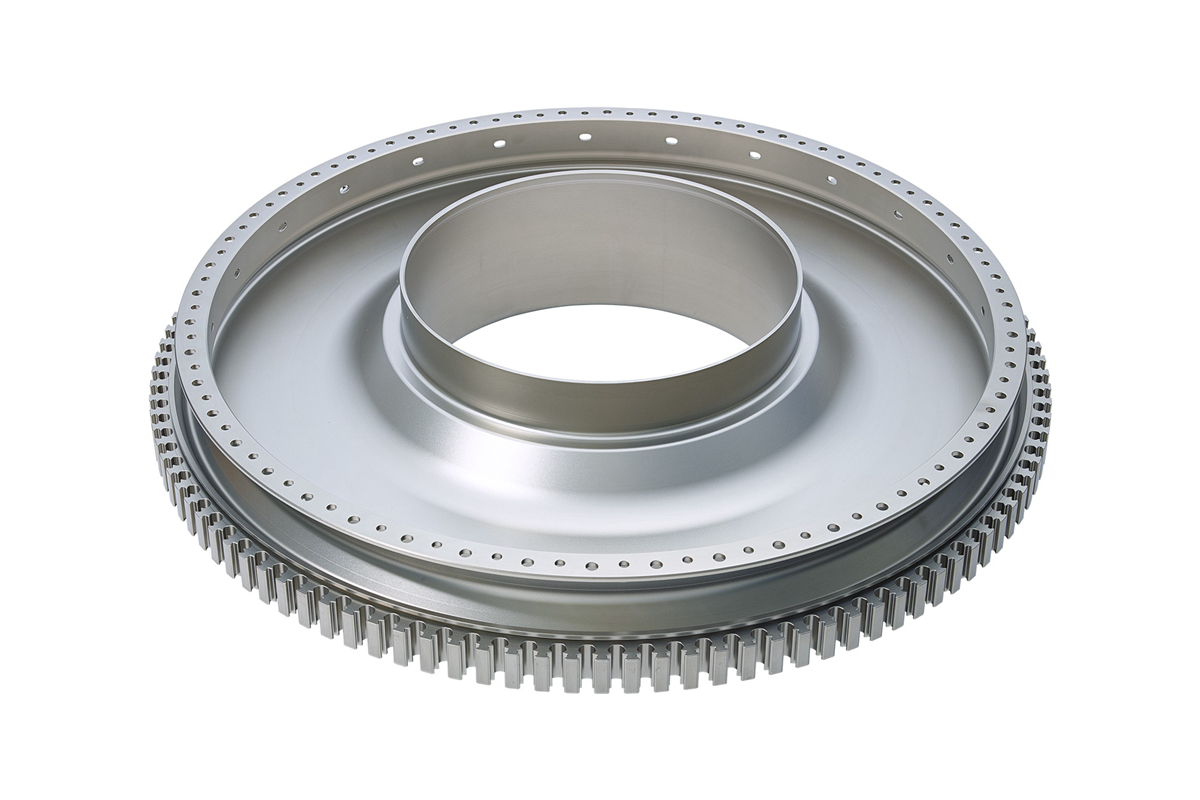
Основная технология ПМ турбинных дисков из суперсплавов
Атомизация порошка: Мелкие сферические порошки сплава (10–100 мкм), полученные методом газовой атомизации, с отличной химической однородностью и низким содержанием кислорода.
Горячее изостатическое прессование (ГИП): Порошки консолидируются под давлением 100–200 МПа и при температуре 1150–1200°C в печи ГИП, достигая плотности >99,9% с пористостью <0,1%.
Изотермическая ковка (опционально): Ковка при ~1100°C выравнивает зерна и улучшает микроструктуру для оптимальной усталостной прочности и сопротивления ползучести.
Растворение и старение: Послековочная термообработка стабилизирует γ/γ′ фазы, достигая предела прочности на растяжение до 1500 МПа.
Прецизионная обработка на станках с ЧПУ: Многоосевая обработка на станках с ЧПУ обеспечивает допуски размеров ±0,01 мм на всех несущих и аэродинамических поверхностях.
Опциональные покрытия: Поверхности могут быть обработаны или покрыты слоями, устойчивыми к окислению и термической усталости, в соответствии со спецификацией заказчика.
Материальные характеристики ПМ суперсплавов для турбинных дисков
Сплав | Предел прочности (МПа) @ 700°C | Сопротивление ползучести | Усталостная долговечность | Типичное применение |
|---|---|---|---|---|
Rene 95 | 1450 | Отличное | Высокоресурсное | Диск турбины высокого давления реактивного двигателя |
Udimet 720 | 1420 | Превосходное | Длительноресурсное | Роторы военных двигателей |
FGH97 | 1500 | Исключительное | >30 000 циклов | Ступени энергетических и авиационных турбин |
Пример из практики: Порошковометаллургический диск из Rene 95 для ступени турбины высокого давления
Предпосылки проекта
Ведущий производитель авиационных двигателей (OEM) требовал жаропрочные турбинные диски для своей ступени турбины высокого давления (ТВД). Технические условия включали длительную работу при 700–750°C, усталостную долговечность свыше 25 000 циклов и допуск размеров менее ±0,01 мм. Rene 95, изготовленный методом порошковой металлургии, был выбран благодаря своей усталостной прочности и микроструктурной стабильности.
Типичные области применения ПМ турбинных дисков
Диск турбины высокого давления GE CF6 (Rene 95): Используется в двигателях широкофюзеляжных самолетов, выдерживая высокоскоростное вращение и повторяющиеся термические циклы в течение более 25 000 летных циклов.
Промежуточный турбинный диск PW4000 (Udimet 720): Обеспечивает долгосрочную надежность по ползучести и усталости в среднеступенчатых авиационных турбинных узлах.
Компрессорно-турбинный диск GE9X (FGH97): Разработан для двигателей со сверхвысокой степенью двухконтурности с максимальными требованиями к механическим и термическим нагрузкам.
Диск промышленной газовой турбины Siemens (FGH97): Обеспечивает длительную базовую выработку электроэнергии с низкой деформацией ползучести при >700°C.
Производственное решение
Выбор и просеивание порошка: Порошок Rene 95 просеивается для оптимального распределения частиц по размерам и контроля химического состава.
Консолидация ГИП: Уплотнение при 1200°C/150 МПа для полной консолидации с остаточной пористостью <0,1%.
Изотермическая ковка: Ковка при ~1100°C для равномерного течения зерна, минимизации концентрации напряжений и повышения сопротивления усталости.
Термообработка: Отжиг на твердый раствор при 1150°C с последующим двухстадийным старением при 760–870°C создает мелкодисперсное распределение γ′ фазы.
Обработка на станках с ЧПУ: Отверстие ступицы, торцы и пазы «ласточкин хвост» турбинного диска обрабатываются с допуском ±0,01 мм с использованием современных 5-осевых систем ЧПУ.
Обеспечение качества: Внутренняя целостность подтверждена рентгеновским контролем; точность размеров проверена с помощью КИМ.
Результаты и валидация
Механическая прочность: Конечный предел прочности на растяжение превысил 1450 МПа; предел текучести превысил 1000 МПа при 700°C.
Усталостные характеристики: Испытания на мало- и многоцикловую усталость выдержали 30 000 циклов при имитации профилей нагрузки двигателя.
Сопротивление ползучести: 1000-часовое испытание на ползучесть при 750°C показало деформацию менее 0,5%, что превышает спецификации аэрокосмических турбин.
Допуски размеров: Все критические размеры подтверждены в пределах ±0,01 мм с использованием многоточечной проверки на КИМ.
Качество микроструктуры: СЭМ и металлография показали равномерное распределение γ′ фазы и отсутствие пор или трещин.
Часто задаваемые вопросы
Почему порошковая металлургия предпочтительна для изготовления турбинных дисков в высокотемпературных двигателях?
Как Rene 95 сравнивается с другими суперсплавами по усталостным характеристикам и сопротивлению ползучести?
Какие допуски может обеспечить Neway AeroTech на обработанных турбинных дисках?
Подходят ли порошковометаллургические диски как для авиационных, так и для промышленных турбинных применений?
Какие неразрушающие методы контроля используются в Neway AeroTech для проверки качества ПМ дисков?
