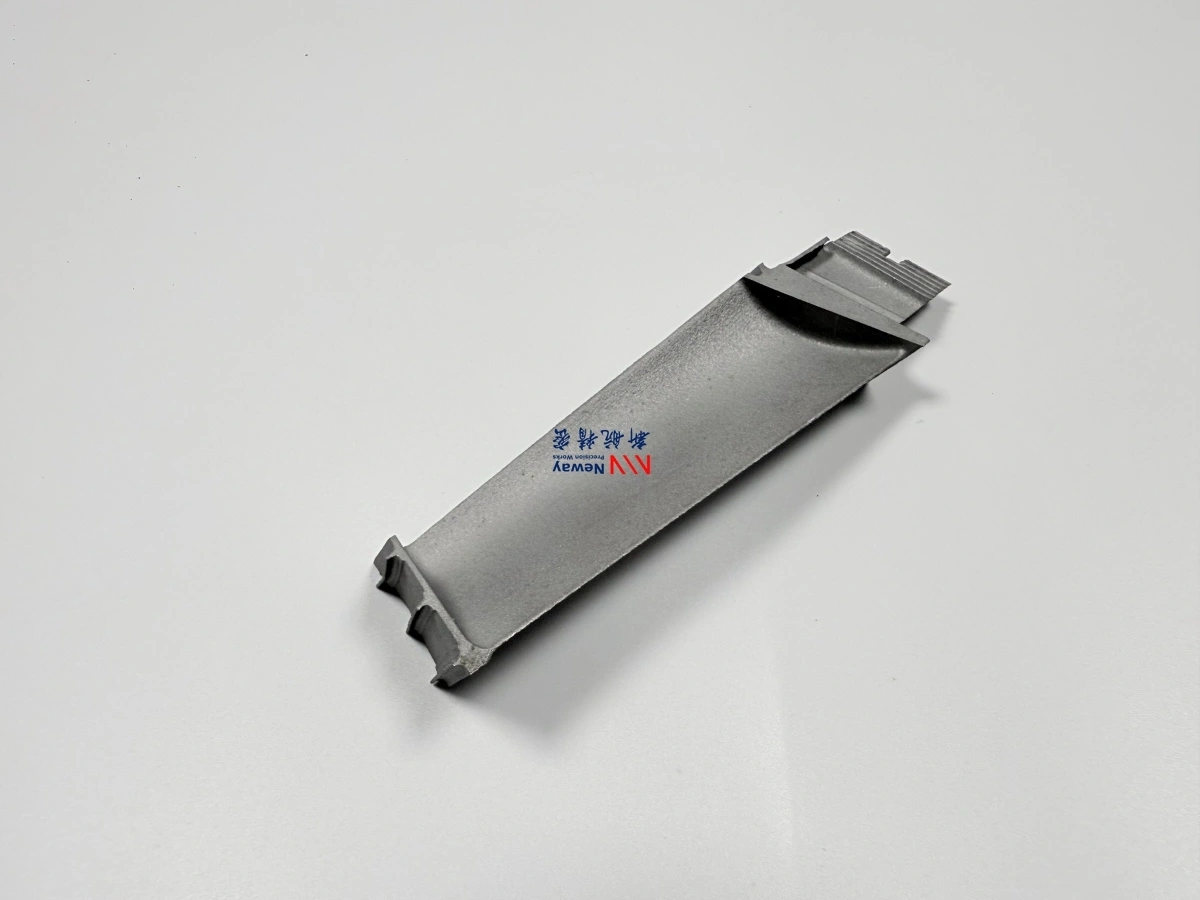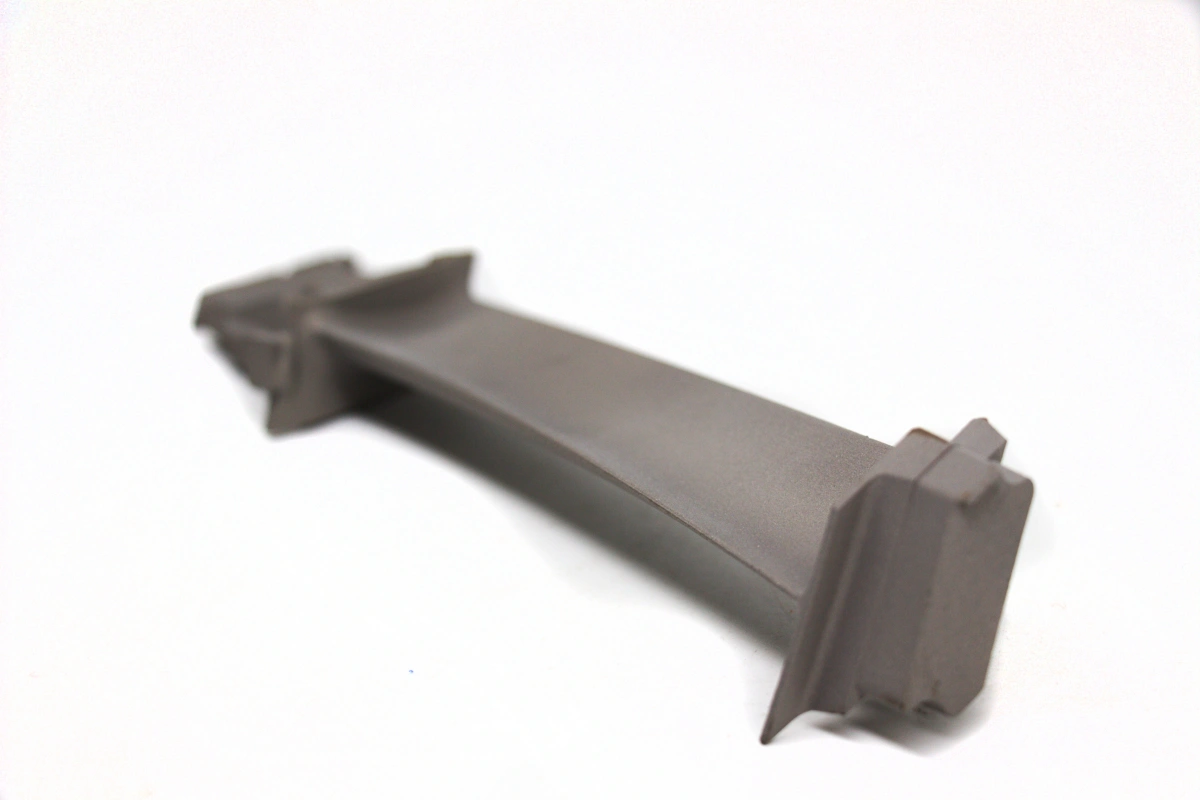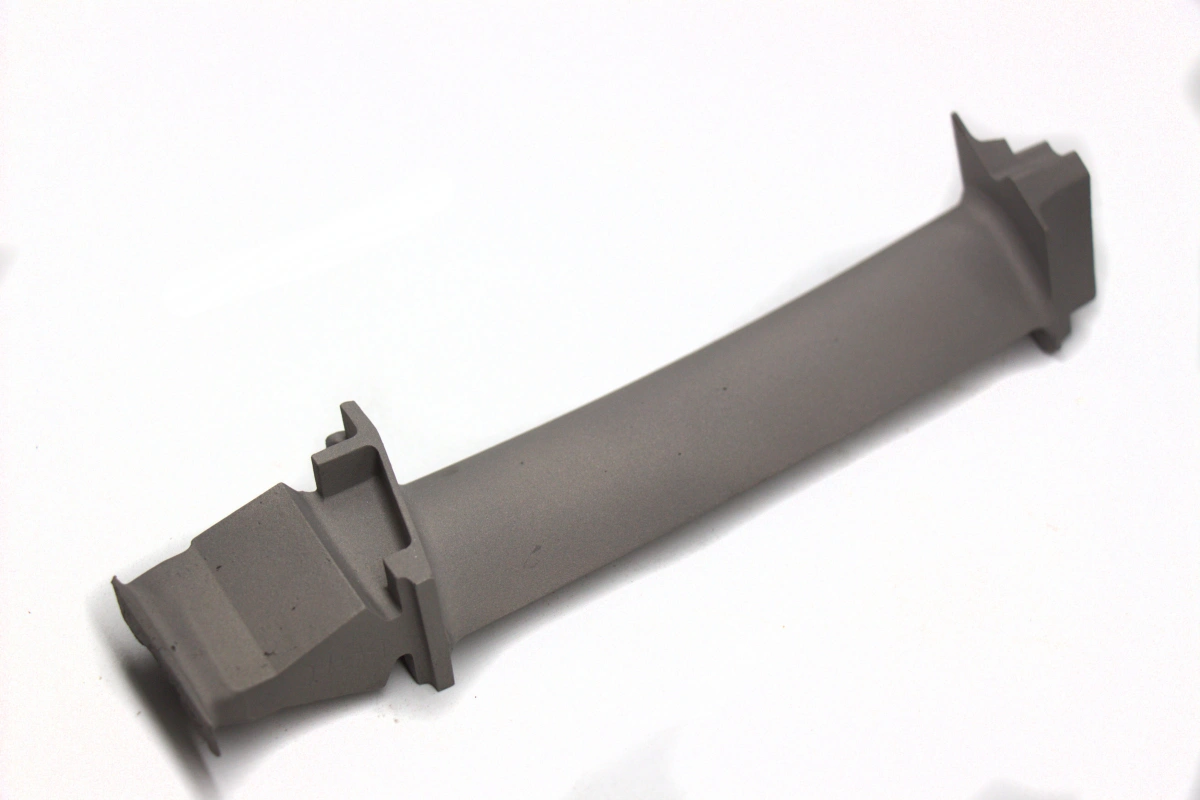
Does Print Data Prove a Casting Route?
Casting route data cannot come from a printed part. A printed manifold proves geometry, fits and clearances, but it never runs the shell, the pour or the stress relief that production will repeat, so the material state behind the numbers is different. Only a wax pattern or a hard tool feeds the same casting chain that ships the part.
What does a printed manifold actually give the project?
A printed manifold gives the project answers about shape, and those answers arrive fast. Port alignment, flange position, bracket clearance and assembly sequence can all be checked on a printed part within about 4 days of a model release, which is why printing carries an unfrozen design so well.
What it does not give is process evidence. A printed part has no shell, no casting skin, no gating system and no cast microstructure, so a dimension taken from it describes a laser melt and not a casting. The number looks the same on a report and means something different.
Why does printed metal behave differently from cast?
Printed metal and cast metal reach the same alloy from opposite directions, and the difference shows up in three places. The microstructure difference is not cosmetic. A laser melt solidifies in fine, directional grains with the layer structure still visible, while a casting solidifies from the mould wall inward with a coarser grain and a skin that carries the shell's texture.
Residual stress follows the same split. A printed manifold is stress relieved at 800 °C for 1.5 h after support removal, while the cast part is relieved at 880 °C for 3 h after cleaning, and the cast part also keeps 1.5 mm of allowance against 1.0 mm for the printed one. Those are different starting points for the same machining operation.
The wall limit moves too. A 2.5 mm wall runs on all three routes, but printed metal reaches down to 0.8 mm while a casting route stops near 2.0 mm. A printed part that holds a thin section says nothing about whether a casting can fill it.
Which casting route data transfers to production?
Only the two casting routes produce data that transfers to production, and they do it because they share one chain. A wax pattern 3D printing step feeds the shell, the pour and the heat treat exactly as a hard tool does, so a part made from a printed wax pattern inherits the same casting state the series will run.
That is the whole argument for the middle route. It costs more per part than printed metal and less than a cavity, and it buys the one thing printed metal cannot supply: a measurement taken on a real casting, from a real shell, after a real heat cycle. When the question is "will the casting hold this", only a casting answers it.
For a project still choosing between routes, superalloy 3D printing answers a different question. It answers whether the shape can exist at all.
What is the cheapest transferable test?
The cheapest transferable test is one wax-pattern part, poured and heat treated like production, measured against the drawing. One part is enough to prove that the gating fills the wall, that the shrinkage compensation sits in the right direction and that the heat cycle leaves the flange flat enough to machine.
That single printed prototype data carries a dimensional record at CT6 under ISO 8062-3 and a 3D scan against the model at an acceptance band of ±0.9 mm. It is more expensive than a printed prototype and far cheaper than a cavity, and it is the smallest unit that produces transferable test data worth comparing with the series.
When does printed data still make sense?
Printed data makes sense whenever the question is geometric. A manifold that needs a fit check before the cooling layout is frozen, or a bracket that has to clear a new accessory, is cheaper to answer on a printed part in 4 days than on any casting route.
Two limits keep the two data sets separate. Printed results should not be quoted as casting route data, and a casting route should not be rejected because a printed part warped differently. The tolerance is the same at CT6 under ISO 8062-3, but the process that produced it is not, and a supplier evaluation that mixes the two will approve the wrong route.
Send the drawing with the feature that worries you most, and the answer comes back with the cheapest route that produces evidence for that feature, printed or cast.