Superalloy High-Pressure Valve Components Manufacturer
A high-pressure valve component RFQ should identify the pressure-retaining boundary, sealing surfaces, and trim movement before the supplier chooses a casting or machining route. Valve bodies, bonnets, seats, cages, plugs, stems, sleeves, gland parts, and connection adapters can all be made from superalloys, but they do not carry the same manufacturing risk. A thick body section may need internal soundness review. A seat may need surface finish and concentricity. A stem guide may need stable bore geometry. A port adapter may need thread quality and burr control.
NewayAeroTech supports high-pressure valve components through vacuum investment casting, special alloy casting, CNC machining, heat treatment, HIP review where suitable, and inspection. For buyers, the RFQ should state whether the supplier is quoting a casting blank, a machined valve component, a finished trim part, or a sample-based manufacturing review. That boundary keeps component inspection separate from final valve assembly validation.
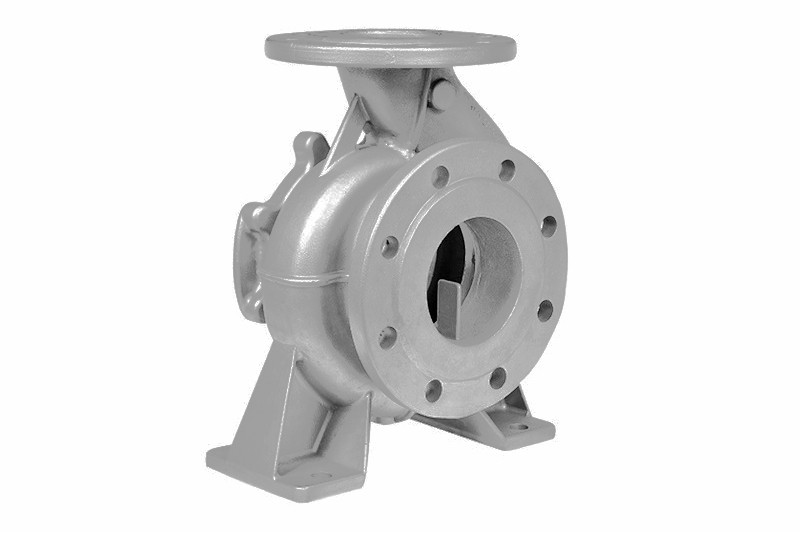
Map the pressure-retaining boundary before route selection
The first technical review should mark which regions carry pressure and which regions only support assembly. A valve body or bonnet may need thick-section casting control and surface inspection around pressure walls. A cage may influence flow and pressure drop but may not be pressure-retaining in the same way. A plug or seat may decide shutoff performance. A gland part or guide may decide motion and alignment. When these roles are unclear, the supplier may quote the wrong inspection plan.
The RFQ should include media, working pressure notes, temperature, cycling condition, and whether the component sees erosive particles, corrosive fluids, gas service, or high-temperature flow. The supplier does not need to approve the complete valve design, but it needs enough information to judge alloy family, casting soundness risk, machining stock, and NDT scope. A thick valve body made from a corrosion-resistant alloy is a different manufacturing problem from a small machined trim ring.
If a used part is provided, pressure-related wear and deformation should be documented. A seat scar, stem galling mark, pitted bore, or distorted flange may reveal the reason for replacement, but it should not automatically become the new nominal geometry. The buyer should define whether the sample is for reference, reverse measurement, or a first-article comparison.
Choose the alloy by pressure, media, and moving contact
High-pressure valve components may use nickel-based, cobalt-based, titanium, or other special alloys depending on media and function. Hastelloy alloy casting may be reviewed when corrosion resistance is central. Inconel alloy casting may be reviewed when high temperature and strength are part of the requirement. Stellite alloy casting may be considered for wear-resistant seats, trim features, or sliding contact zones.
Material choice must be tied to the component, not only to the valve name. A pressure-retaining body may need soundness, machinable stock, and corrosion resistance. A seat may need wear behavior and surface finish. A stem or guide may need galling resistance and stable roundness. A threaded adapter may need clean threads and reliable seal geometry. The buyer should state the reason for a requested alloy so the supplier can comment on both manufacturability and function.
When an alloy substitution is being considered, the RFQ should list restricted materials, mating components, and whether the buyer will run its own pressure or functional tests. The component supplier can make and document the part to agreed manufacturing criteria, but system-level valve acceptance remains a separate buyer or assembler responsibility unless explicitly included.
Select casting or machining by wall thickness and feature risk
Vacuum investment casting can support complex valve bodies, bonnet shapes, cages, flow inserts, and adapters with curved walls or integral bosses. Casting may reduce material waste and keep complex flow geometry closer to net shape. It also introduces shrinkage, gating, shell removal, internal soundness, and first-article inspection questions. The buyer should ask the supplier to identify thick sections, sharp transitions, and areas where extra machining stock is needed.
Machining may be the better route for seats, stems, simple sleeves, small adapters, and early prototypes. Superalloy CNC machining controls the final fit of bores, grooves, threads, taper seats, and gasket faces. For high-pressure parts, thread roots, seal lands, and bore transitions deserve careful route planning. Burrs or tool marks in a pressure or sealing feature can be more important than a broad outside wall dimension.
Some components need a combined route: cast near-net body, rough machine, heat treat, finish machine, inspect, and clean. That sequence should be visible in the quote. If the buyer only receives a unit price without route assumptions, it is hard to compare suppliers or understand why one response carries more inspection effort than another.
Control seat, bore, thread, and gasket interfaces
High-pressure valve components are accepted by interfaces. Seat geometry, stem-bore alignment, gasket-face flatness, thread quality, port concentricity, and edge condition determine whether the part can move into assembly. The RFQ should mark these features as critical and identify which surfaces are final-machined. A casting that looks acceptable outside may still fail if there is not enough stock on a seal face or if a bore cannot be held from the available datums.
Machining allowance should be realistic. Thick sections may need stock for cleanup after casting. Thin ribs or cages may distort if too much machining force is applied. Threaded ports need enough material for complete thread form and inspection, but tool access may be restricted by nearby walls. The supplier should review fixtures, datum pads, and inspection access before accepting a final route.
For trim components, surface finish and edge condition should be named in the RFQ. A seat or plug does not only need the right material; it needs a controlled contact surface. A cage or flow sleeve does not only need holes; it needs burr control and consistent flow edges. These details make the article's high-pressure valve focus different from a generic corrosion-resistant valve discussion.
Sequence heat treatment, HIP review, and post-process work carefully
Heat treatment can be necessary for selected superalloy valve components, but it should be coordinated with final machining. Thermal processing may affect flatness, bore position, and seat geometry. For many high-pressure components, rough machining before heat treatment and finish machining afterward gives better control of critical interfaces. The buyer should state which features must meet drawing requirements after all process steps.
Hot isostatic pressing may be reviewed for suitable castings when internal soundness is a major risk in thick sections. It should be tied to alloy, casting geometry, acceptance criteria, and later machining. It should not be treated as a universal fix for every pressure component. If HIP is included, the quote should explain what reports or follow-up inspections are expected.
Post-process work should protect sealing and pressure-related features. Cleaning, deburring, surface preparation, and handling protection need to be planned around seats, bores, threads, and gasket faces. A high-pressure component can lose value if a final handling step damages a functional surface.
Build inspection evidence around pressure and movement risks
Material testing and analysis should answer the component's risks. A cast body may need chemistry confirmation, dimensional reporting, visual inspection, penetrant inspection, radiographic review where agreed, and hardness checks where required. A machined seat or stem guide may need CMM or gauge inspection, roundness, surface finish, and visual edge review. A threaded adapter may need thread gauging and seal-surface checks.
The buyer should state whether pressure testing, leak testing, or functional cycling is expected from the component supplier or from the valve assembler. A manufacturing supplier can document material, dimensions, route, and agreed NDT. It cannot replace the buyer's valve-level qualification unless that scope is separately contracted and defined. Keeping this boundary clear helps avoid unsupported assumptions.
Inspection records should identify datums and surfaces. A report that only says pass does not help the buyer understand pressure-boundary evidence. A better package identifies the critical features, method used, and the drawing or RFQ requirement checked. This makes supplier comparison more practical.
What to send for a high-pressure valve component RFQ
A clear RFQ includes drawings, 3D models, media, pressure and temperature notes, component role, current material or candidate material, quantity range, surface finish requirements, NDT expectations, and any used sample photos. For oil and gas, chemical-processing, marine, or energy systems, the buyer should describe the actual media and pressure duty rather than relying only on the industry name.
The supplier response should separate alloy review, casting or machining route, stock allowance, heat-treatment and HIP assumptions, post-process controls, inspection evidence, and open engineering questions. If the quote covers only a component and not a complete valve assembly, that should be made explicit. If the buyer needs a finished trim part ready for assembly, the required functional surfaces and inspection reports should be included.
NewayAeroTech's role is to connect high-temperature alloy manufacturing with practical valve-component evidence. A good RFQ gives enough detail for that route to be reviewed before material is ordered, tooling is made, or machining fixtures are committed.
Related FAQs
What superalloys are most commonly used in subsea valve components?
How does vacuum investment casting contribute to the manufacturing of subsea valve components?
How do heat treatments improve the performance of subsea valve components?
What are the key challenges in manufacturing subsea valve components from superalloys?
What is the role of CNC machining in producing superalloy valve assemblies?
What are the primary quality control measures for superalloy valve assemblies?