Steam Turbine Parts High Performance Alloy Manufacturer For Energy Applications
An energy-sector steam turbine part RFQ should define the steam-path location, alloy grade, erosion or corrosion exposure, finished-interface requirements, and inspection package before price comparison begins. Stationary diaphragms, nozzle blocks, blade carriers, sealing segments, valve components, guide rings, and high-temperature fastener or support parts do not share one manufacturing route. NewayAeroTech can review custom high-performance alloy parts for steam turbine and energy applications when the buyer provides drawings, sample condition notes, material requirements, quantity, and acceptance criteria.
Steam turbine components differ from gas turbine hot-section parts in the way moisture, scale, oxidation, thermal cycling, and sealing interfaces affect manufacturing decisions. A part may need corrosion-resistant alloy selection, tight-machined seal faces, weld or repair boundary control, and dimensional evidence across large arcs or ring segments. The best quotation is not only a material price; it is a defined route from alloy procurement through casting or machining, heat treatment, surface preparation, and inspection.
Separate Steam-Path Parts by Function and Failure Risk
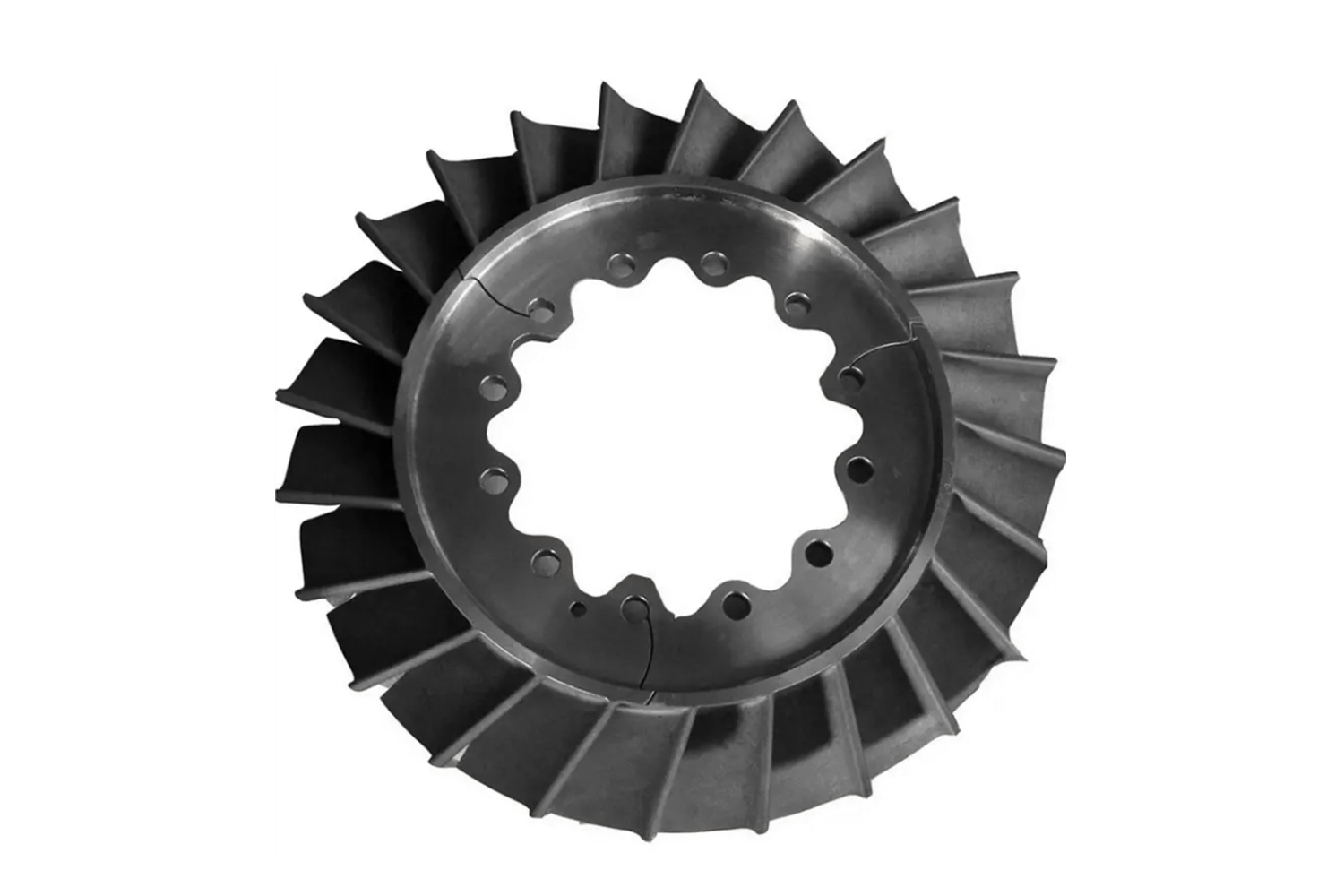
Buyers should split the RFQ by the part’s job inside the steam turbine. A blade or bucket-like component puts attention on root fit, airfoil surface, erosion allowance, and vibration-related geometry control. A diaphragm, nozzle block, or guide vane segment requires flow-path surface continuity, mounting faces, and local wall thickness review. Seal rings and packing segments need stable arc geometry and controlled seal teeth or land surfaces. Valve and actuator-related alloy parts may need corrosion resistance, hard-facing compatibility, and high-temperature dimensional stability.
A used sample can be helpful, but it should not replace a controlled drawing. Steam-path components often carry erosion marks, corrosion pits, scale, rubbed seal faces, and locally blended repair areas. Those features should be documented as service condition, not automatically copied into new geometry. NewayAeroTech can use sample photos or 3D scan references to discuss manufacturability, while the buyer should approve final dimensions, material selection, and acceptance rules before production starts.
Part type | RFQ concern | Manufacturing detail to define |
Rotating blade or bucket | Root fit, airfoil profile, erosion-prone leading edge | Drawing datum, alloy grade, machining stock, surface finish, and final dimensional report. |
Diaphragm or nozzle segment | Flow-path alignment, wall thickness, split-line fit | Casting route or machined blank, seal face cleanup, CMM profile, and visual inspection. |
Seal ring or packing segment | Arc size, seal tooth condition, wear surface | Segment tolerance, hard-facing or coating note, final machining sequence. |
Valve or steam-control alloy part | Corrosion, thermal cycling, seating or threaded interface | Material grade, CNC route, heat treatment condition, pressure-side inspection when specified. |
Select Alloys Around Steam Exposure Rather Than Generic Heat
High-temperature alloy selection for steam turbine parts should account for oxidation, corrosion, erosion, mechanical loading, and manufacturability. Inconel 718 may be reviewed for suitable structural or machined turbine hardware. Inconel 625, Hastelloy grades, and selected nickel-based alloys may be considered where corrosion resistance and fabrication behavior are important. Stellite or cobalt-based wear-resistant alloys may be relevant for seal, valve, or rubbing-contact features, depending on the drawing. The alloy choice should follow the customer specification and service location, not a broad request for the strongest material.
NewayAeroTech can support high-temperature alloy casting and material-route review for custom steam turbine parts. If the drawing names a proprietary or customer-approved grade, the supplier should confirm availability, melt route, heat treatment condition, machining behavior, and required test records. If the grade is not fixed, the buyer can request candidate material review, but final approval should remain with the customer engineering team.
Material review point | Why it changes the RFQ | Buyer data needed |
Nickel-based superalloy | Useful where heat, oxidation, strength, and machining stability are combined concerns | Exact grade, heat treatment state, application area, and required records. |
Cobalt-based or wear-resistant alloy | May support seal, valve, or rubbing-contact features where wear resistance is central | Wear surface location, mating material, surface finish, and post-process note. |
Corrosion-resistant nickel alloy | Relevant for steam, condensate, scale, or chemically aggressive environments | Exposure description, cleaning condition, inspection method, and surface acceptance. |
Customer-specified material | Prevents uncontrolled substitution and quotation ambiguity | Material standard, approved equivalent rule, and documentation requirements. |
Choose Casting, Machining, or Fabrication From the Interface Geometry
The correct manufacturing route depends on whether the difficult feature is the flow path, the ring geometry, the sealing surface, or the connection interface. Vacuum investment casting may fit turbine parts with curved surfaces, integrated bosses, or near-net superalloy geometry. Superalloy CNC machining may fit valve bodies, seal segments, datum-heavy brackets, and parts where final surfaces dominate cost. Fabricated routes may be reviewed for sheet or ring-like components when welding and distortion control are more important than casting complexity.
A quotation should show the blank source and the finishing route. For a cast steam-path component, the buyer should know whether the quote includes pattern/tooling review, casting, cut-off, heat treatment, machining, inspection, and reporting. For a machined component, the quote should state the starting stock condition, fixture plan, heat-treatment sequence, difficult bore or thread features, and final inspection. Route transparency helps buyers avoid comparing a rough blank against a finished component.
Plan Heat Treatment, Surface Treatment, and Wear-Face Scope Early
Post-processing can decide whether a steam turbine part is acceptable. Heat treatment may be required for alloy condition and dimensional stability. HIP may be reviewed for cast superalloy soundness when the drawing or risk level calls for it. Surface preparation, oxidation-resistant treatment, hard-facing compatibility, cleaning, or coating preparation can change the sequence and cost. NewayAeroTech can support superalloy heat treatment, HIP, and post-process planning where the project requirements justify those steps.
Steam turbine buyers should identify wear faces, seal lands, seating areas, and surfaces exposed to steam erosion. A supplier cannot safely price those surfaces if the RFQ only says “finish as required.” The drawing should state surface finish, stock allowance, coating or hard-facing boundary, and whether final machining occurs before or after any surface process. If repair-market samples are used, worn edges and blended faces should be reviewed before they become new-part geometry.
Post-process item | Where it appears in steam turbine RFQs | Quotation control point |
Heat treatment | Nickel alloy blades, rings, valve parts, and high-temperature supports | State required condition, sequence before final machining, and record needs. |
HIP review | Cast superalloy parts with internal soundness risk | Define whether HIP is required, conditional, or excluded from the quote. |
Surface preparation | Flow-path surfaces, seal lands, and coated or hard-faced areas | Define roughness, masking, cleanup, and inspection after processing. |
Final machining | Dovetails, split lines, seat faces, bolt holes, and seal features | Set datums, machining allowance, CMM points, and surface finish. |
Inspection Should Prove the Steam-Path Interfaces, Not Only the Alloy
Material certificates alone do not prove that a steam turbine component is ready for assembly. Buyers should request inspection evidence that matches the part type. CMM inspection is useful for roots, split lines, seal arcs, flange faces, and hole positions. FPI or DPI can help review surface-connected indications on cast or machined superalloy parts. X-ray or CT may be used for castings where internal soundness is important. Chemical analysis, hardness, metallography, and heat-treatment records may be required when the purchase specification calls for them.
NewayAeroTech can support superalloy material testing and analysis as part of custom supply. The buyer should define acceptance criteria before manufacturing begins: which surfaces are critical, which reports are required, whether inspection is 100 percent or sampled, and whether the first article needs extra evidence. That prevents a late dispute where a supplier produced the shape but not the records needed by the plant or engineering contractor.
Prototype and Replacement-Market Boundaries Need Careful Wording
Steam turbine projects often begin with a worn component, a drawing from an earlier revision, or an urgent plant-maintenance need. A prototype or first article can help verify fit, machining sequence, and inspection approach before the buyer releases a small batch. Rapid prototyping may support geometry checks or fixture planning, but the production route should still be confirmed before repeat orders. The buyer should state whether the component is for fit review, process validation, standby inventory, or production use.
NewayAeroTech manufactures custom parts to customer drawings and specifications. It should not be positioned as a seller of original inventory or a source of design-authority approvals. When the part is intended to replace a worn item, the RFQ should define the non-OEM manufacturing boundary, drawing approval responsibility, material confirmation method, and first-article acceptance process. That keeps the project focused on custom manufacturing evidence rather than unsupported spare-part claims.
RFQ Checklist for Steam Turbine Alloy Parts
A strong RFQ package should include the 2D drawing, 3D model if available, material grade, part function, steam-path location, quantity, revision level, surface finish, heat treatment, coating or hard-facing notes, inspection standard, required reports, and sample photos if the part comes from maintenance work. Call out blade roots, seal teeth, arc segments, split lines, threaded ports, valve seats, and other interfaces that drive cost. If the buyer wants only a blank, say so. If the buyer wants a finished part with records, include that in the first request.
Ask each supplier to return a process route, included operations, exclusions, inspection deliverables, open drawing questions, and any risk surfaces requiring engineering review. That format allows price comparison across custom alloy manufacturers without losing the technical boundary of the steam turbine component.
Related FAQs
What materials are best suited for steam turbine parts in high-temperature applications?
How does the manufacturing process impact the performance of steam turbine parts?
What surface treatments are typically applied to steam turbine components?
What are the benefits of using advanced inspection methods for steam turbine parts?
How can rapid prototyping enhance the development of turbine parts?
For steam turbine part RFQs, send the drawing package, alloy requirement, sample condition, quantity, post-process expectation, and inspection evidence needed for acceptance. NewayAeroTech can review the information and propose a custom manufacturing route for high-performance alloy components used in energy applications.