Can a damaged TBC be repaired, or does the component need to be fully stripped and recoated?
TBC Repair or Full Recoat Decision
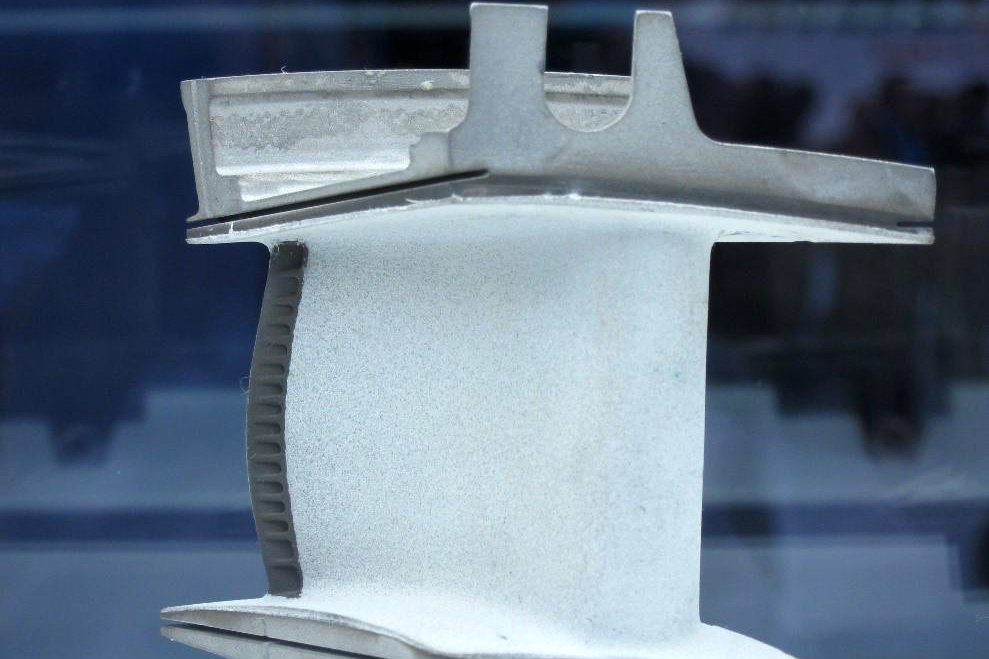
A damaged Thermal Barrier Coating (TBC) can often be selectively repaired rather than fully stripped and recoated—depending on the extent of degradation. For minor erosion or localized spallation, spot repairs are commonly performed, especially on turbine blades manufactured via single crystal casting or high-precision components requiring continued dimensional accuracy. However, if bond coat delamination or extensive cracking is detected, the entire coating system must be removed and reapplied to restore thermal protection reliability.
Localized Repair Methods
Small damaged areas may be grit-blasted and selectively recoated without removing the full TBC system. Plasma spray or EB-PVD spot repair techniques are suitable when the substrate alloy—such as Inconel 625 or Rene 80—remains structurally intact. This approach minimizes downtime and preserves original material properties.
Full Stripping and Recoating
When bond coat failure, oxidation penetration, or large-area spallation occurs, a complete coating removal is required. The TBC is chemically stripped, followed by surface preparation and reapplication using advanced thermal barrier coating technologies. Critical turbine components—especially in aerospace and power-generation systems—are often fully recoated after scheduled inspections to ensure fatigue and oxidation resistance remain within safety limits.
Inspection and Post-Treatment
After repair or recoating, advanced material testing and analysis and dimensional restoration via superalloy CNC machining are performed to verify coating adhesion, uniformity, and aerodynamic accuracy. Thermal cycling and fatigue testing confirm that the restored component can safely return to service.