Benefits of Thermal Barrier Coatings for High-Temperature Alloys
The benefit of a thermal barrier coating depends on material compatibility across the full stack. A suitable substrate can still fail with the wrong bond-coat chemistry, ceramic phase, thermal expansion, preparation, or service environment. Buyers should approve the substrate-bond coat-top coat combination, not purchase “TBC” as a single generic material.
For this RFQ, define the exact high-temperature alloy and condition, grain structure, prior thermal and repair history, operating temperature and cycling, atmosphere or deposits, coating architecture, approved feedstock, application method, thickness or structure, qualification evidence, and material-change process. Substitution should require technical review even when two powders share a broad chemistry name.

Start with the Substrate Alloy and Its Delivery Condition
Nickel- and cobalt-based alloys differ in aluminum, chromium, cobalt, refractory elements, strengthening phases, carbides, oxidation response, diffusion behavior, and heat-treatment limits. Exact grade and specification are required. “Inconel,” “Rene,” “CMSX,” “Hastelloy,” or “superalloy” is not a coating substrate definition.
State equiaxed, directionally solidified, single-crystal, wrought, fabricated, or repaired condition. Grain structure and prior heat exposure can influence diffusion, surface preparation, thermal fatigue, and distortion. Welding, HIP, brazing, stripping, and service aging should be included in the incoming history.
Accept chemistry, microstructure, geometry, wall, surface, NDE, and repair before coating. The layer stack should not be used to obscure a crack, inclusion, open porosity, contaminated weld, undersized section, or unapproved substrate condition.
Match the Bond Coat to Substrate and Environment
Bond-coat decision | Inputs to approve | Key compatibility concern |
MCrAlY family | M constituent, Cr/Al/Y and additions, application, thickness | Oxidation, roughness, diffusion and top-coat support |
Diffusion aluminide | Substrate chemistry, activity, cycle, resulting zone | Interdiffusion, phase development and dimensional change |
Modified aluminide | Modifier source, process and service rationale | Process repeatability and environmental response |
Overlay plus diffusion treatment | Deposit chemistry and full thermal sequence | Composition gradient, oxide formation and substrate effects |
Recoat over service material | Strip method, depletion, prior cycles and wall | Cumulative substrate loss and altered diffusion behavior |
Bond-coat choice should follow oxidation, hot-corrosion, thermal-cycling, geometry, coating method, substrate chemistry, and approved qualification. A system successful on one alloy can develop a different interdiffusion zone or oxide scale on another.
Specify material source, chemistry limits, lot control, deposition method, surface condition, thickness or other controlled characteristic, and thermal cycle. Report actual batch identity and process route for the component or qualification coupon.
Approve the Ceramic Material Beyond the Name YSZ
Yttria-stabilized zirconia is widely used, but the yttria level, phase condition, impurity limits, particle or source characteristics, deposition route, and final structure influence performance. An RFQ that lists only “YSZ” leaves critical material variables undefined.
Alternative zirconates or multilayer ceramics may be considered for different temperature, conductivity, phase-stability, or environmental objectives, but they introduce their own expansion, toughness, sintering, erosion, and processing questions. Treat a new ceramic as a material-system change requiring evidence.
Define whether the supplier must follow a customer-approved material or may propose an alternative. A proposal should include intended benefit, compatibility rationale, feedstock controls, application process, qualification plan, and known limits without presenting laboratory promise as component performance.
Control Thermal Expansion and Elastic Mismatch
The substrate, bond coat, oxide scale, and ceramic expand and contract differently. Temperature gradients, dwell, cooling rate, layer thickness, modulus, porosity, and geometry create stresses at interfaces and within the ceramic. Sharp edges, thickness transitions, and local hot spots can concentrate them.
A compliant or columnar ceramic structure may accommodate strain differently from a lamellar sprayed structure. The process must create the approved architecture consistently. Density alone is not a universal quality target; some controlled porosity or segmentation can be functional.
Qualification should reproduce relevant substrate, curvature, thickness, edge, bond coat, ceramic structure, and thermal cycle. Flat coupons are useful for material control but may not represent an airfoil, fillet, hole, shroud edge, or thick-to-thin transition.
Choose Feedstock Characteristics for the Deposition Method
APS powder needs controlled chemistry, particle-size distribution, morphology, flow, moisture, storage, and handling appropriate to the feed system and plasma process. EB-PVD uses source material and chamber controls with different requirements. Feedstock cannot be qualified independently of the deposition route.
Lot changes can alter deposition efficiency, splat formation, porosity, phase, surface, or rate. Define incoming certificates, verification tests, storage, drying or conditioning, shelf controls, recovery or reuse restrictions, and traceability.
When powder blending or multiple sources are permitted, state proportions, mixing method, verification, and change approval. Avoid unrecorded shop substitutions based only on availability or similar trade names.
Protect Phase Stability Through Thermal Exposure
Ceramic phase can change during deposition, heat treatment, or service. Bond coat and substrate also evolve through oxidation and diffusion. The complete time-temperature sequence, including substrate heat treatment, bond-coat diffusion, top-coat deposition, qualification cycling, and prior service, should be reviewed.
High-temperature sintering can reduce strain tolerance and alter thermal conductivity; oxide growth can increase interface stress; interdiffusion can change bond-coat or substrate zones. These mechanisms depend on material combination and exposure, not simply coating thickness.
Use controlled heat treatment where specified, with documented atmosphere or vacuum, loading, ramp, soak, cooling, and deviation disposition. Repeat cycles after rework require approval.
Account for Oxidation, Corrosion, Deposits, and Erosion
A TBC exposed to clean thermal cycling faces a different risk from one exposed to salts, ash, sand, fuel impurities, process deposits, or corrosive gases. Deposits can react with or penetrate the ceramic, while particles can erode leading edges and exposed zones.
Provide environment composition and particle or deposit information where known. Select bond-coat chemistry, ceramic material, structure, thickness, and test exposure from the actual concern. A thermal-cycling test in laboratory air may not represent hot corrosion or deposit attack.
Coating does not remove the need to evaluate cooling, surface temperature, or substrate corrosion. Local blockage, coating loss, cooling-hole restriction, and bond-coat depletion can shift the failure mechanism.
Define Interfaces, Graded Layers, and Multilayer Systems
Multilayer or graded coatings may be proposed to manage conductivity, expansion, environment, or erosion. Every additional interface adds material, thickness, process, adhesion, and inspection variables. Define layer order, composition, transition, thickness, and acceptance.
For graded feed or composition, specify how ratio changes are programmed and verified. A nominal gradient without process evidence is difficult to reproduce. Witness sections should capture the transition and represent the production load position.
Avoid adding layers solely to create a more advanced specification. The supplier should explain which failure mechanism each layer addresses and how the complete system will be qualified.
Control Material Compatibility Around Cooling Features
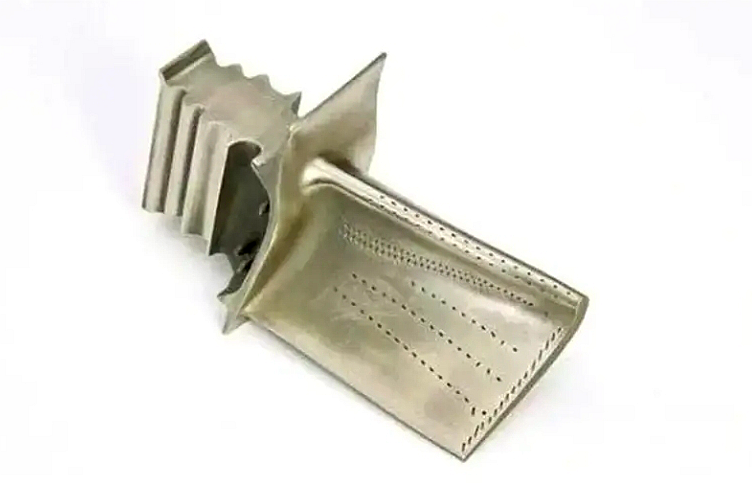
Cooling-hole edges, film-cooling surfaces, slots, seal lands, fillets, and thin trailing edges combine geometry and material gradients. Overspray, bond-coat buildup, ceramic thickness, edge termination, and local preparation can change area, contour, flow, and stress.
Define masking materials and their compatibility with preparation, bond coat, ceramic deposition, and removal. Mask residues, adhesive, metallic contamination, or damage during demasking can compromise the interface or adjacent substrate.
Where hole reopening is permitted, specify method, recast or edge condition, wall protection, and final inspection. Material removed after coating can expose bond coat or substrate and create a new termination that needs acceptance.
Use Material-Specific Inspection and Test Evidence
Verify substrate and bond-coat chemistry, ceramic feedstock identity, layer thickness, microstructure, phase, porosity or structure, interface, and surface as required by the approved system. Each method needs locations, sampling, preparation, and acceptance references.
Material testing and analysis can include microscopy, phase analysis, chemistry, hardness of relevant metallic layers, adhesion-related tests, thermal cycling, erosion, oxidation, or corrosion. Select evidence from the material risk and component duty.
Coupon results should identify substrate alloy and condition, bond coat, ceramic lot, preparation, application method, load position, thermal sequence, and test conditions. A coupon made from a convenient alloy is not representative if compatibility is the question.
Set a Formal Gate for Material Substitution
Changes to substrate grade or source, bond-coat chemistry, feedstock supplier, particle distribution, ceramic composition, phase, application method, diffusion cycle, or layer architecture can alter the system. Define which changes require notification, technical review, comparative testing, or requalification.
A substitution package should compare old and new materials, explain the reason, identify affected mechanisms, provide process data and test evidence, and define production transition. Do not rely on supplier equivalence statements without the buyer's acceptance basis.
Keep old and new lots segregated and traceable during transition. Production records should identify which material system was applied to every part or lot.
Evaluate Strip and Recoat as a New Material State
After service and stripping, the substrate may have oxidation, depletion, interdiffusion, prior bond-coat remnants, repair, wall loss, and additional thermal exposure. It should not be assumed equivalent to a new substrate even when the alloy name is unchanged.
Define strip chemistry or method, maximum substrate loss, cleanliness, minimum wall, depletion or microstructure limits, repair boundaries, and permitted recoat cycles. Inspect before applying a new bond coat.
For non-OEM work, establish configuration, design authority, sample history, material-identification limits, and intended application. A used coating stack is evidence of prior condition, not automatically an approved new-coating specification.
Send a Material-Compatibility TBC RFQ
Provide the controlled drawing and model, exact substrate alloy and condition, grain structure, prior thermal and repair history, operating temperature and cycling, environment and deposits, cooling features, approved bond coat and ceramic or proposal boundary, deposition method, material and feedstock controls, layers, thickness and structure, masks, inspection, coupons, tests, quantities, first article, records, and change control.
Ask suppliers to identify every material source and lot-control method, compatibility assumptions, proposed substitutions, qualification hardware, destructive sections, thermal and environmental tests, strip/recoat limits, documentation, and recurring cost.
The useful TBC system is the one whose materials remain compatible through application, service exposure, inspection, and any approved refurbishment. A credible quote makes that material chain visible instead of selling a generic coating name.
Related FAQs
Which Materials Are Commonly Used in TBCs for High-Temperature Alloy Parts?
How Do Plasma Spraying and EB-PVD Differ in Applying TBC Coatings?
Key Post-Processes to Maximize Thermal Barrier Coating (TBC) Performance
Essential Quality and Performance Tests for Thermal Barrier Coatings (TBC) on Superalloys
Which Industries Benefit Most from Using TBCs on High-Temperature Alloy Components?