Polypropylene (PP)
Material Introduction
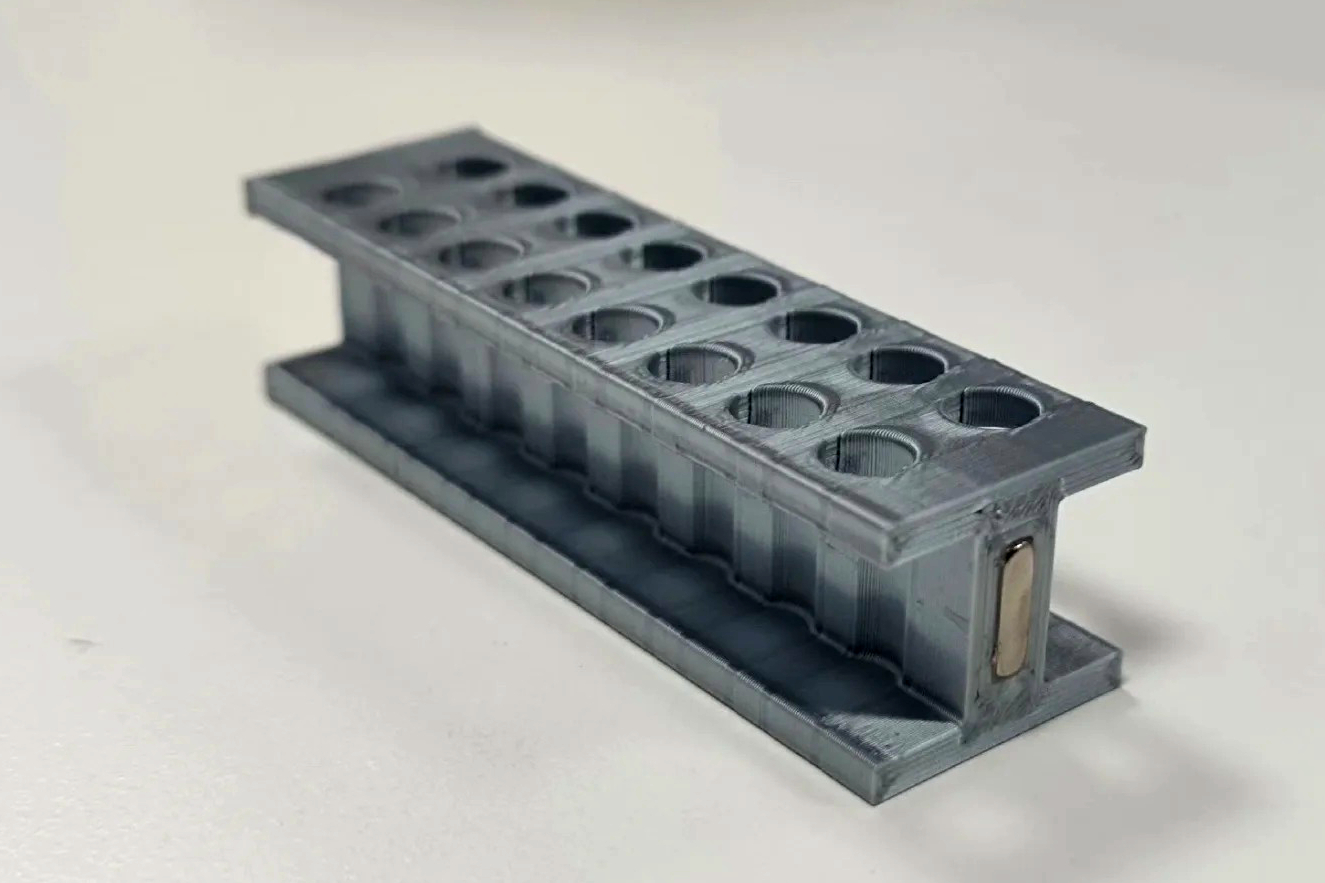
Polypropylene, commonly known as PP, is a lightweight thermoplastic material used for functional plastic prototypes, chemical-resistant components, living-hinge concepts, containers, clips, covers, and flexible mechanical parts. In 3D printing, PP is selected when the part requires a practical combination of low density, chemical resistance, fatigue resistance, impact behavior, and slight flexibility.
Compared with many rigid prototype plastics, PP is valued for its excellent resistance to moisture and many chemicals, making it useful for packaging, fluid-contact concepts, laboratory accessories, consumer product prototypes, and functional engineering samples. NewayAeroTech provides Polypropylene (PP) 3D printing as part of its plastic 3D printing service for prototypes requiring lightweight structure, flexibility, and chemical-resistant performance.
International Naming Table
Region / Standard | Naming / Designation |
|---|---|
Common Name | Polypropylene / PP |
Polymer Family | Polyolefin thermoplastic |
Material Category | Lightweight engineering thermoplastic |
Common Printing Technology | FDM / FFF, SLS-like PP powder printing, depending on supplier and part requirement |
Typical Material Behavior | Lightweight, chemical-resistant, fatigue-resistant, low moisture absorption, slightly flexible |
Typical Component Reference | Functional prototypes, containers, clips, living hinges, covers, fluid-contact parts |
Alternative Material Options
PP is suitable when the part requires lightweight structure, chemical resistance, fatigue resistance, and low moisture absorption. However, alternative material selection should depend on stiffness, flexibility, surface finish, temperature exposure, impact load, wear resistance, and testing purpose. For tougher mechanical prototypes and wear-resistant functional parts, Nylon (Polyamide) may be more suitable.
For rubber-like deformation, soft-touch behavior, or shock absorption, TPU or Flexible Resin may be better choices. For higher rigidity, impact strength, or heat resistance, Polycarbonate (PC) may be evaluated. For demanding heat and chemical exposure, PEEK or other high-performance plastics may be more appropriate.
Design Intent of Polypropylene (PP)
Polypropylene is designed for plastic parts that require low weight, chemical resistance, moisture resistance, and fatigue performance. In product development, PP is often used when the printed part must represent molded polypropylene behavior, especially for packaging parts, containers, caps, hinges, clips, protective covers, laboratory fixtures, consumer products, and fluid-contact prototypes.
The design intent of PP is different from rigid resin or high-stiffness engineering plastic materials. It is not normally selected for maximum rigidity or ultra-smooth cosmetic appearance; it is selected when flexibility, fatigue resistance, and chemical compatibility are important. PP is especially valuable for living hinge concepts, snap-fit features, lightweight covers, and parts that may contact water, detergent, oils, or mild chemicals. Because PP can be difficult to print compared with common materials, design validation should consider warpage, shrinkage, bed adhesion, wall thickness, and printed-part anisotropy.
Chemical Composition
Material Aspect | Typical Description |
|---|---|
Polymer Type | Polyolefin thermoplastic polymer |
Base Polymer | Polypropylene chain structure based on propylene monomers |
Common Forms | PP homopolymer, PP copolymer, modified PP printing filament or powder |
Modified PP | May include additives to improve printability, flexibility, impact resistance, or dimensional control |
Filled PP | May include fillers for stiffness, thermal behavior, or lower shrinkage depending on supplier system |
Note: PP 3D printing properties vary by grade, printer system, filament or powder formulation, orientation, cooling condition, and post-processing. Final performance should be confirmed using the selected material datasheet and printed part testing.
Physical Properties
Property | Typical Reference |
|---|---|
Material Type | Lightweight polyolefin thermoplastic |
Primary Printing Route | FDM / FFF or powder-based PP printing, depending on grade |
Density | Low, useful for lightweight prototype parts |
Moisture Absorption | Very low compared with Nylon and many engineering plastics |
Chemical Resistance | Good resistance to many acids, bases, detergents, and aqueous chemicals |
Surface Finish | Depends on printing route; FDM layers or powder texture may be visible |
Mechanical Properties
Property | Engineering Relevance |
|---|---|
Fatigue Resistance | Useful for living hinges, snap fits, clips, and repeated bending features |
Chemical Resistance | Supports containers, caps, fluid-contact prototypes, and chemical handling concepts |
Impact Behavior | Helps parts survive handling, drops, and assembly force depending on grade and geometry |
Flexibility | Provides slight elastic deformation compared with rigid resin or stiff engineering plastics |
Low Moisture Absorption | Helps maintain properties in humid or water-contact prototype environments |
Dimensional Control | Requires careful process planning due to shrinkage, warpage, and print orientation effects |
Material Characteristics
Polypropylene is characterized by low density, good chemical resistance, low moisture absorption, fatigue resistance, and flexible mechanical behavior. These characteristics make it useful for prototypes that must simulate injection-molded PP parts or operate in mild chemical and fluid-contact environments. PP is especially valuable for living hinges, flexible clips, snap-fit parts, containers, caps, covers, and lightweight functional components.
Compared with Nylon (Polyamide), PP absorbs less moisture and offers good chemical resistance, but Nylon usually provides better stiffness, wear resistance, and broader mechanical performance. Compared with Photopolymer Resins, PP is better for flexible functional behavior, while resin materials are better for high-detail visual models and smooth surfaces. Compared with TPU, PP is less rubber-like but more suitable for lightweight semi-rigid structures.
Manufacturing Process Performance
PP can be processed through selected 3D printing service routes such as FDM / FFF or powder-based PP printing, depending on material availability and part requirement. It is more challenging to print than common plastics because of shrinkage, warpage, and bed adhesion sensitivity. Successful PP printing requires appropriate material selection, temperature control, build surface compatibility, part orientation, and geometry planning.
During manufacturing, part design should consider wall thickness, shrinkage compensation, support strategy, print orientation, hole sizing, and assembly tolerance. Thin living-hinge features and flexible clips may require prototype testing because printed behavior can differ from injection-molded PP. NewayAeroTech provides PP 3D printing for functional prototypes, chemical-resistant parts, lightweight covers, containers, clips, and low-volume plastic components.
Applicable Post-processing
PP 3D printed parts may require support removal, surface cleaning, light sanding, trimming, hole finishing, insert installation, bonding evaluation, welding evaluation, and dimensional inspection depending on the application. Because PP has low surface energy, painting, coating, bonding, and labeling can be more difficult than with many other plastics. Surface treatment or mechanical fastening may be required if secondary assembly is needed.
For functional prototypes, post-processing should focus on mating surfaces, hole accuracy, hinge behavior, snap-fit performance, container sealing, and part deformation under load. If the part requires more rigid strength, Polycarbonate or Nylon may be better. If the part requires stronger thermal or chemical performance, PEEK or other high-performance plastics may be evaluated.
Common Applications
Polypropylene is commonly used for chemical-resistant prototypes, containers, caps, closures, living hinges, snap-fit clips, lightweight covers, fluid-contact mockups, laboratory accessories, packaging prototypes, consumer product parts, automotive interior samples, medical device housings, and low-density functional components. It is especially suitable when the final product may be injection-molded in PP and the prototype needs similar flexibility or chemical behavior.
In these applications, PP 3D printing helps reduce tooling risk by allowing engineers to test geometry, fit, hinge function, container shape, and assembly features before injection mold investment. It is also useful for low-volume prototype batches where molded PP tooling would be too expensive or slow. For final production approval, chemical compatibility, fatigue behavior, operating temperature, dimensional tolerance, surface finish, and assembly method should be validated with printed samples.
When to Choose Polypropylene (PP)
Choose PP when the project requires a lightweight, chemical-resistant, low-moisture-absorption plastic material for functional prototypes or low-volume parts. It is especially suitable for living hinges, flexible clips, snap-fit features, containers, covers, caps, and chemical-contact prototypes where PP-like behavior is required before moving to injection molding or production tooling.
If the part requires higher mechanical strength and wear resistance, Nylon (Polyamide) may be preferred. If the part requires rubber-like flexibility, TPU or Flexible Resin may be better. If the part mainly requires smooth appearance and fine detail, Photopolymer Resins may be more suitable. The best choice depends on chemical exposure, hinge function, flexibility, load, tolerance, surface finish, and budget.
Engineering Selection Note
Polypropylene should be evaluated as a lightweight functional thermoplastic rather than only a visual prototyping material. For RFQ evaluation, customers should provide the 3D model, expected chemical exposure, target flexibility, hinge or snap-fit requirement, mating components, wall thickness requirement, quantity, tolerance requirement, surface finish requirement, color requirement, and expected use condition. This allows NewayAeroTech to determine whether PP, Nylon, TPU, Flexible Resin, PC, PEEK, or another plastic 3D printing material is most appropriate for the part.
Explore Related Blogs