Can MJF Produce Parts with Complex Internal Geometries?
Inherent Capability for Complex Designs
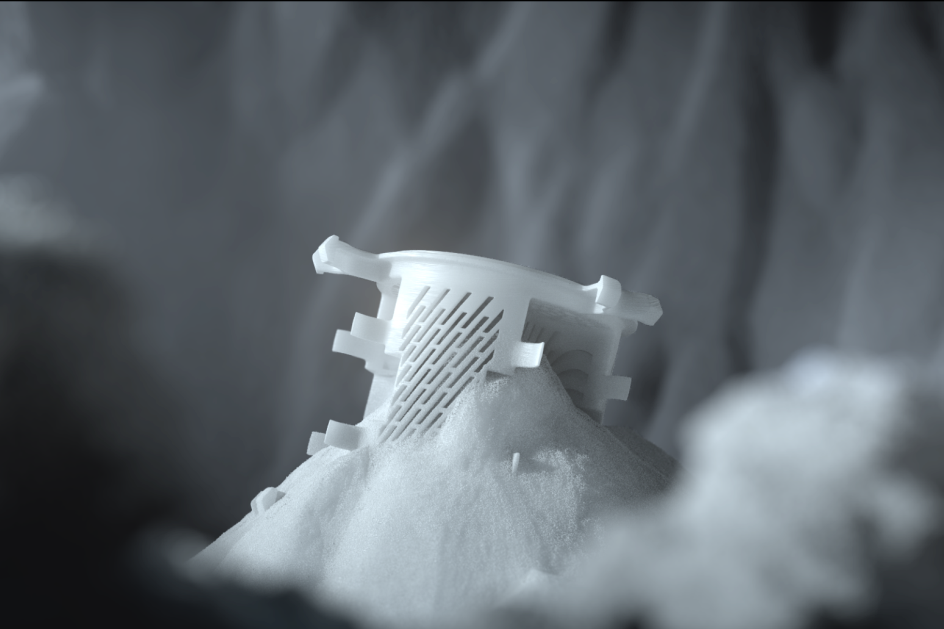
Yes, Multi Jet Fusion (MJF) is exceptionally capable of producing parts with complex internal geometries. As a powder-bed fusion process, MJF builds components layer by layer without the need for support structures within enclosed volumes. This freedom allows for the creation of internal channels, lattices, undercuts, and hollow sections that would be impossible or prohibitively expensive to manufacture using conventional methods like injection molding or CNC machining. This makes MJF an ideal solution for prototypes and end-use parts requiring advanced functionality, such as integrated fluidics, custom ducting, or lightweight, reinforced structures.
Advantages Over Conventional and Other Additive Methods
MJF offers distinct advantages for internal complexity compared to both traditional manufacturing and some other 3D printing services. Unlike machining, which is limited by tool access, MJF has no such constraints. Compared to Fused Deposition Modeling (FDM), MJF provides superior surface quality and accuracy inside internal passages. Furthermore, its ability to produce functional, moving assemblies (like hinges or interlocking parts) in a single print job eliminates assembly and reduces part count. For industries like aerospace and aviation and automotive, this enables the consolidation of complex assemblies into one optimized, lightweight component.
Material Performance and Application-Specific Solutions
The functionality of complex MJF parts is enhanced by a range of engineering-grade materials. For high-strength applications, materials like Nylon (Polyamide) PA12 and PA11 offer excellent mechanical properties and chemical resistance. For more specialized needs, Polypropylene (PP) provides durability and flexibility, while glass or carbon-fiber-filled nylons offer increased stiffness. This allows MJF to produce complex internal geometries not just as models, but as durable parts suitable for functional testing and end-use in demanding environments, such as custom jigs, fixtures, and fluid handling systems.
Integration with Other Manufacturing Services
MJF is often used in conjunction with other manufacturing services for a complete production solution. A complex internal geometry might be prototyped and validated via MJF before moving to high-volume injection molding. Alternatively, an MJF-produced part with intricate channels could serve as a core component within a larger metal assembly. For projects requiring ultimate thermal or mechanical performance beyond polymer capabilities, the design principles validated with MJF can inform the production of metal counterparts using processes like superalloy 3D printing or vacuum investment casting, ensuring a seamless transition from design to functional metal part.