
Hastelloy Alloy Forging Solutions for High-Performance Turbofan Components
Introduction
Hastelloy alloys, known for exceptional corrosion resistance and thermal stability, are ideal for manufacturing critical turbofan engine components in harsh aerospace environments. Through advanced superalloy precision forging, Neway AeroTech ensures optimal mechanical properties, achieving dimensional tolerances of ±0.1 mm and enhanced fatigue performance exceeding aerospace standards.
Leveraging specialized isothermal forging techniques at precise temperatures (950-1200°C) and deformation rates, Neway delivers Hastelloy components with homogeneous microstructures, outstanding tensile strengths (>900 MPa), and prolonged service life for modern turbofan applications.
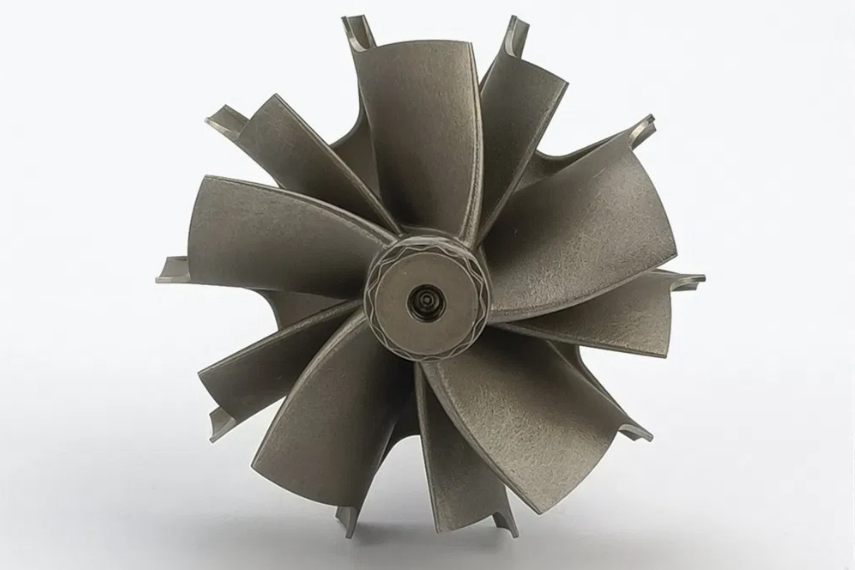
Core Manufacturing Challenges of Hastelloy Alloy Turbofan Components
Producing turbofan components from Hastelloy alloys such as Hastelloy X, Hastelloy C-276, and Hastelloy C-22 involves addressing several technical challenges:
High-temperature deformation resistance requires specialized forging equipment.
Strict dimensional accuracy (±0.1 mm) and surface finish requirements (Ra ≤3.2 µm).
Prevention of grain boundary defects through precise thermal control.
Ensuring consistent metallurgical properties to resist fatigue and corrosion.
Detailed Explanation of Hastelloy Alloy Forging Process
The Hastelloy alloy forging process includes:
Billet Preparation: Hastelloy billets undergo controlled heating to precise temperatures (950-1200°C) for uniform deformability.
Isothermal Forging: Material deformation occurs in a temperature-controlled die environment to maintain uniform strain rates and prevent grain boundary defects.
Controlled Cooling: Gradual cooling (20-50°C/hr) in controlled atmospheres minimizes residual stress and enhances grain refinement.
Heat Treatment: Post-forging heat treatments at 1050-1150°C and rapid quenching and aging treatments improve mechanical properties and creep resistance.
Precision Machining: Final CNC machining achieves critical aerospace tolerances (±0.01 mm), essential for engine integration and performance.
Comparison of Mainstream Forging Methods for Hastelloy Turbofan Components
Forging Method | Dimensional Accuracy | Surface Finish (Ra) | Grain Structure Control | Mechanical Properties | Cost Efficiency |
|---|---|---|---|---|---|
Isothermal Forging | ±0.1 mm | ≤3.2 µm | Excellent | Superior | Medium |
Precision Die Forging | ±0.2 mm | ≤6.3 µm | Good | Good | High |
Free Forging | ±0.5 mm | ≤12.5 µm | Moderate | Moderate | Low |
Ring Rolling Forging | ±0.3 mm | ≤6.3 µm | Good | Good | Medium-High |
Manufacturing Process Selection Strategy
Selecting the optimal forging process for Hastelloy turbofan components involves precise considerations:
Isothermal Forging: Preferred for components requiring superior microstructural homogeneity, precise dimensional accuracy (±0.1 mm), and exceptional fatigue resistance, such as high-stress turbine blades.
Precision Die Forging: Suitable for moderately complex geometries needing consistent mechanical properties, high repeatability, and cost-effective high-volume production.
Free Forging: Ideal for preliminary shaping or lower-volume components where subsequent machining can accommodate relaxed tolerances (±0.5 mm).
Ring Rolling Forging: Best suited for manufacturing seamless ring-shaped turbofan components, optimizing grain orientation and mechanical integrity.
Material Analysis Matrix
Hastelloy Alloy | Max Service Temp (°C) | Tensile Strength (MPa) | Yield Strength (MPa) | Creep Resistance | Corrosion Resistance | Typical Applications |
|---|---|---|---|---|---|---|
900 | 860 | 380 | Excellent | Superior | Turbine blades, combustors | |
850 | 790 | 355 | Good | Exceptional | Exhaust ducts, hot-section casings | |
800 | 690 | 310 | Good | Exceptional | Turbofan casings, compressor components | |
650 | 760 | 320 | Moderate | Outstanding | Lower-temp turbine sections | |
815 | 750 | 340 | Good | Superior | Corrosion-resistant turbofan housings | |
760 | 690 | 300 | Moderate | Exceptional | Fan and compressor casings |
Material Selection Strategy
Material selection strategies for Hastelloy alloys in turbofan components are:
Hastelloy X: Chosen for high-temperature turbine blades and combustors requiring exceptional oxidation resistance and tensile strength (860 MPa) at operating temperatures up to 900°C.
Hastelloy C-276: Ideal for exhaust ducts and hot-section casings, selected for its outstanding corrosion resistance in aggressive environments, strong mechanical properties (790 MPa tensile strength), and stability at temperatures up to 850°C.
Hastelloy C-22: Preferred for turbofan casings and compressor components needing exceptional corrosion resistance and mechanical integrity (690 MPa tensile strength) at moderate service temperatures (up to 800°C).
Hastelloy B-2: Utilized for lower-temperature turbine sections (up to 650°C) requiring superior corrosion resistance and tensile strength (760 MPa), balancing durability with cost efficiency.
Hastelloy C-2000: Selected for turbofan housing structures demanding excellent corrosion resistance and strong mechanical performance (750 MPa tensile strength), suitable for service up to 815°C.
Hastelloy G-30: Recommended for fan and compressor casings that experience less extreme temperatures (up to 760°C), providing robust corrosion resistance and satisfactory mechanical strength (690 MPa).
Key Post-processing Technology
Critical post-processing steps for Hastelloy turbofan forgings include:
Hot Isostatic Pressing (HIP): Eliminates internal defects and porosity, enhancing component density (>99.9%) and fatigue life by up to 30%.
Thermal Barrier Coating (TBC): Ceramic coatings (typically 100-250 µm thick) applied via plasma spraying significantly reduce surface temperatures, extending part lifespan.
Precision CNC Machining: Ensures high-precision dimensions (±0.01 mm) required for accurate turbofan assembly.
Controlled Heat Treatment: Specialized solution annealing and aging processes optimize microstructure, enhancing mechanical properties and creep resistance.
Industry Application and Case Analysis
Aerospace Case Study: Hastelloy X Turbofan Blades
Neway AeroTech successfully delivered Hastelloy X turbine blades for a major aerospace OEM through advanced isothermal forging combined with HIP and TBC, meeting rigorous operational criteria:
Operating Temperature: Continuous operation up to 900°C
Fatigue Life Enhancement: Improved by approximately 35%
Dimensional Accuracy: Maintained within ±0.05 mm
Certification: Fully compliant with aerospace quality standard AS9100
FAQs
Why choose Hastelloy alloys for turbofan engine components?
What forging processes optimize Hastelloy alloy properties for aerospace applications?
How does isothermal forging enhance the mechanical properties of Hastelloy components?
What post-processing methods are recommended for Hastelloy turbofan parts?
What dimensional tolerances can be achieved through precision forging of Hastelloy alloys?
