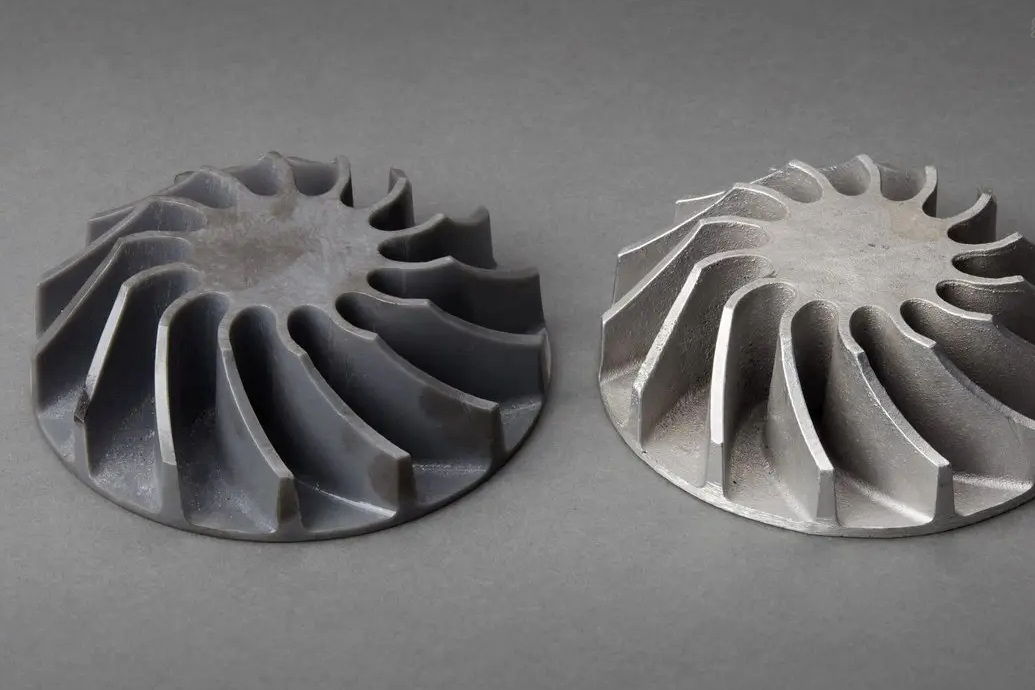
High-End Alloy Parts for Fuel Cell and Hydrogen Energy System Supplier
A fuel cell or hydrogen-energy alloy-parts RFQ should begin with the service boundary, not only with a drawing number. The same machined ring, bracket, manifold insert, burner fitting, valve trim, sensor boss, or compact heat-transfer element can face very different manufacturing risks depending on whether it sees dry hydrogen, humid gas, condensate, purge media, reformer heat, electrical isolation requirements, or repeated assembly cycles. A useful supplier review therefore separates material compatibility, geometry, sealing surfaces, cleanliness, and inspection evidence before asking for price.
NewayAeroTech supports custom high-temperature and corrosion-resistant alloy parts through routes such as vacuum investment casting, special alloy casting, alloy machining, heat treatment, and post-process inspection. For hydrogen-energy systems, the buyer should define whether the part is a casting blank, a near-net component, a machined sealing element, or a fully finished assembly detail. That boundary changes the quote more than a generic alloy name does.

Define the hydrogen-service boundary before asking for price
The first RFQ decision is whether the part is actually exposed to hydrogen or only installed near a hydrogen-related system. A stack support bracket, reformer fixture, burner nozzle insert, valve seat, manifold block, heat shield, and sensor fitting may all be described as fuel cell hardware, yet each has a different risk profile. A wetted component needs material compatibility review, surface condition control, and cleaning expectations. A heated component needs oxidation and thermal-cycle review. A load-bearing attachment needs mechanical property evidence and dimensional repeatability. A part that only locates adjacent hardware may need tighter flatness and hole-position control rather than a high nickel alloy.
Buyers should state the media, temperature range, pressure range, operating cycle, cleaning medium, and whether the part is used in a prototype rig, validation build, or repeat production order. The supplier cannot responsibly quote the same route for every fuel cell or hydrogen-energy part. For example, an investment casting can reduce material waste for a curved flow body, while a machined billet may be better for a rectangular sealing insert with tight flatness. A corrosion-resistant casting may need extra stock on seal faces so machining can remove surface scale and deliver a stable contact surface.
The RFQ should also identify drawing ownership and sample boundary. If the buyer provides only a used sample, deformation, wear, coating residue, and assembly marks must be separated from intended geometry. If the buyer provides a controlled drawing, the supplier can quote directly against dimensions, datums, material, and inspection notes. If both drawing and sample are available, the quote can separate reverse-measurement support from manufacturing responsibility.
Separate wetted, heated, and sealing features in the drawing review
Hydrogen-energy components often combine three feature types in one compact part: gas-contact passages, heated external surfaces, and precision sealing or assembly interfaces. Treating the whole part as one generic alloy item leads to unclear inspection plans. A flow passage may require stable wall thickness and internal cleanliness. A seal face may require machining stock, flatness control, and surface-finish documentation. A bolt pattern may need positional inspection after heat treatment. A thermal shield surface may tolerate cosmetic variation that would be unacceptable on a gasket land.
For cast components, the drawing review should mark thin ribs, blind pockets, drain holes, bosses, flange transitions, and any feature that may trap shell, abrasive media, or cleaning residue. Superalloy CNC machining then needs a clear datum plan. A feature that is easy to cast may still be difficult to fixture if all surrounding surfaces are curved or as-cast. The buyer can reduce quotation uncertainty by showing which faces are functional, which faces are non-contact surfaces, and where extra stock is acceptable.
For machined-from-solid parts, the supplier should review tool access, burr risk, and whether long internal passages require gun drilling, EDM, or staged machining. A fuel cell test rig may accept a prototype machining approach for an early sample, but the same geometry may need a different route if the buyer later needs stable small-batch manufacturing. That route decision should be made before the first article, not after a prototype has already locked in an impractical feature.
Choose the alloy and route by media, heat, and geometry together
Material selection for fuel cell and hydrogen-energy parts should not be reduced to a single phrase such as high-end alloy. Nickel alloys, cobalt alloys, titanium alloys, stainless steels, and specialty corrosion-resistant alloys all solve different problems. Inconel alloy vacuum investment casting may suit hot, oxidizing, or strength-critical parts when the geometry benefits from casting. Hastelloy alloy vacuum investment casting may be reviewed when corrosion resistance is central to the requirement. Titanium alloy casting may be considered only when the operating environment, joining method, and inspection scope support it.
The route should also follow the part shape. A volute-like gas body, curved transition, or manifold with organic profiles may justify investment casting. A flat compression plate, simple spacer, or sealing washer may be better machined from wrought stock. A trial burner insert, sensor bracket, or unusual flow director may start as a prototype route before the buyer commits to a casting tool. When buyers send an RFQ, the most useful note is not simply the alloy preference; it is the reason the alloy is being considered and the surfaces that control the system function.
Heat treatment and densification also need early discussion. Some castings may require superalloy heat treatment to reach the intended microstructure. Some high-integrity castings may be reviewed for hot isostatic pressing when internal soundness is a major concern. The supplier should not add post-processing as a vague line item; it should be connected to porosity risk, property requirements, dimensional movement, and the final machining sequence.
Control surfaces, cleanliness, and machining allowance from the start
Fuel cell and hydrogen-system components often fail supplier reviews at the surface-control stage. A casting may meet general geometry but still leave too little stock on a seal face after removal of scale or surface discontinuities. A machined passage may meet size but leave burrs at a cross-hole intersection. A heat-treated part may move enough to change flatness on a compression face. The RFQ should therefore mark final-machined surfaces, as-cast surfaces, internal passages, threaded features, and cleaning-sensitive zones.
Machining allowance should be agreed before tooling or process planning. Too little stock can expose casting variation at a functional face. Too much stock can increase machining time, tool wear, and distortion risk on thin sections. For a cast manifold insert, the buyer may allow broader tolerance on outer walls while requiring controlled stock on gasket lands and bolt bosses. For a valve or fitting component, the supplier may need extra material near the seat, thread, or weld-prep area. These decisions affect both price and first-article evidence.
Cleanliness is also a real manufacturing requirement, not a final packing note. Hydrogen-energy hardware may include small channels, sealing grooves, and instrument ports where trapped media can interfere with assembly or testing. The supplier should define blasting limits, passivation or surface treatment scope where applicable, ultrasonic cleaning expectations when requested, and protection of machined sealing faces after inspection. Superalloy post-process planning should be tied to the actual drawing features rather than offered as a generic finishing package.
Build the inspection plan around pressure, sealing, and flow features
A strong inspection plan for fuel cell or hydrogen-energy alloy parts starts with function. The buyer should identify which surfaces seal, which passages control flow, which holes align adjacent hardware, and which regions carry load. From that list, the supplier can select dimensional inspection, visual checks, penetrant inspection, radiographic review where applicable, material verification, hardness checks, and surface-finish measurement. Material testing and analysis should answer the buyer's actual risk questions instead of producing a thick but unfocused file.
For castings, internal soundness review may be needed around thick-to-thin transitions, bosses, and flow-body intersections. For machined parts, CMM or fixture inspection may be more important than radiography. For seal faces, flatness, surface finish, and edge condition can matter more than an overall outside dimension. For threaded or welded interfaces, the inspection plan should clarify gauging, visual criteria, and whether final inspection happens before or after surface treatment.
The quote should state what evidence will be supplied with the first article and what remains under the buyer's system validation. A component supplier can document material, dimensions, process route, and agreed inspections. It cannot validate the complete stack, electrolyzer, reformer, or hydrogen-energy system unless that system-level test scope is separately defined by the buyer. Clear responsibility keeps the RFQ grounded in manufacturable evidence.
Use prototype and first-article builds to remove route uncertainty
Hydrogen-energy projects often begin with a prototype part that is close enough for rig testing but not yet ready for repeat manufacturing. That is normal, but the prototype route should be labeled. A machined prototype may confirm assembly fit, port orientation, seal contact, and sensor access. It may not prove that a later casting will hold the same wall condition or internal geometry. A printed or fabricated development part can support concept review, but it should not be treated as the final casting or machining plan unless the production route is already part of the validation.
For first articles, the buyer should ask for a route-specific package: process traveler summary, material certificate or material report where applicable, heat-treatment record when used, dimensional report, photos of functional surfaces, inspection reports, and deviation notes. When cast tooling is new, the supplier may also need to review shrinkage, stock distribution, and gating-related surface areas after the first pour. When the part is machined from billet, the first article should focus more on datum stability, burr control, hole position, and repeatable fixturing.
Small-batch manufacturing should not automatically copy a prototype process. If five prototype parts are made by one-off machining, the supplier may need a different fixture, inspection frequency, or casting route for a batch of 50. Buyers get better quotations when they state expected annual volume, release size, drawing revision status, and whether the supplier is responsible for manufacturing suggestions before design freeze. That information lets the supplier choose a route that can survive both the first sample and the next order.
What to send for a clear NewayAeroTech RFQ review
A practical RFQ package for high-end alloy fuel cell and hydrogen-energy parts includes the 2D drawing, 3D model if available, material requirement or candidate materials, operating media, temperature and pressure notes, cleaned or as-received sample condition, quantity range, and target inspection evidence. If the buyer is unsure about the alloy, the RFQ should explain the failure mode or design concern: corrosion, oxidation, thermal cycling, wear at a seat, leakage at a seal face, distortion after heat, or poor machinability in the current route.
For parts in energy systems or chemical-processing equipment, the drawing review should also identify whether any surface is exposed to process chemicals, condensate, startup heat, cleaning fluids, or galvanic contact with adjacent materials. A buyer does not need to solve every manufacturing detail before asking for quotation, but the RFQ should reveal enough context for the supplier to avoid a misleading low quote.
The best supplier response should separate assumptions from commitments. It should state the proposed manufacturing route, material review notes, machining boundary, post-process scope, inspection evidence, and open technical questions. That structure helps the buyer compare suppliers without confusing a low-price prototype with a production-ready component route. For NewayAeroTech, it also gives engineering teams the context needed to recommend casting, machining, heat treatment, or combined delivery for a specific hydrogen-energy part.
Related FAQs
What are the main challenges in manufacturing superalloy parts for fuel cells?
What testing methods are essential to ensure the quality and performance of fuel cell parts?
Which post-processes optimize superalloy fuel system module performance?
How does 3D printing help in the development of fuel cell superalloy components?