EDM and Deep Hole Drilling for Turbine Blade Cooling Features
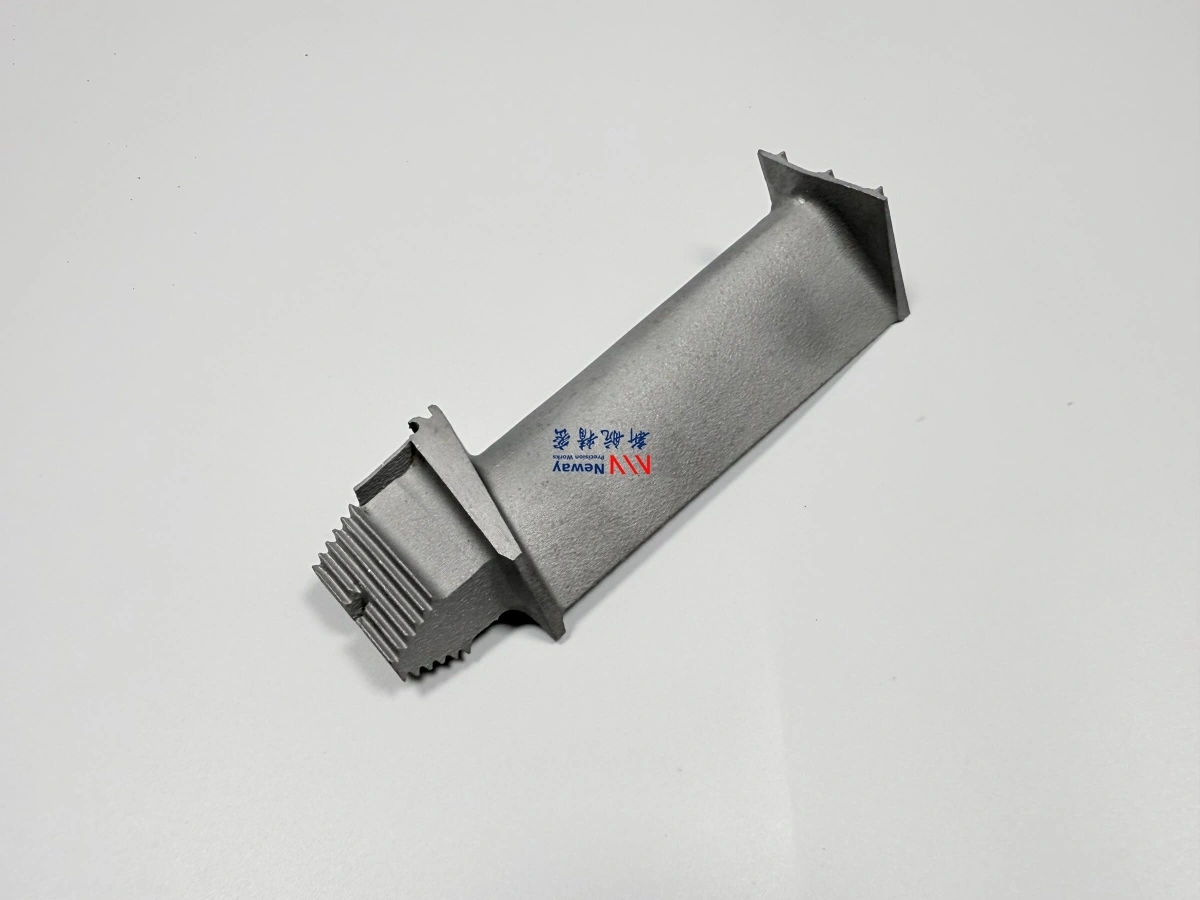
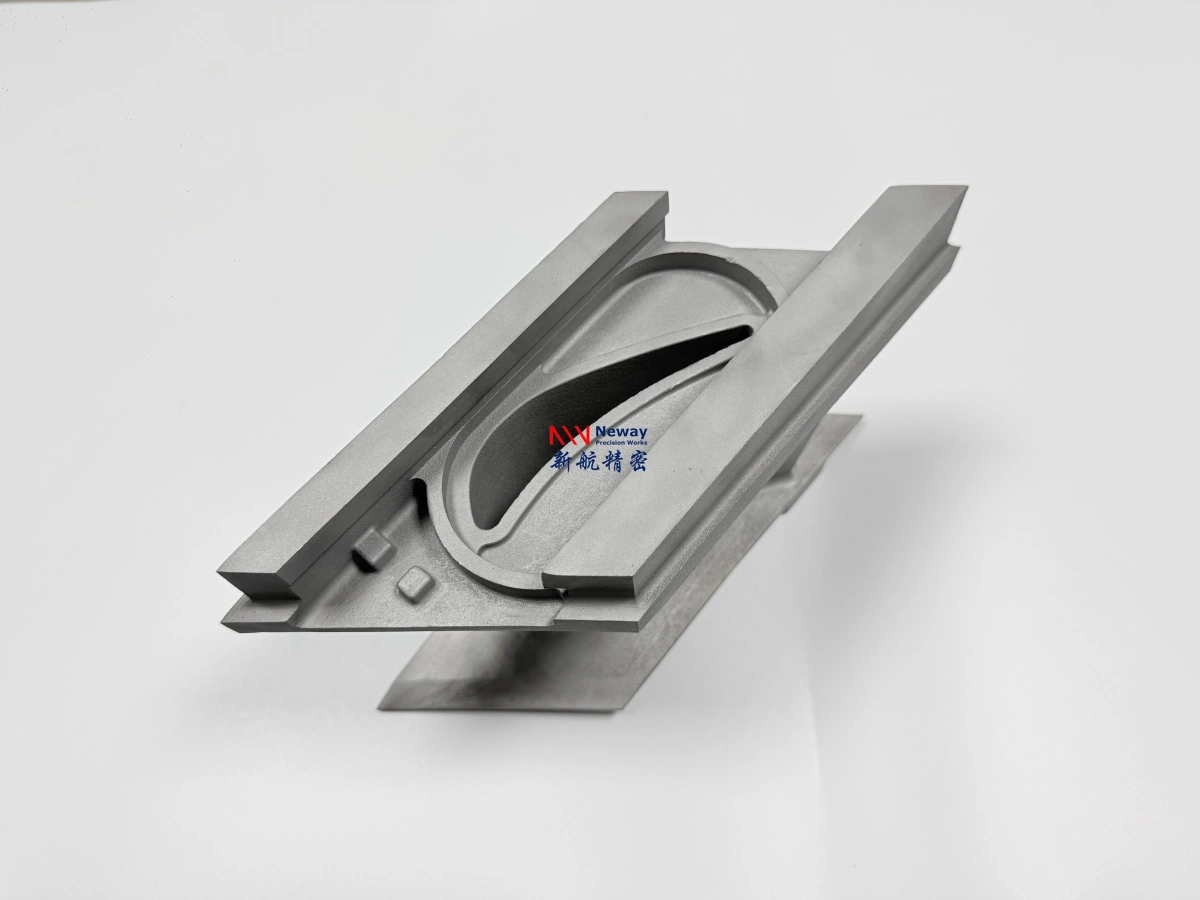
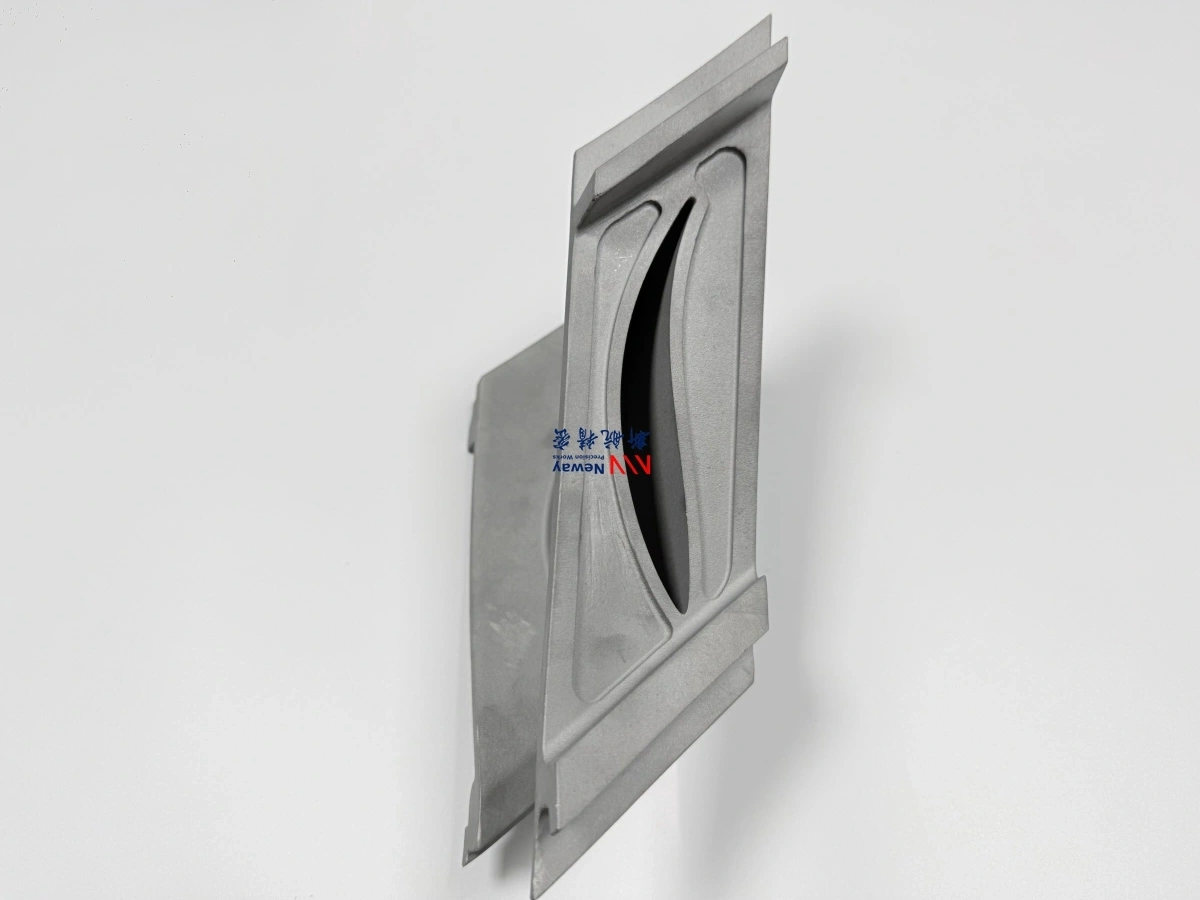
For a turbine blade cooling-feature RFQ, buyers should separate the cast airfoil, the internal or external cooling geometry, and the final inspection evidence before comparing suppliers. EDM, deep-hole drilling, and CNC machining do different jobs on nickel-based and cobalt-based superalloys. A small film-cooling hole, a shaped discharge slot, a metering hole, a trailing-edge exit feature, and a long internal passage cannot be quoted from the same machining note. The supplier needs to know which features are already formed by casting and ceramic core, which features must be drilled or EDM-machined after casting, and which surfaces remain buyer-controlled after delivery.
NewayAeroTech can review turbine blade, turbine bucket, vane, shroud, and hot-section component projects where superalloy EDM machining must work with superalloy deep hole drilling, superalloy CNC machining, casting-route selection, heat treatment, and dimensional inspection. The review is based on customer drawings, models, samples, material notes, and acceptance standards. It is not a claim that every cooling design can be manufactured without engineering review; blade wall thickness, access angle, alloy condition, and inspection method all decide the feasible route.
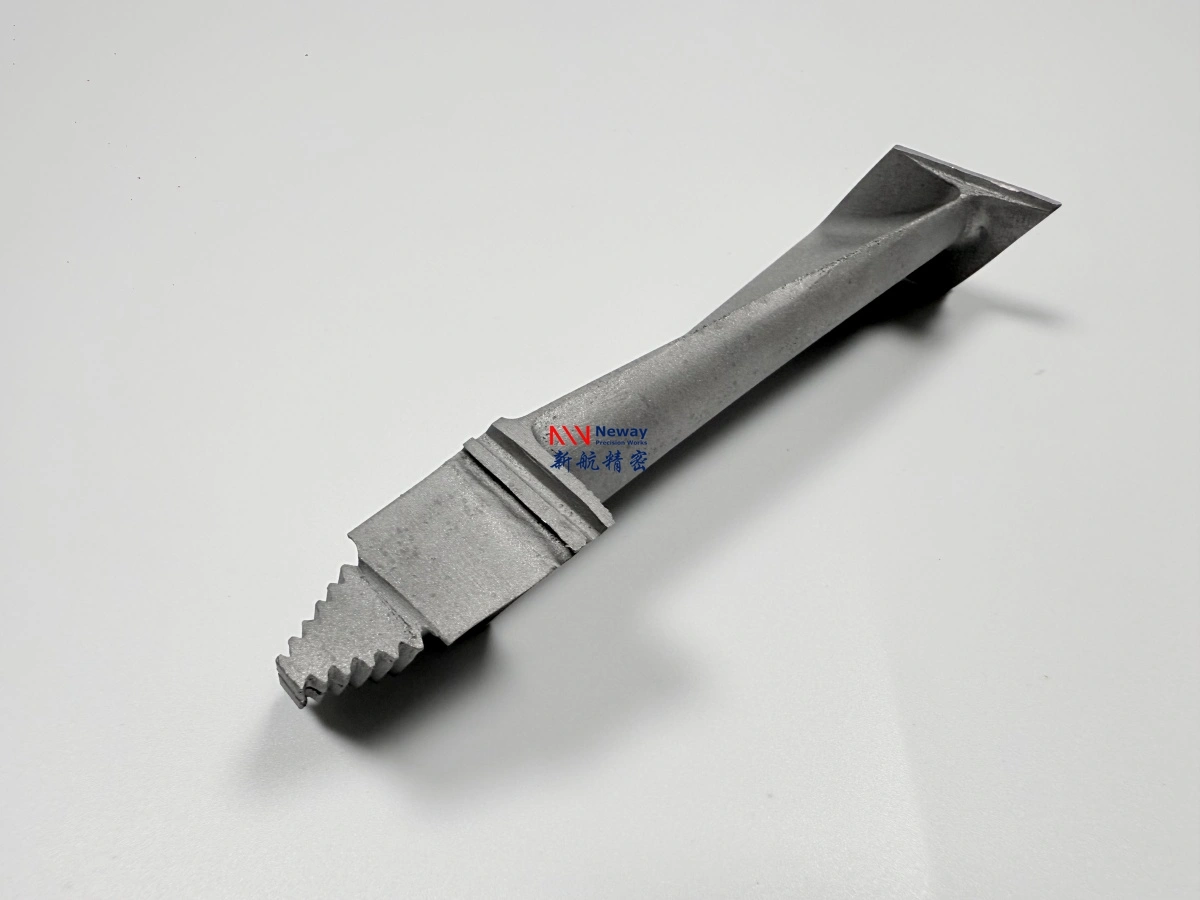
Cooling Feature Boundary Before Machining
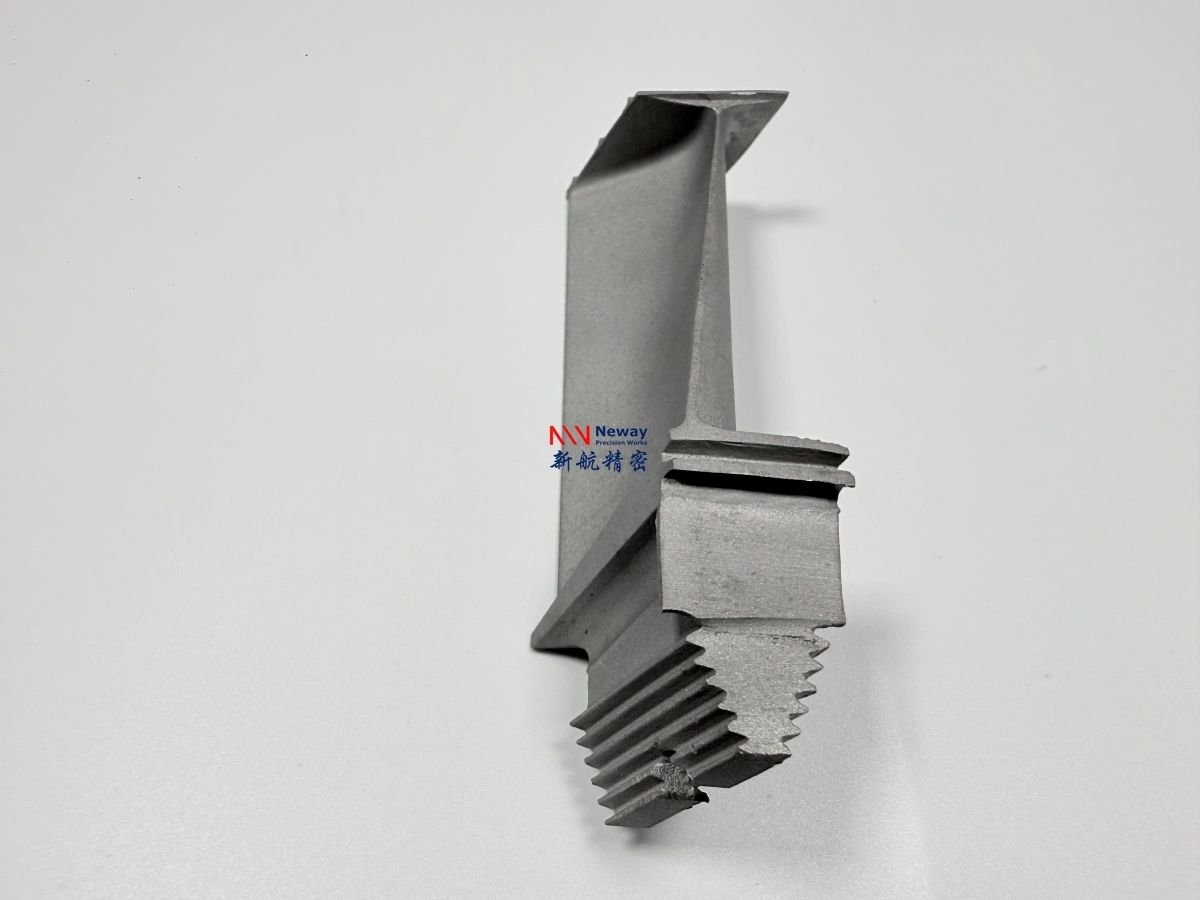
The first RFQ decision is not the machine type; it is the boundary of the cooling system in the supplied geometry. A cast blade may already contain internal passages formed by ceramic cores. The post-casting operation may only need to open metering holes, trim an exit slot, machine a root-side access feature, or finish a shaped film-cooling pattern. A different project may start from a solid or semi-solid blank where long passages must be drilled before smaller EDM features are added. These two jobs carry different fixture, datum, and inspection requirements.
Buyers should mark each cooling feature by function, not only by diameter. A feed passage, impingement hole, bleed hole, trailing-edge slot, platform cooling feature, and root-side access port all control a different manufacturing risk. On a single crystal or directionally solidified blade, the machining route must also respect airfoil wall stock, crystal-route expectations, thermal-history notes, and any surfaces that later receive coating preparation. If the drawing uses a generic note such as "cooling holes per model," the supplier still needs a feature list showing which holes are open, which are blind, which intersect an internal passage, and which require flow or visual confirmation.
Cooling feature in the RFQ | Manufacturing question | Why the answer changes the quote |
|---|---|---|
Long root-to-airfoil passage | Can the axis be reached by deep-hole drilling before other features are finished? | Access length, drift risk, datum control, and breakthrough location become the main cost drivers. |
Small film-cooling hole pattern | Are the holes cylindrical, shaped, angled, or tied to a metering requirement? | EDM electrode choice, fixture indexing, recast-layer review, and inspection method change. |
Trailing-edge exit slots | Is the exit formed by casting, EDM trimming, or a combined route? | Thin-wall protection and edge condition become more important than simple hole diameter. |
Platform or root cooling feature | Does the feature share a datum with root machining or platform sealing surfaces? | The machining sequence must protect final interface geometry and CMM reporting. |
Choosing EDM Deep Hole Drilling or CNC
EDM is usually reviewed when the feature is difficult to cut mechanically, when the alloy is hard after heat treatment, when the geometry is narrow or shaped, or when the buyer wants to reduce cutting-force risk on a thin superalloy section. Deep-hole drilling is reviewed when the feature is long relative to diameter and needs a controlled path through a blade root, shank, or thicker hot-section section. CNC machining remains part of the route because datums, fixture pads, root features, platform faces, and inspection references often have to be established before the hole operation can be trusted.
The supplier cannot quote the route from hole diameter alone. A 1 mm hole through a short wall is a different job from a 1 mm angled feature that must enter a cast internal cavity without damaging the opposite wall. A larger drilled passage may look easier in a table, yet become difficult when it crosses a thin airfoil section or needs to meet an existing core-formed channel. EDM and drilling also interact with heat treatment and coating plans. If a hole will be machined before coating, the buyer should state whether later surface preparation may alter the opening. If the feature is machined after coating or after final surface finishing, the process window becomes narrower and may require a different review.
Process route | Best-fit feature review | Buyer data needed before quotation |
|---|---|---|
EDM | Small angled holes, slots, shaped exits, hard superalloy features, and fragile local sections. | Feature model, entry/exit faces, acceptable edge condition, recast-layer expectation, and inspection method. |
Deep-hole drilling | Long passages, root-side feed holes, thicker sections, and features with length-to-diameter risk. | Drilling axis, available datum, breakthrough allowance, wall-stock map, and any flow-check requirement. |
CNC machining | Datums, fixture surfaces, root and platform references, chamfers, local pads, and pre-machining access. | Datum scheme, machining allowance, surface finish note, tolerance class, and CMM reporting need. |
Combined route | Cooling layouts where cast passages, drilling, EDM, and final machining must meet. | Manufacturing sequence, critical-to-function features, hold points, and first-article validation plan. |
Wall Section Alloy and Route Risk
Cooling features become difficult when the drawing does not show the remaining wall section around the hole. Turbine blades and buckets may use Inconel 738LC, Rene alloys, CMSX-series single crystal alloys, MAR-M247, GTD111DS, or other high-temperature alloys depending on the application. The alloy name tells the supplier about machinability and post-process sensitivity, but the local geometry decides the practical risk. A hole near a concave airfoil wall, a trailing-edge slot, or a platform transition can be more sensitive than a feature in a heavy root section even when the material is the same.
For cast blades, the team should also identify which cooling geometry is controlled by the wax pattern and ceramic core, which geometry is created after casting, and which local surfaces need allowance for cleanup. If the blade route is single crystal casting, the buyer should avoid treating EDM or drilling as an isolated shop operation. Fixture pressure, local heating, stress relief expectations, and inspection hold points may all need review. If the feature belongs to a repair or MRO sample-based project, a used blade sample should not be treated as final design geometry when wear, oxidation, coating residue, and deformation can shift hole location or local thickness.
NewayAeroTech's review normally starts by asking whether the buyer has a native 3D model, a 2D drawing with section views, or only a sample part. A model allows the supplier to check hole axes, wall stock, and intersection risk. A drawing can define datum and acceptance rules. A sample can help understand the component, but it cannot replace engineering approval for final dimensions, especially when cooling holes have been enlarged, blocked, or distorted in service.
Inspection Evidence for Cooling Holes
Cooling-feature inspection should be selected from the failure mode the buyer wants to control. A CMM report can confirm entry locations, datum relationships, root or platform references, and some accessible feature geometry. Visual inspection, borescope review, section checks, or CT review may be needed when the concern is internal connection or breakthrough quality. FPI can support surface crack review around machined edges. X-ray or CT can help when cast passages, wall thickness, or blocked channels are part of the acceptance discussion. Flow testing may be requested when the drawing or customer validation plan requires evidence that a cooling path is open, but the exact method must be defined by the buyer's standard or project requirement.
Buyers should not ask for every possible inspection as a blanket requirement. That often makes the quote slower without clarifying the acceptance risk. A stronger RFQ connects each inspection to a feature: CMM for entry location, CT or X-ray for internal path confirmation, FPI for machined-edge surface condition, and flow review for channel continuity when required. Material testing and analysis may also be connected to heat treatment records, metallography, hardness testing, or chemical analysis when the project scope includes full manufacturing support rather than only feature machining.
Inspection evidence | Cooling-feature question answered | RFQ note buyers should provide |
|---|---|---|
CMM or dimensional report | Are entry points, datum references, platform offsets, and local feature positions acceptable? | Identify datum scheme, reporting points, and any critical-to-function dimensions. |
Visual or borescope review | Are openings clear, burr conditions acceptable, and accessible internal features visible? | State whether photo records or documented observations are required. |
X-ray or CT review | Do drilled or EDM features connect to the intended internal passage without wall damage? | Define which channel, wall, or intersection needs review. |
FPI | Are machined edges free from surface indications under the buyer's acceptance plan? | Provide acceptance criteria and whether inspection occurs before or after coating preparation. |
Flow check | Does the cooling path remain open after machining and post-processing? | Provide the required method or validation expectation if flow evidence is needed. |
Datums Fixtures and Sequence Control
Cooling-hole work often fails commercially when the buyer and supplier assume different datums. The casting datum, root machining datum, airfoil inspection datum, and fixture datum may not be identical. A hole pattern that is acceptable relative to a local surface can be unacceptable relative to the final root or platform interface. For this RFQ, buyers should identify the controlling datum for each feature group and state whether the supplier is responsible for creating datum surfaces before EDM or drilling begins.
Sequence control is just as important as the chosen process. A typical review may include rough datum machining, stress or heat-treatment review when required, deep-hole drilling for long passages, EDM for shaped cooling features, deburring or edge review, CMM inspection, FPI, and final cleaning. The sequence may change when the blade is delivered as a casting blank instead of a finished component. If the buyer expects the supplier to deliver a finished blade, root geometry, platform faces, tip features, cooling holes, and inspection records should be in the same scope. If the buyer only needs a machined blank for later in-house validation, the RFQ should not require finished-part evidence that the supplier has not been asked to control.
RFQ item | What the buyer should define | Supplier responsibility clarified |
|---|---|---|
Datum ownership | Primary, secondary, and local datums for the cooling feature group. | Whether NewayAeroTech creates, uses, or only references the datum surfaces. |
Feature sequence | Which operations occur before EDM, before drilling, after heat treatment, and before coating. | Whether the quote covers a single operation or a combined manufacturing route. |
Machining allowance | Stock left around root, platform, airfoil edge, or local hole surface. | Whether the supplier protects allowance or finishes to the final dimension. |
Inspection hold point | Where the buyer wants evidence before the next process continues. | Whether reports are supplied at casting, machining, EDM, drilling, or final release. |
RFQ Package for Cooling Feature Work
A complete RFQ for EDM and deep-hole drilling should include the 3D model, 2D drawing, alloy grade, delivery condition, quantity, blade or component type, feature list, datum scheme, machining allowance, heat treatment condition, coating plan, and inspection standard. Buyers should also identify whether the project is new manufacture, prototype validation, replacement manufacturing, or sample-based reverse review. Those categories change the amount of design authority the supplier can assume.
If the project involves a turbine blade or hot gas path component, NewayAeroTech can review whether the route should combine vacuum investment casting, single crystal or directional casting, EDM, deep-hole drilling, CNC machining, HIP, heat treatment, coating preparation, and inspection. The most useful RFQ does not simply ask for "EDM holes." It shows the feature purpose, the surface that controls the location, the acceptance evidence needed, and the delivery state expected. Send drawings, models, material notes, feature tables, and inspection requirements so NewayAeroTech can review a practical manufacturing route for suitable superalloy turbine cooling-feature projects.
Related FAQs
How does EDM create complex features without mechanical stress in superalloys?
What tests ensure accuracy and integrity of complex EDM features?
How does deep-hole drilling improve turbine blade and aerospace performance?
Why flow testing of cooling channels is critical for superalloy components?
How do tests and inspections ensure quality of deep-hole drilled parts?
How should buyers specify inspection requirements in an RFQ?