
قرص توربين من مساحيق سبائك فائقة تحمل درجات الحرارة العالية
مقدمة
تعدين المساحيق (PM) هو أكثر طرق التصنيع تقدمًا لإنتاج أقراص توربين من سبائك فائقة تحمل درجات الحرارة العالية، مع عمر إجهاد استثنائي، ومقاومة للزحف، واستقرار ميكانيكي. في نيوي إيروسبيس، نحن متخصصون في تصنيع أقراص توربين بتقنية PM من سبائك مثل Rene 95 وUdimet 720 وFGH97 – مصممة للعمل في توربينات الغاز التي تتجاوز 700 درجة مئوية وسرعات دوران تزيد عن 12000 دورة في الدقيقة. هذه المكونات حاسمة لتطبيقات الفضاء والطيران، وتوليد الطاقة، والدفع العسكري.
من خلال توحيد مساحيق السبائك الدقيقة وتطبيق التشكيل بالطرق الدقيق والمعالجة الحرارية، تقدم أقراص التوربين الخاصة بنا تحكمًا لا مثيل له في البنية المجهرية، ودقة أبعاد، وموثوقية ميكانيكية.
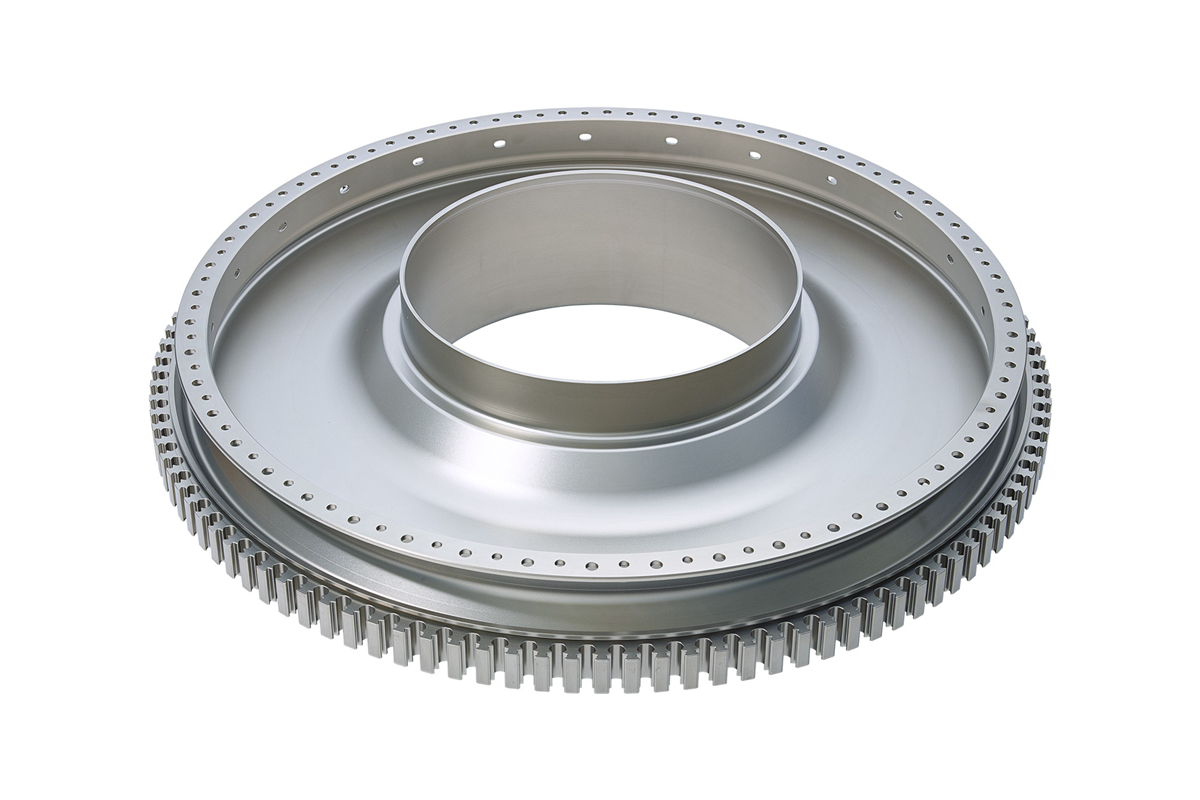
التكنولوجيا الأساسية لأقراص توربين PM من السبائك الفائقة
تذرية المسحوق: إنتاج مساحيق سبائك كروية دقيقة (10–100 ميكرومتر) عبر التذرية بالغاز مع تجانس كيميائي ممتاز ومحتوى أكسجين منخفض.
الكبس المتساوي الحرارة (HIP): توحيد المساحيق تحت ضغط 100–200 ميجا باسكال ودرجة حرارة 1150–1200 درجة مئوية في فرن HIP، لتحقيق كثافة >99.9% مع مسامية <0.1%.
التشكيل بالطرق المتساوي الحرارة (اختياري): التشكيل بالطرق عند ~1100 درجة مئوية لمحاذاة الحبيبات وتحسين البنية المجهرية للحصول على قوة إجهاد وزحف مثلى.
المعالجة بالتبريد والشيخوخة: المعالجة الحرارية بعد التشكيل بالطرق تثبت طور γ/γ′، لتحقيق قوة شد تصل إلى 1500 ميجا باسكال.
التشغيل الآلي الدقيق بالتحكم الرقمي (CNC): يضمن التشغيل الآلي متعدد المحاور بالتحكم الرقمي تسامحات أبعاد تبلغ ±0.01 ملم على جميع الأسطح الحاملة للأحمال والديناميكية الهوائية.
الطلاءات الاختيارية: يمكن إنهاء الأسطح أو طلاؤها بطبقات مقاومة للأكسدة والإجهاد الحراري بناءً على مواصفات العميل.
خصائص مواد السبائك الفائقة PM لأقراص التوربين
السبيكة | قوة الشد القصوى (ميجا باسكال) عند 700°C | مقاومة الزحف | عمر الإجهاد | التطبيق الشائع |
|---|---|---|---|---|
Rene 95 | 1450 | ممتاز | مصنف لدورات عالية | قرص توربين ضغط عالي لمحرك نفاث |
Udimet 720 | 1420 | فائق | مصنف لعمر طويل | دوارات المحركات العسكرية |
FGH97 | 1500 | استثنائي | >30,000 دورة | مراحل توربينات الطاقة والطيران |
دراسة حالة: قرص تعدين مساحيق Rene 95 لمرحلة توربين ضغط عالي
خلفية المشروع
تطلب مصنع معدات أصلية رائد لمحركات الطائرات أقراص توربين عالية الحرارة لمرحلة التوربين عالي الضغط (HPT). تضمنت المواصفات العمل المستمر عند 700–750 درجة مئوية، وعمر إجهاد يتجاوز 25000 دورة، وتسامح أبعاد أقل من ±0.01 ملم. تم اختيار Rene 95 عبر تعدين المساحيق لقوة إجهاده واستقراره المجهري.
التطبيقات النموذجية لأقراص توربين PM
قرص توربين ضغط عالي GE CF6 (Rene 95): يستخدم في محركات الطائرات ذات الجسم العريض، ويحافظ على الدوران عالي السرعة والدورات الحرارية المتكررة لأكثر من 25000 دورة طيران.
قرص توربين وسيط PW4000 (Udimet 720): يوفر موثوقية طويلة الأمد للزحف والإجهاد في تجميعات توربينات الطيران في المرحلة المتوسطة.
قرص توربين ضاغط GE9X (FGH97): مصمم لمحركات ذات تجاوز فائق الارتفاع مع متطلبات أقصى تحميل ميكانيكي وحراري.
قرص توربين غاز صناعي Siemens (FGH97): يدعم توليد الطاقة الأساسي طويل الأمد مع تشوه زحف منخفض عند >700 درجة مئوية.
حل التصنيع
اختيار المسحوق والغربلة: غربلة مسحوق Rene 95 للحصول على توزيع حجم جسيمات مثالي وتحكم كيميائي.
توحيد HIP: تكثيف تحت 1200 درجة مئوية / 150 ميجا باسكال للتوحيد الكامل مع مسامية متبقية <0.1%.
التشكيل بالطرق المتساوي الحرارة: التشكيل بالطرق عند ~1100 درجة مئوية لتدفق حبيبات موحد، وتقليل تركيز الإجهاد وتحسين مقاومة الإجهاد.
المعالجة الحرارية: التلدين بالتبريد عند 1150 درجة مئوية يليه شيخوخة مزدوجة المرحلة عند 760–870 درجة مئوية لتطوير توزيع طور γ′ دقيق.
التشغيل الآلي بالتحكم الرقمي (CNC): تشغيل ثقب القرص، والوجه، وأخاديد ذيل الحمامة إلى ±0.01 ملم باستخدام أنظمة CNC بخمس محاور متقدمة.
ضمان الجودة: تأكيد السلامة الداخلية بواسطة فحص الأشعة السينية؛ التحقق من دقة الأبعاد بواسطة آلة القياس الإحداثي (CMM).
النتائج والتحقق
القوة الميكانيكية: تجاوزت قوة الشد النهائية 1450 ميجا باسكال؛ تجاوزت قوة الخضوع 1000 ميجا باسكال عند 700 درجة مئوية.
أداء الإجهاد: اجتازت اختبارات الإجهاد منخفض وعالي الدورات 30000 دورة تحت ملفات تحميل محاكاة للمحرك.
مقاومة الزحف: أظهر اختبار الزحف لمدة 1000 ساعة عند 750 درجة مئوية إجهادًا أقل من 0.5%، متجاوزًا مواصفات توربين الفضاء.
تسامحات الأبعاد: تأكد من أن جميع الأبعاد الحرجة ضمن ±0.01 ملم باستخدام التحقق متعدد النقاط بآلة القياس الإحداثي.
جودة البنية المجهرية: أظهرت الفحوصات المجهرية الإلكترونية والمعدنية توزيعًا موحدًا لـ γ′ وغياب المسام أو الشقوق.
الأسئلة الشائعة
لماذا يُفضل تعدين المساحيق في تصنيع أقراص التوربين للمحركات عالية الحرارة؟
كيف يقارن Rene 95 بالسبائك الفائقة الأخرى من حيث أداء الإجهاد والزحف؟
ما التسامحات التي يمكن لـ Neway AeroTech تحقيقها على أقراص التوربين المشغلة آليًا؟
هل أقراص تعدين المساحيق مناسبة لكل من تطبيقات توربينات الطيران والصناعية؟
ما الاختبارات غير التدميرية المستخدمة للتحقق من جودة قرص PM في Neway AeroTech؟
