
Vacuum Investment Casting Super Alloy Parts Welding Service
High-Integrity Welding for Cast Superalloy Components
Superalloy components produced by vacuum investment casting are essential to aerospace engines, energy systems, and industrial turbines. These castings often require post-processing weld repair, precision joining, or assembly welding. However, welding vacuum-cast superalloys—especially nickel-based grades like Inconel, Rene, and Hastelloy—presents significant challenges due to microsegregation, hot cracking, and oxidation sensitivity.
Neway AeroTech offers NADCAP-compliant superalloy welding services for turbine vanes, blade segments, exhaust parts, and structural castings. We integrate TIG, laser, and vacuum chamber welding with post-weld heat treatment, hot isostatic pressing (HIP), and full NDT verification.
Core Welding Processes for Vacuum Cast Superalloy Parts
Neway AeroTech applies controlled welding procedures tailored to the alloy chemistry, grain structure, and casting geometry of each part.
TIG welding with matched Inconel, Rene, or Hastelloy filler
Laser welding for thin-wall or heat-sensitive zones
Vacuum and inert gas welding chambers to eliminate oxidation
Post-weld heat treatment and HIP for microstructural recovery
We support blade tip buildup, seal surface welding, crack repair, and component assembly for cast superalloy parts.
Common Superalloys for Cast and Welded Applications
Alloy | Max Temp (°C) | Yield Strength (MPa) | Common Welded Parts |
|---|---|---|---|
950 | 760 | Turbine blades, nozzle segments | |
1050 | 880 | Stator vanes, hot section housings | |
1050 | 880 | Combustion liners, shrouds | |
1175 | 790 | Transition ducts, exhaust rings |
These alloys require precise welding protocols to prevent microcracking and retain high-temperature performance.
Case Study: TIG Weld Repair of Inconel 738 Cast Vane Segment
Project Background
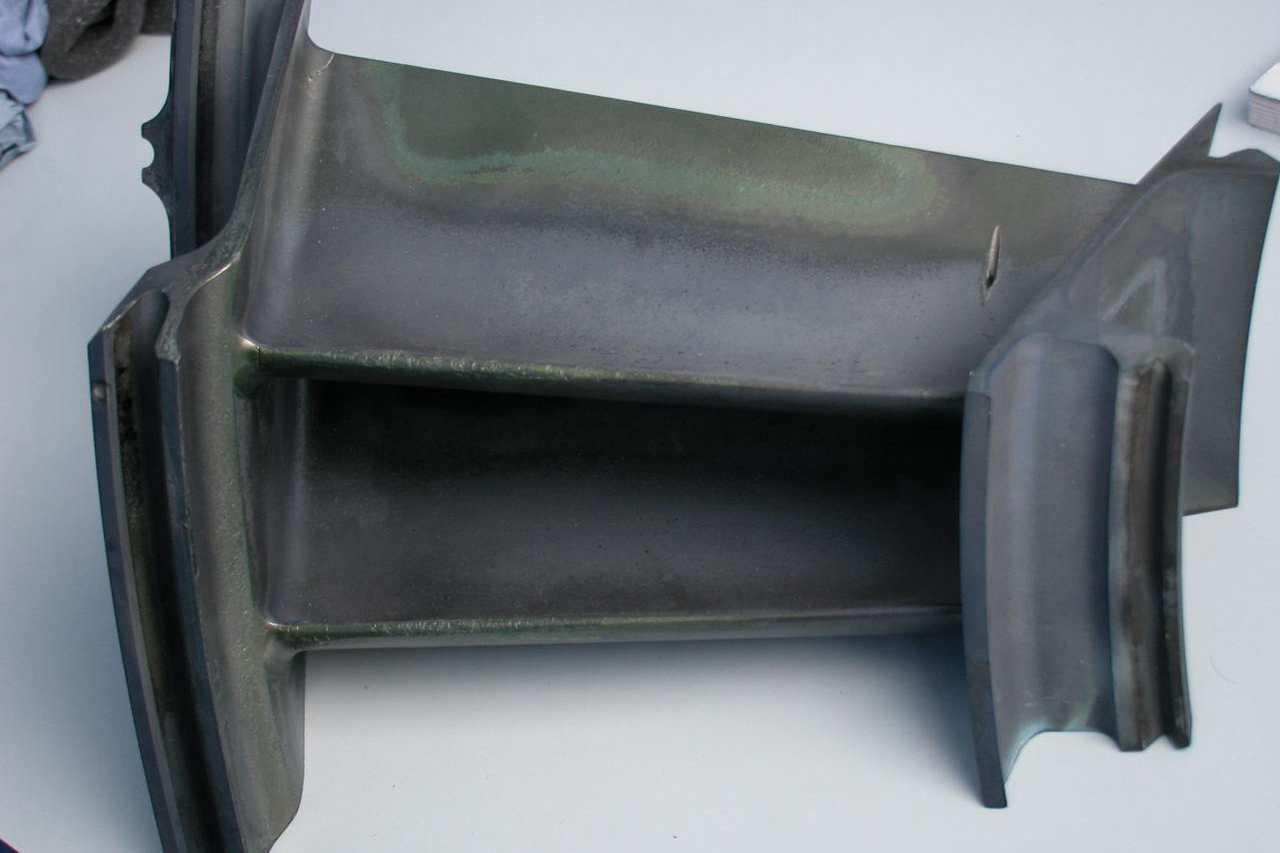
A customer submitted equiaxed Inconel 738 vanes with casting porosity and edge erosion. We applied TIG weld buildup using matched Inconel filler, followed by stress-relief heat treatment and X-ray inspection. The restored parts met OEM geometry and microstructure specs.
Typical Welded Superalloy Components and Industries
Component | Weld Type | Alloy | Industry |
|---|---|---|---|
Turbine Vane | TIG multi-pass | Inconel 738 | |
Exhaust Liner | Laser weld seam | Hastelloy X | |
Blade Tip | TIG buildup | Rene 80 | |
Seal Ring | TIG joint weld | Inconel 713C |
Each weld is qualified to withstand thermal fatigue and high-cycle loading in combustion and exhaust environments.
Welding Challenges for Vacuum Cast Superalloy Parts
Microsegregation in cast zones increases hot cracking risk during fusion
High gamma prime content requires controlled interpass temperatures
Thin-wall distortion during localized weld heating
HAZ grain coarsening if PWHT is improperly applied
Porosity and inclusions from improper gas shielding or surface oxidation
Certified Welding Solutions for Cast Superalloy Assemblies
Pre-weld joint prep and oxide removal using CNC contour grinding
Argon-shielded TIG welding with low heat input and filler matched by alloy
Laser welding for sub-millimeter seams and low HAZ spread
Post-weld HIP and heat treatment to restore ductility and microstructure
**Final blending, inspection, and optional TBC coating for surface protection
Results and Verification
Welding Execution
Cast vane segments were TIG welded using Inconel 738 filler wire under controlled argon atmosphere. Multi-layer passes were built to 3 mm thickness, blended, and machined.
Post-Weld Processing
Heat treatment was performed at 980°C to relieve HAZ stress and normalize structure. Optional HIP processing removed internal porosity. Parts were passivated and recoated where specified.
Inspection
X-ray NDT confirmed void-free weld fusion. CMM inspection validated dimensions. SEM confirmed grain integrity and surface quality. All parts were cleared for turbine assembly.
FAQs
What superalloy grades are commonly welded after vacuum casting?
How do you prevent cracking in high gamma prime alloys?
Can HIP be applied after welding for porosity removal?
What is the minimum weld thickness for turbine vane repairs?
What surface treatments are available post-weld?
