
Tool Steel Precision Engineered Mining Parts 3D Printing Solutions
Introduction to Tool Steel Additive Manufacturing for Mining Applications
Tool steels are engineered for extreme mechanical wear, impact, and high-load operation—making them indispensable for mining and mineral processing. With 3D printing, complex wear-resistant parts can now be manufactured on demand, allowing for reduced downtime and faster design iterations in rugged mining environments.
At Neway Aerotech, we offer tool steel 3D printing services using Selective Laser Melting (SLM) and Direct Metal Laser Sintering (DMLS) to produce high-precision mining tools, protective enclosures, drill shoes, and cutting inserts tailored for high-impact, high-abrasion applications.
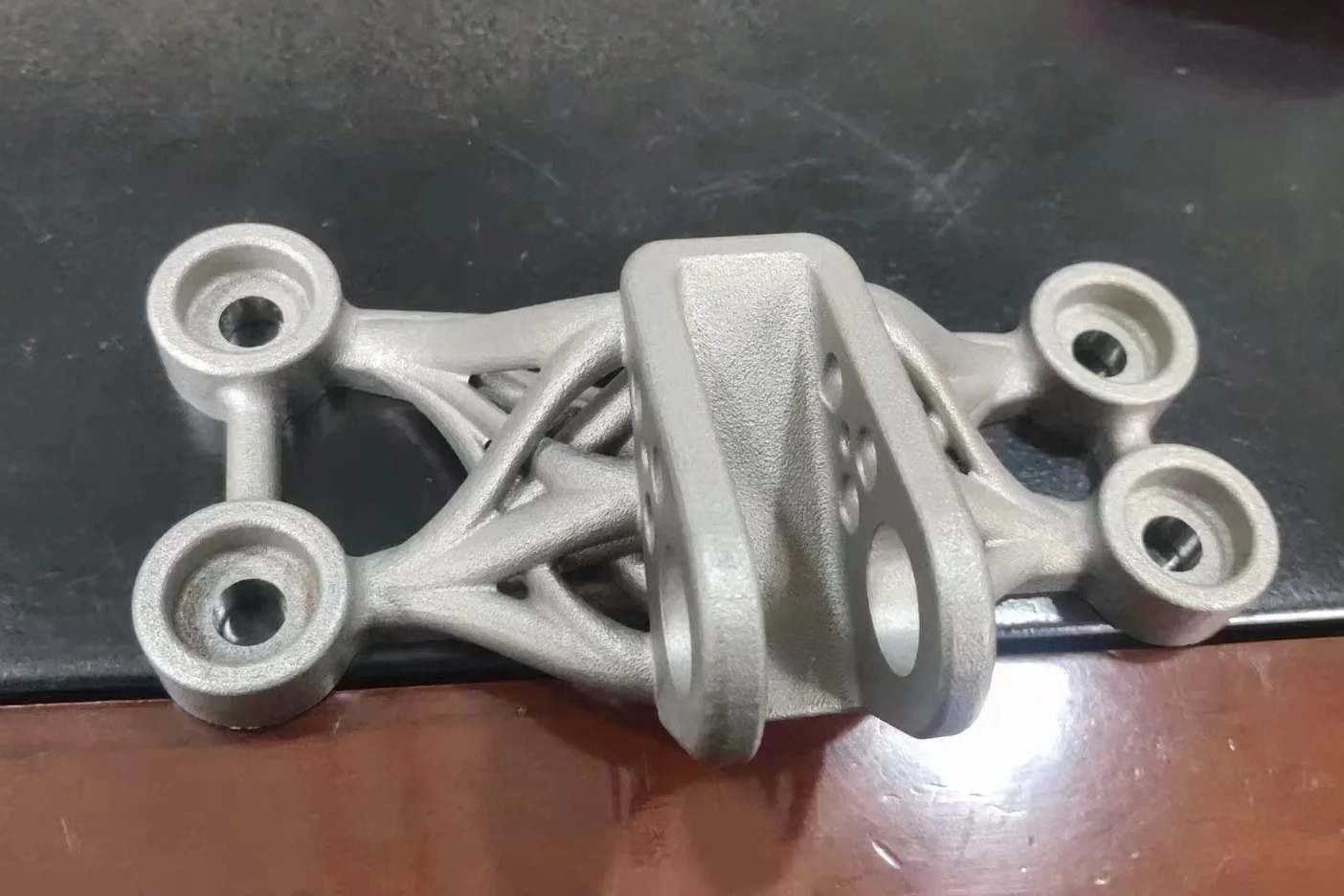
Additive Manufacturing Capabilities for Mining Tool Components
SLM and DMLS Process Parameters
Parameter | Value | Mining Application Relevance |
|---|---|---|
Layer Thickness | 30–60 μm | Enables edge sharpness and robust wall profiles |
Surface Roughness (as-built) | Ra 8–15 μm | Can be refined for sliding or impact surfaces |
Tolerance (as-printed) | ±0.05 mm | Maintains fit between assemblies and mounting zones |
Heat Treat Compatibility | Excellent (HRC > 50 achievable) | Wear surfaces hardened after printing |
Tool Steel Grades Used in Additive Mining Applications
Grade | Hardness (HRC) | Abrasion Resistance | Key Applications |
|---|---|---|---|
H13 | 45–52 (as-built) | High | Rock breaker shoes, protective cages |
A2 | Up to 58 | Excellent | Drill bits, chisel tips |
D2 | 60–62 (hardened) | Very high | Cutting dies, abrasion shields |
Maraging Steel 300 | ~55 | Moderate | High-strength structural housings |
Why Tool Steel is Ideal for Mining Applications
High Hardness and Toughness: Withstands constant impact and sliding wear in crushing, conveying, and drilling systems.
Thermal Resistance: Maintains mechanical integrity even under frictional heating during dry contact.
Custom Geometry: Enables optimized cutting patterns, internal reinforcement, and weight reduction.
Post-Treatment Compatibility: Printable parts can be hardened, coated, and precision machined.
Repair-Friendly: Worn-out tool steel parts can be rebuilt with Directed Energy Deposition (DED).
Post-Processing and Surface Finishing
Heat Treatment: Oil quenching, tempering, or vacuum hardening based on material.
HIP: Applied to critical parts to eliminate porosity and improve fatigue resistance.
CNC Machining: For fine-tolerance slots, threaded holes, and spline features.
Coating Options:
Titanium Nitride (TiN) or PVD coatings for additional surface hardness.
Shot peening for compressive stress and crack resistance.
Case Study: 3D Printed H13 Steel Cutting Insert for Quarry Drilling Tool
Project Background
A mining equipment OEM required a high-wear insert with optimized cutting geometry and internal cooling channels. The traditional brazed-carbide design lacked durability and required frequent replacement during quarry drilling operations.
Manufacturing Workflow
Design: Solid model with serrated cutting edge and spiral internal coolant channels.
Material: Gas atomized H13 tool steel, D50 ~35 μm.
Printing: SLM at 50 μm layers, argon atmosphere, build time 5 hours per insert.
Post-Processing:
Quenched and tempered to HRC 52
Coolant ports reamed and threaded
Insert ground flat on mounting face
Inspection:
CMM for feature accuracy
Pressure tested internal flow to 20 bar
Field-tested under 100+ drilling cycles
Results and Verification
The printed H13 cutting insert lasted 3× longer than the standard brazed alternative. The design also reduced vibration and improved cutting efficiency by 18%, with no insert breakage or cracking after repeated hammer load exposure.
FAQs
What’s the difference between H13 and D2 tool steel in mining wear applications?
Can printed tool steel parts be heat treated to match forged properties?
Are internal cooling channels printable in tool steel components?
Is WAAM or DED suitable for large tool steel rebuilds in mining?
What coatings are best for printed tool steel components in abrasive environments?
