
Ti-5Al-5V-5Mo-3Cr (Ti5553) Vacuum Investment Casting Aerospace Turbine Parts Supplier
Introduction
Ti-5Al-5V-5Mo-3Cr (Ti5553) is a near-beta titanium alloy engineered for ultra-high strength, excellent toughness, and fatigue resistance, making it ideal for heavily loaded aerospace turbine parts. As a specialized vacuum investment casting supplier, we manufacture precision Ti5553 components with a dimensional accuracy of ±0.05 mm, controlled beta grain structures, and porosity below 1% for demanding turbine and engine environments.
Ti5553 castings are optimized for jet engines and structural components that require exceptional mechanical performance at reduced weight.
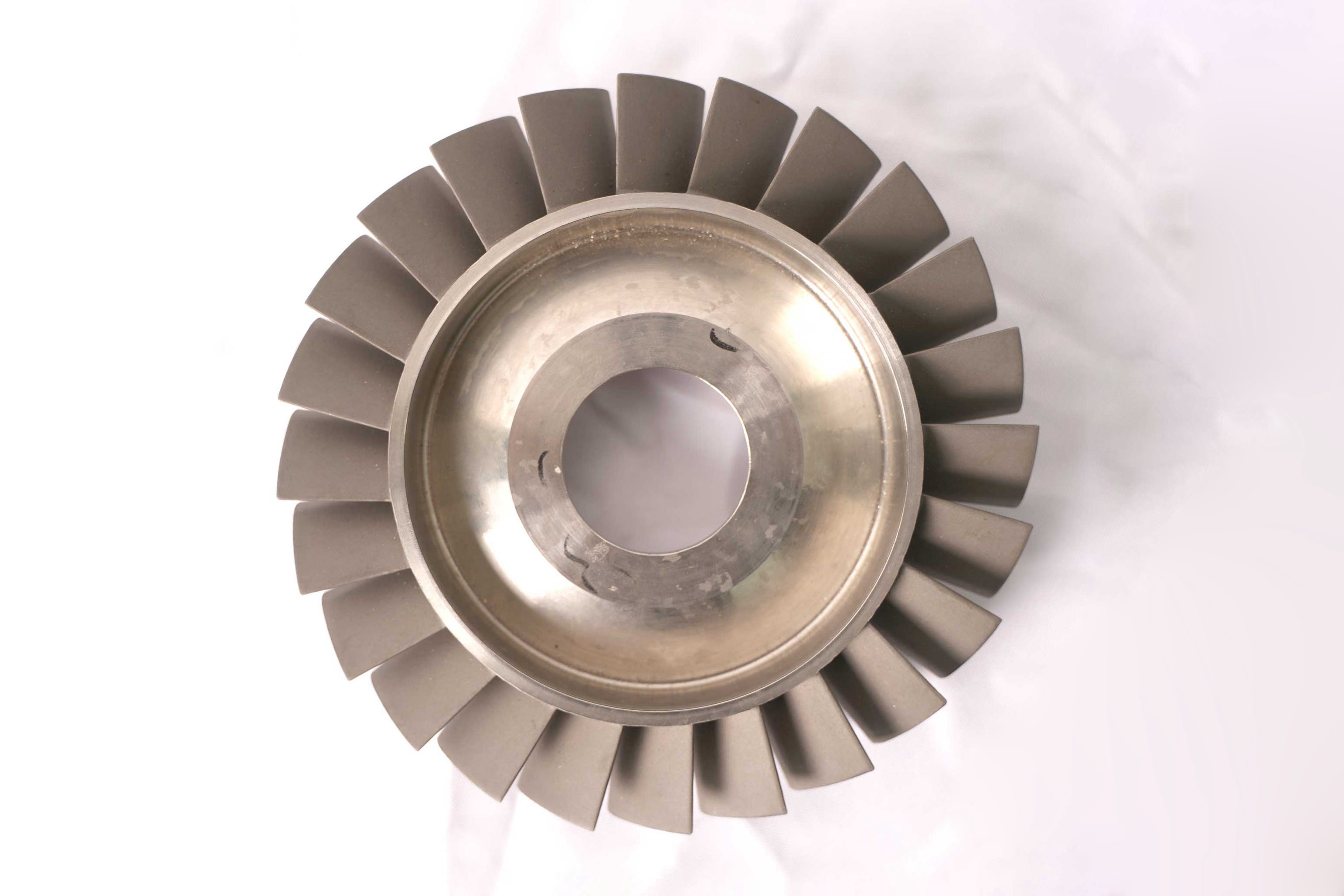
Core Technology: Vacuum Investment Casting of Ti5553
Ti5553 turbine components are produced using advanced vacuum investment casting to avoid contamination and ensure metallurgical integrity. The alloy is vacuum melted and poured at ~1650°C into ceramic shell molds (8–10 layers), with mold preheating at 950–1050°C. Cooling rates of 20–50°C/min are applied to achieve equiaxed beta grain structures (0.5–2 mm) and prevent alpha-case formation.
Material Characteristics of Ti-5Al-5V-5Mo-3Cr Alloy
Ti5553 is a metastable beta titanium alloy used for heavily stressed aerospace parts requiring high strength and fracture toughness. Key properties include:
Property | Value |
|---|---|
Density | 4.77 g/cm³ |
Ultimate Tensile Strength | ≥1380 MPa |
Yield Strength | ≥1280 MPa |
Elongation | ≥8% |
Fracture Toughness (K_IC) | ≥55 MPa·√m |
Fatigue Strength (10⁷ cycles) | ~600 MPa |
Operating Temperature Limit | Up to 300–350°C |
This alloy provides a superior strength-to-weight ratio, ideal for rotating turbine components and aircraft engine structural housings.
Case Study: Ti5553 Aerospace Turbine Component Production
Project Background
A global jet engine manufacturer required high-strength turbine disc covers and load-bearing brackets for a commercial aerospace engine platform. Ti5553 was selected for its superior fatigue resistance and castability. We delivered vacuum investment cast parts meeting AMS 4984 standards with final precision machining and non-destructive testing.
Typical Aerospace Turbine Applications
Turbine Disc Covers (e.g., GE90, PW1100G): Ti5553 covers offer weight savings and exceptional mechanical strength for high-RPM rotating sections.
Fan Hub Support Structures: Structural elements connecting fan modules to core engine frames, where fatigue and vibration resistance are critical.
Low-Pressure Turbine Casings: Precision-cast, load-bearing housings exposed to high-speed flow and mechanical stress at moderate temperatures.
Accessory Gearbox Mounts: Brackets that require tight tolerances and high load capacity under engine vibration and thermal cycling.
These parts must perform reliably under dynamic conditions, pressure fluctuations, and long-term cyclic fatigue exposure.
Manufacturing Solutions for Ti5553 Turbine Components
Casting Process High-purity wax patterns are invested into ceramic shells and vacuum cast at ~1650°C. Molds are preheated and solidification is controlled to prevent segregation, cracking, or distortion.
Post-processing Hot Isostatic Pressing (HIP) at ~920°C and 100 MPa is used to eliminate porosity and optimize microstructure. Beta heat treatment ensures optimal mechanical performance.
Post Machining After casting and HIP, components are finished using CNC machining for mounting holes, interfaces, and sealing surfaces. EDM is used to produce fine features. Deep hole drilling enables access for fasteners or cooling passages.
Surface Treatment Optional anodizing or passivation treatments are applied to enhance fatigue resistance and corrosion protection. Shot peening is available to improve fatigue life in cyclic loading applications.
Testing and Inspection Each component undergoes X-ray NDT, CMM dimensional inspection, mechanical testing, and metallographic analysis to confirm grain size, beta phase stability, and compliance with aerospace specifications.
Core Manufacturing Challenges
Avoiding alpha-case formation while achieving thin-wall accuracy in complex cast geometries.
Meeting ±0.05 mm dimensional tolerances on large, load-bearing components.
Controlling beta-phase grain structure to balance strength and ductility.
Results and Verification
Dimensional accuracy confirmed within ±0.05 mm using 3D CMM scanning.
Porosity <1% achieved post-HIP and validated via X-ray inspection.
Ultimate tensile strength ≥1380 MPa and fatigue strength ~600 MPa confirmed through cyclic load testing.
No phase instability or cracking after thermal cycling at 300°C for 1000 hours.
FAQs
Why is Ti5553 ideal for aerospace turbine casting applications?
What tolerances can be achieved through vacuum investment casting of Ti5553?
How do you control grain structure and mechanical strength during production?
Can Ti5553 turbine parts be customized for specific engine models?
What inspection standards do you follow for flight-critical components?
