
Ti-10V-2Fe-3Al Precision Casting Aerospace Engine Components Manufacturer
Introduction
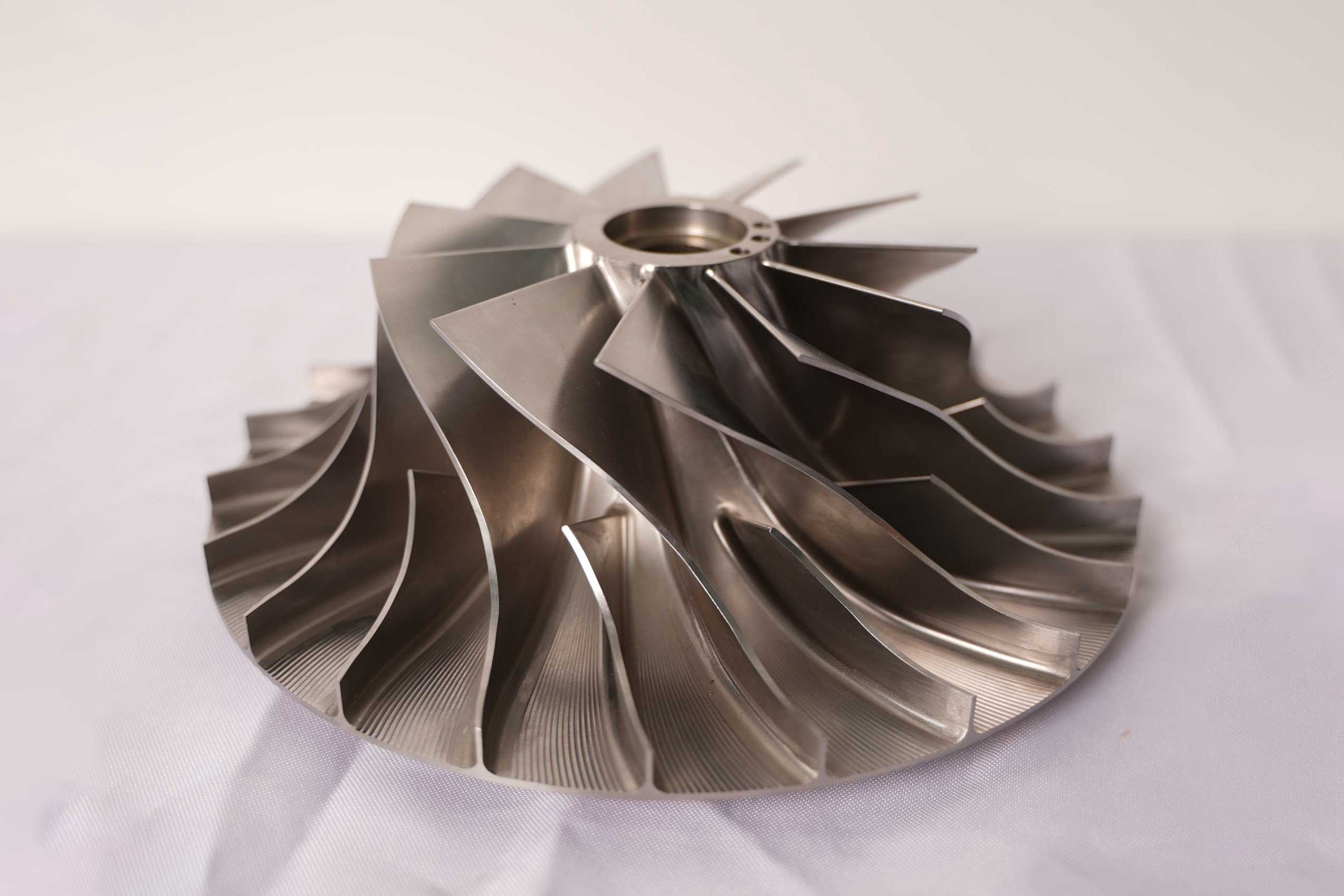
Ti-10V-2Fe-3Al is a near-beta titanium alloy developed for aerospace engine applications requiring high strength-to-weight ratio, excellent fracture toughness, and superior fatigue resistance. As a professional precision casting manufacturer, we produce high-performance Ti-10V-2Fe-3Al aerospace components using vacuum investment casting, achieving ±0.05 mm dimensional accuracy and <1% porosity for critical engine systems.
Our castings are ideal for rotating and structural elements in aerospace propulsion assemblies, where lightweight and high-performance titanium parts are essential.
Core Technology: Precision Investment Casting of Ti-10V-2Fe-3Al
We utilize advanced vacuum investment casting for Ti-10V-2Fe-3Al to prevent oxygen contamination and ensure metallurgical integrity. Ceramic shells (8–10 layers) are used with mold preheating at 950–1050°C. Casting temperatures are maintained around 1650°C under high vacuum (<10⁻³ torr). Controlled cooling rates (20–50°C/min) provide uniform beta-phase transformation and grain size control (0.5–2 mm).
Material Characteristics of Ti-10V-2Fe-3Al Alloy
Ti-10V-2Fe-3Al is a near-beta titanium alloy offering high specific strength and excellent hardenability with good machinability. It is widely used in aerospace engine and airframe components. Key properties include:
Property | Value |
|---|---|
Density | 4.65 g/cm³ |
Ultimate Tensile Strength | ≥1300 MPa |
Yield Strength | ≥1200 MPa |
Elongation | ≥10% |
Fracture Toughness (K_IC) | ≥55 MPa·√m |
Fatigue Strength (R=0.1, 10⁷ cycles) | ~600 MPa |
Operating Temperature Range | Up to 350–400°C |
This alloy is ideal for structural and load-bearing components in high-speed aircraft and engine systems.
Case Study: Ti-10V-2Fe-3Al Aerospace Engine Component Production
Project Background
An aerospace OEM required lightweight turbine case brackets and engine pylon fittings for a commercial jet engine program. Ti-10V-2Fe-3Al was selected for its superior strength-to-weight ratio. We produced vacuum-cast parts meeting AMS 4983 standards with final dimensions controlled within ±0.05 mm and heat treatment optimized for beta-phase retention.
Typical Aerospace Engine Component Applications
Fan Frame Brackets (e.g., GE LEAP, PW1100G): Cast Ti-10V-2Fe-3Al parts reduce weight while maintaining mechanical integrity under cyclic stress and moderate heat.
Engine Mount Lugs and Links: High-strength castings absorbing engine vibrations and thrust loads with excellent fatigue resistance.
Bearing Support Structures: Static precision castings requiring tight tolerances and stable performance across a wide temperature range.
Bypass Duct Support Frames: Lightweight cast frames designed to handle dynamic loading and pressure pulsations without deformation.
These components are essential to both structural stability and vibration resistance in turbofan and turbojet engine assemblies.
Manufacturing Solutions for Ti-10V-2Fe-3Al Components
Casting Process Wax assemblies are invested into high-purity ceramic shells. Vacuum casting is performed at ~1650°C with mold temperatures around 1000°C. Controlled cooling and mold removal prevent cracking and promote uniform grain structure.
Post-processing After casting, parts undergo Hot Isostatic Pressing (HIP) at ~925°C and 100 MPa to close internal pores. Solution treatment and aging are applied to achieve full mechanical property potential.
Post Machining CNC machining is performed to achieve final precision for mounting faces, hole diameters, and sealing features. Where tight internal features are required, EDM is applied. Deep hole drilling is used for hollow cooling or fastener access passages.
Surface Treatment Components may receive shot peening or stress-relief polishing. Optional titanium oxidation barrier coatings are applied for parts in hot-air zones or salt-laden environments.
Testing and Inspection All parts undergo X-ray nondestructive testing, CMM dimensional validation, mechanical testing, and metallographic analysis to verify grain refinement and β-phase distribution.
Core Manufacturing Challenges
Preventing oxygen pickup and alpha-case formation during titanium casting.
Achieving ±0.05 mm tolerances on large, thin-wall load-bearing parts.
Ensuring full mechanical property development through tight heat treatment control.
Results and Verification
Mechanical strength ≥1300 MPa UTS confirmed by elevated-temperature tensile testing.
Dimensional precision within ±0.05 mm verified by 3D CMM scanning.
Grain structure refined to 0.5–2 mm with porosity <1% post-HIP.
Fatigue life validated to exceed 10⁷ cycles at 600 MPa stress level.
FAQs
Why is Ti-10V-2Fe-3Al preferred for aerospace engine casting applications?
What are the typical tolerances and grain sizes achievable in cast titanium?
How is alpha-case formation avoided during casting?
Can Ti-10V-2Fe-3Al castings be customized for specific engine programs?
What inspection standards are followed to ensure aerospace compliance?
