
Superalloy Turbine Blades Hot Isostatic Pressing Manufacturer
Precision HIP Treatment for High-Performance Turbine Blade Applications
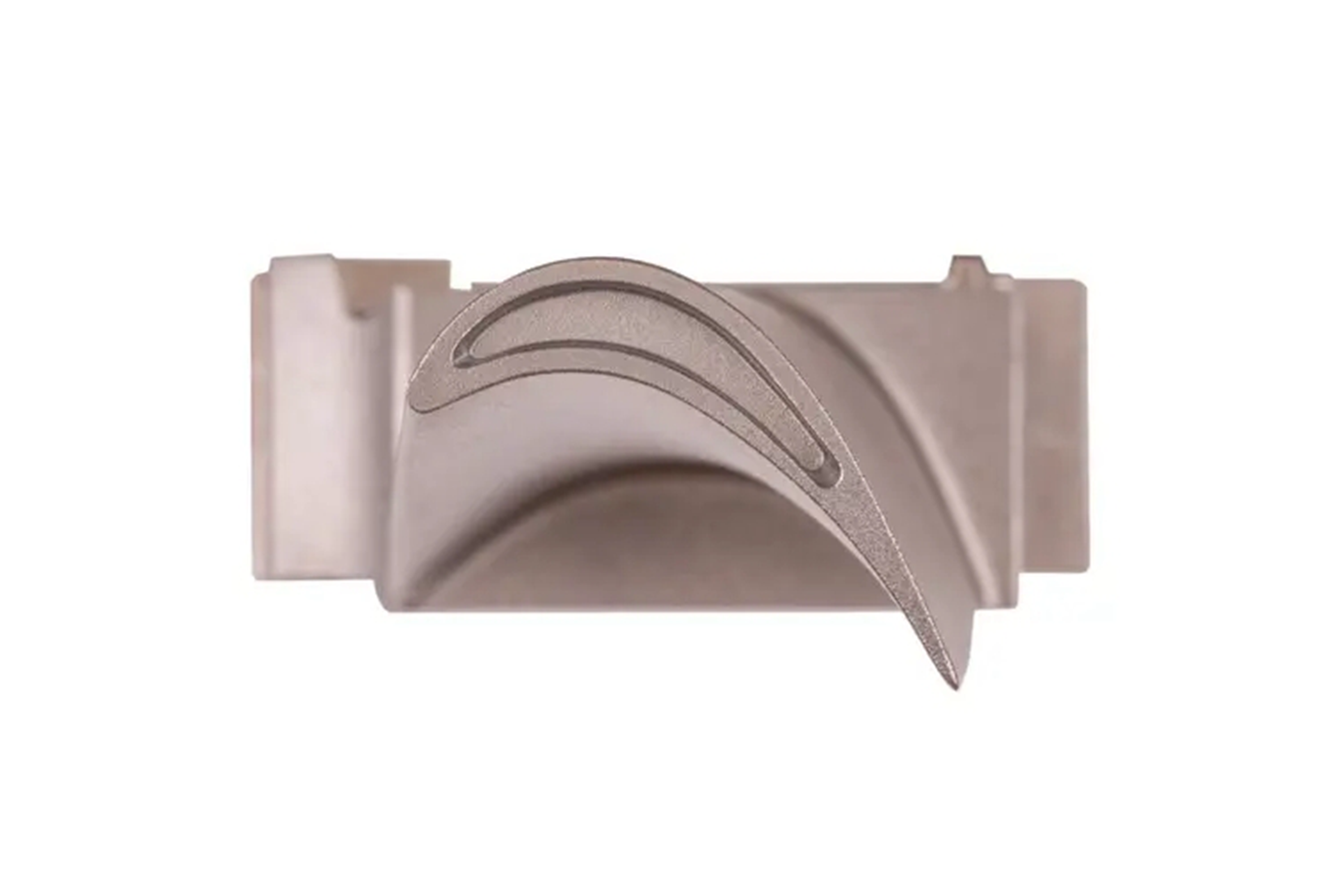
Turbine blades made from high-performance superalloys operate under extreme thermal and mechanical loads. These components must be free of internal voids, shrinkage porosity, and casting defects to ensure fatigue resistance, creep strength, and long-term stability at temperatures above 1000°C. Hot Isostatic Pressing (HIP) is a critical post-casting process that densifies turbine blades and restores material integrity.
Neway AeroTech is a specialized HIP manufacturer for superalloy turbine blades. We provide HIP processing for vacuum investment cast blades made from Inconel, Rene alloys, CMSX single crystals, and Hastelloy. Our process enhances durability, structural stability, and inspection conformity.
Why HIP is Critical for Turbine Blade Performance
Turbine blades experience cyclic stresses and extreme temperatures. HIP ensures consistent mechanical properties by eliminating casting-related porosity and homogenizing microstructure.
Removes internal porosity formed during directional or equiaxed solidification
Improves fatigue resistance and thermal shock tolerance
Prepares blades for CNC machining and welding without deformation
Stabilizes grain boundaries in cast and single crystal superalloy blades
HIP is a standard aerospace and turbine industry requirement for flight and power-rated components.
Superalloy Grades HIP-Treated in Turbine Blade Manufacturing
Alloy | Max Temp (°C) | Typical HIP Temp (°C) | Applications |
|---|---|---|---|
1050 | 1210 | HP stator vanes, blade segments | |
1040 | 1230 | First-stage turbine blades | |
1140 | 1260 | Single crystal airfoils, rotor blades | |
1175 | 1170 | Transition blades, exhaust vanes |
All HIP cycles follow OEM and AMS 2774 process standards.
Case Study: HIP of CMSX-4 First-Stage Turbine Blades
Project Background
A customer submitted 80 cast CMSX-4 first-stage blades. HIP parameters were 1260°C, 140 MPa, 4 hours in argon. SEM confirmed >98% porosity closure, and fatigue tests showed a 2.3× improvement in life compared to non-HIP parts.
Typical Turbine Blade Models and Industries
Blade Model | Description | Alloy | Industry |
|---|---|---|---|
HPTB-500 | First-stage blade with complex internal cooling | CMSX-4 | |
NGV-730 | Nozzle guide vane with 8-hole cooling | Rene 77 | |
TRB-420 | Turbine rotor blade with equiaxed grain casting | Inconel 738 | |
EGV-250 | Exhaust guide vane with integrated support flange | Hastelloy X |
Each part was fully HIP-treated before machining, coating, and blade assembly.
HIP Advantages for Superalloy Turbine Blades
Eliminates >99% of porosity, improving ultrasonic inspection and high-cycle fatigue performance
Enhances grain boundary stability, minimizing creep deformation and phase coarsening under thermal stress
Improves microstructural uniformity, especially in single crystal airfoils with thick-to-thin transitions
Prepares weld-repaired blades for further processing without cracking or loss of mechanical integrity
Increases fatigue life by 2–3× in high-speed turbine rotor and stator components
HIP Process Parameters and Technical Standards
Temperatures: 1170–1300°C, depending on alloy phase stability and solidus temperature
Pressure: 100–200 MPa, argon or inert gas environment under AMS 2774
Cycle duration: 2–6 hours, based on casting thickness and complexity
Cooling rate: ≤10°C/min, to prevent cracking or overaging
Post-HIP dimensional recovery verified by CMM and SEM analysis
Results and Verification
HIP Execution
Blades were HIPed at 1260°C and 140 MPa for 4 hours in argon. Cooling rate was controlled to ≤10°C/min to avoid thermal stress cracking.
Post-HIP Processing
After HIP, blades underwent heat treatment as per AMS 5662 or OEM specs. CNC machining and optional TBC coating followed based on application requirements.
Inspection
X-ray testing confirmed full internal densification. CMM validated profile tolerances within ±0.008 mm. SEM showed uniform grain morphology and closed shrinkage cavities.
FAQs
What HIP cycle parameters are used for turbine blade superalloys?
How does HIP affect fatigue and creep resistance in blades?
Can HIP be applied to single crystal and equiaxed blade castings?
What standards do HIP-treated turbine blades meet?
Is HIP done before or after heat treatment and machining?
