
Superalloy Single Crystal Casting Turbine Nozzles
Introduction
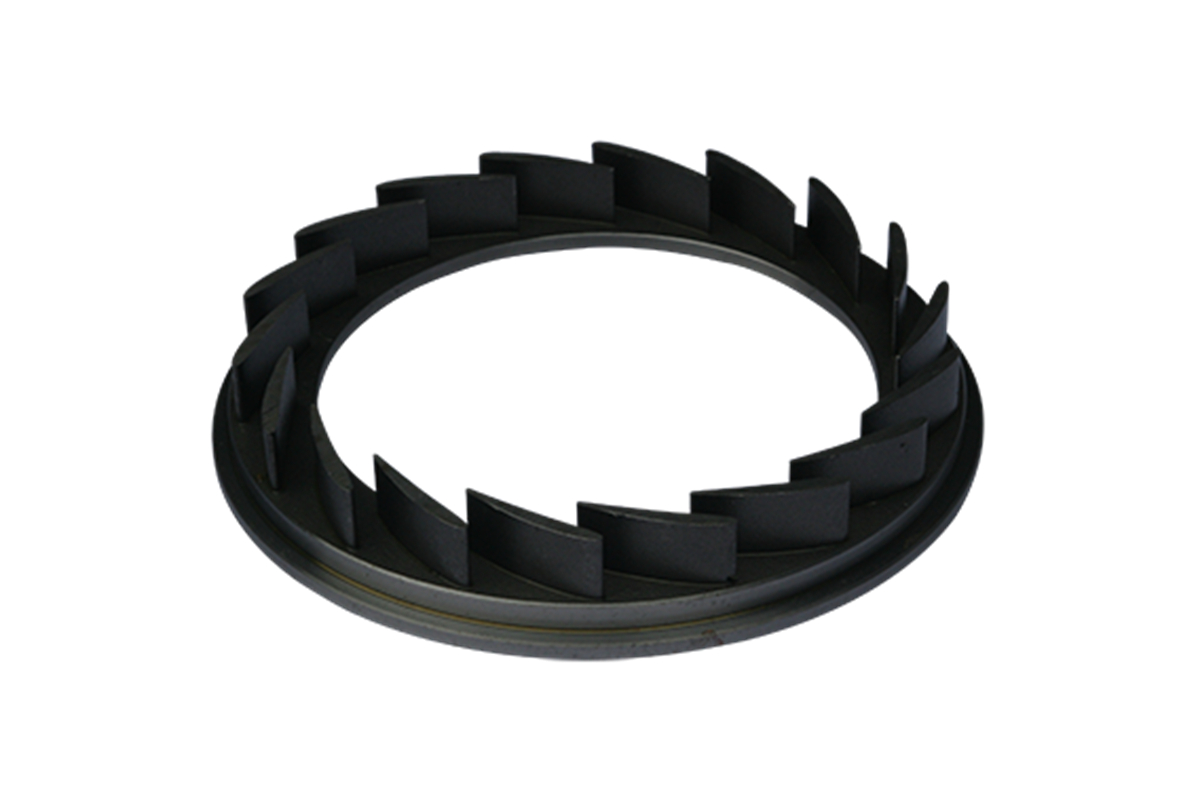
Superalloy single crystal casting is the most advanced method for producing high-performance turbine nozzles used in aero and industrial gas turbines. At Neway AeroTech, we specialize in the directional solidification and single-crystal growth of superalloys such as CMSX-4, CMSX-10, and PWA 1484. These nozzles offer unmatched resistance to creep, oxidation, and thermal fatigue at operating temperatures exceeding 1100°C. Our products serve demanding applications in aerospace, power generation, and military propulsion systems.
By eliminating grain boundaries through single-crystal growth, these nozzles maintain strength, structural integrity, and dimensional stability over prolonged high-temperature service cycles.
Core Technology of Single Crystal Casting
Vacuum Investment Shell Preparation: Wax patterns of turbine nozzles are assembled and coated with ceramic slurry. Molds are fired at 1000–1100°C under vacuum.
Directional Solidification Furnace: Using the Bridgman technique, casting is performed in a controlled temperature gradient to grow a single crystal along the <001> direction.
Grain Selector Design: Helical or angled selectors ensure only one grain propagates into the nozzle, forming a defect-free single crystal.
Post-Casting Heat Treatment: Solution and aging treatment dissolves eutectic phases, precipitates γ′, and stabilizes the γ/γ′ microstructure.
CNC Finishing: Complex geometries (flow paths, mounting flanges) are machined with ±0.02 mm accuracy using CNC machining.
Coating (Optional): Thermal Barrier Coating (TBC) may be applied to further enhance resistance to hot gas erosion and oxidation.
Material Characteristics of Single Crystal Superalloys for Nozzles
Alloy | Max Operating Temp | Creep Resistance | Oxidation Resistance | Common Use |
|---|---|---|---|---|
CMSX-4 | 1150°C | Excellent | Excellent | Aero engine nozzles |
CMSX-10 | 1200°C | Superior | Excellent | Military gas turbines |
PWA 1484 | 1175°C | Excellent | Excellent | Power turbine nozzles |
Rene N5 | 1160°C | High | Excellent | Jet engine nozzles |
SRR 99 | 1120°C | High | Good | Auxiliary turbines |
Case Study: Single Crystal CMSX-4 Turbine Nozzles for High-Bypass Aero Engines
Project Background
A Tier 1 aerospace engine manufacturer required turbine nozzles capable of maintaining microstructural integrity and mechanical strength under 1150°C for 25,000 flight cycles. CMSX-4 was selected for its balance of creep strength, oxidation resistance, and manufacturability in single crystal casting.
Typical Single Crystal Turbine Nozzle Applications
GE90 HPT Nozzles (CMSX-4): Deployed in long-range Boeing 777 aircraft engines, these nozzles maintain flow control and throat stability under >1100°C exhaust gas.
Rolls-Royce Trent XWB Nozzles (PWA 1484): Designed for sustained operation in high-efficiency widebody aircraft engines, with excellent creep and oxidation resistance.
F135 Engine Nozzles (CMSX-10): Used in the F-35 fighter engine, with superior creep strength for afterburning operation and transient thermal spikes.
LM2500+G4 Power Turbine Nozzles (Rene N5): Operate in industrial and marine gas turbines, providing flow direction in high-cycle service with temperatures around 1150°C.
T700 Helicopter Engine Nozzles (SRR 99): Used in UH-60 and AH-64 platforms, these nozzles deliver long-life performance in auxiliary turbine sections.
Single Crystal Manufacturing Solution
Wax Assembly and Ceramic Molding: Patterns produced with tight tolerance (±0.05 mm), assembled into clusters, and ceramic shell built with 8–10 layers.
Directional Solidification: Casting performed at withdrawal speeds of 2–6 mm/min with temperature gradients >10°C/mm to ensure single crystal growth.
Grain Verification: Optical and EBSD confirm <001> orientation and absence of stray grains.
Heat Treatment: Solutioning at 1300°C followed by controlled aging at 1080–870°C yields optimum γ′ volume fraction and microstructure.
CNC Machining: 5-axis machining of complex nozzle shapes ensures dimensional control for flow efficiency.
Surface Coating (TBC): Thermal barrier coatings applied for hot corrosion and thermal fatigue protection.
Inspection: X-ray and metallographic evaluation verify structural soundness and microstructural quality.
Final Validation: Geometry checked via CMM inspection; nozzles tested for leak tightness and thermal deformation.
Results and Verification
Creep Strength: CMSX-4 nozzles passed 1000-hour creep testing at 1100°C with no microcracking or plastic deformation.
Thermal Fatigue Resistance: Over 25,000 thermal cycles from 200°C to 1100°C validated with no intergranular cracking or dimensional shift.
Oxidation Testing: Exposed to cyclic oxidation at 1150°C for 1000 hours with TBC intact and no scale exfoliation.
Dimensional Accuracy: Post-machining CMM measurements confirmed ±0.02 mm accuracy in throat width and flange interface geometry.
Grain Orientation Compliance: EBSD and X-ray verified <001> orientation within 15° of the casting axis, with zero stray grain failures.
FAQs
What are the benefits of single crystal casting for turbine nozzles?
Which alloys are most commonly used for single crystal turbine components?
How does directional solidification improve nozzle durability?
What testing methods confirm single crystal quality and orientation?
Can turbine nozzles be customized for unique flow or mounting geometries?
