
Superalloy Powder Metallurgy Turbine Discs
Introduction
Superalloy powder metallurgy turbine discs are critical rotating components in modern aerospace and energy gas turbines. Designed for high-load, high-temperature environments, these discs offer tensile strengths of up to 1500 MPa, fatigue lives beyond 30,000 cycles, and creep resistance at sustained temperatures of 700–750°C. At Neway AeroTech, we provide advanced manufacturing of turbine discs using optimized powder metallurgy and precision post-processing for demanding applications across aerospace, power generation, and defense industries.
Our turbine discs ensure superior operational stability, microstructural control, and mechanical integrity under extreme stress and thermal cycling.
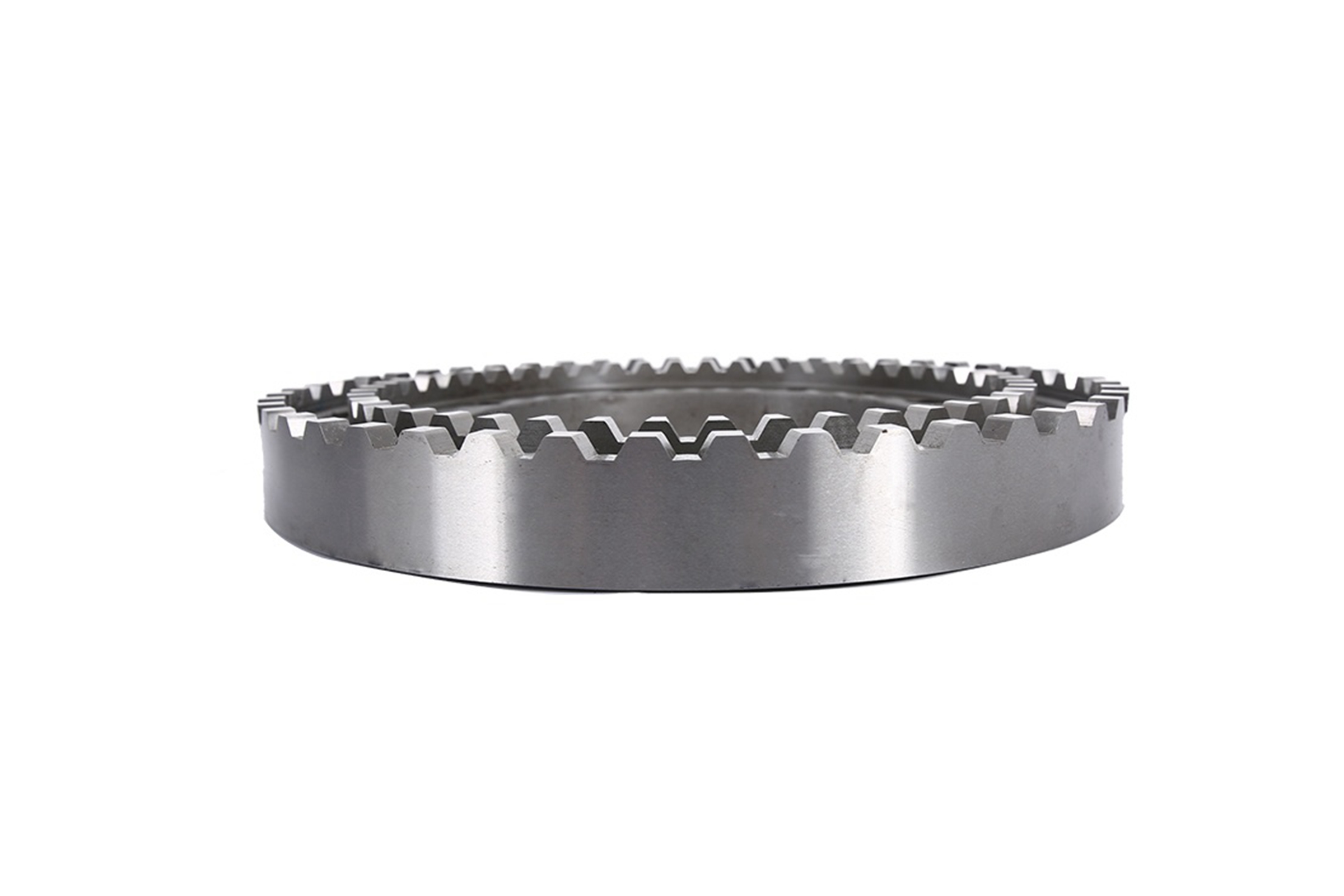
Core Technology of Superalloy Powder Metallurgy
Powder Production (Gas Atomization): Spherical powders (10–100 µm) with controlled chemical homogeneity and low oxygen content ensure optimal flow and sintering behavior.
Hot Isostatic Pressing (HIP): HIP consolidation at 1150–1200°C and 100–200 MPa achieves full density and porosity levels below 0.1%.
Isothermal or Precision Forging: Forging at ~1100°C produces refined grains and near-net shapes, reducing post-machining material removal to ≤5 mm.
Advanced Heat Treatment: Solution heat treatment (1150°C) followed by aging (760–800°C) improves creep strength, tensile strength, and fatigue resistance.
CNC Machining: High-precision machining achieves dimensional tolerances of ±0.01 mm, ensuring precise balancing and assembly.
Thermal Barrier Coatings (TBC): TBC application enhances oxidation resistance and extends service life under elevated thermal loads.
Material Characteristics of PM Superalloy Turbine Discs
Property | Specification |
|---|---|
Common Alloys | Rene 95, Udimet 720, FGH97, Astroloy |
Ultimate Tensile Strength | 1200–1500 MPa |
Yield Strength | ≥900 MPa |
Operating Temperature | Up to 750°C |
Fatigue Resistance | >30,000 cycles at elevated temperatures |
Creep Resistance | Excellent at 700–750°C |
Porosity | <0.1% (post-HIP) |
Dimensional Accuracy | ±0.01 mm |
Case Study: Superalloy Powder Metallurgy Turbine Discs in Commercial Jet Engines
Project Background
An international aerospace OEM required turbine discs with exceptional fatigue and creep resistance for use in a next-generation high-bypass jet engine. The operating envelope included 750°C turbine inlet temperatures and 15,000+ RPM continuous operation. Superalloy powder metallurgy enabled the required performance margins.
Common Disc Applications
High-Pressure Turbine Discs (HPT): Engineered for rotating at high speeds under thermal gradients, HPT discs must maintain structural integrity over 25,000+ cycles.
Intermediate-Pressure Turbine Discs (IPT): These balance structural strength and thermal fatigue resistance during transient and cruise engine operation.
Low-Pressure Turbine Discs (LPT): Designed for long life and minimal creep distortion in large-diameter, low-speed turbines.
Gas Generator and Power Turbine Discs: Used in industrial turbines, these components ensure high-efficiency operation during continuous-duty cycles.
Manufacturing Solution for PM Turbine Discs
Powder Atomization: Production of spherical powders via gas atomization, ensuring size uniformity and minimal contamination.
HIP Consolidation: Achieved at 1150°C under 150 MPa, producing fully dense preforms with porosity below 0.1%.
Precision Forging: Near-net shapes forged at 1100°C to control grain size (ASTM 10–12), reducing stress concentrators.
Heat Treatment: Solution annealed at 1150°C, aged at 760–800°C, achieving ≥1450 MPa UTS and stable creep life.
CNC Machining: Disc profiles and bore geometries machined to ±0.01 mm tolerance for aerodynamic balance and rotor alignment.
Surface Enhancement: TBC coating applied for oxidation resistance and reduced thermal degradation.
Inspection and Validation: X-ray testing and CMM measurement validate internal soundness and geometric conformity.
Mechanical Testing: Fatigue, tensile, and creep testing confirmed durability and compliance with aerospace OEM standards.
Manufacturing Challenges
Tight microstructure control to prevent grain boundary cracking
Eliminating porosity and inclusions in thick cross-section parts
Meeting fatigue life requirements >30,000 cycles under cyclic loading
Balancing lightweight design with thermal and mechanical durability
Results and Validation
Mechanical Properties: Tensile strength of 1450 MPa and yield strength of 950 MPa achieved post-treatment.
Fatigue Performance: High-cycle fatigue life exceeded 35,000 cycles at 700°C.
Creep Resistance: Long-term creep testing confirmed stable performance at 750°C for over 10,000 hours.
Dimensional Accuracy: Final CMM validation confirmed disc profile tolerances within ±0.01 mm.
Surface Condition: Ra <1.6 µm achieved after finishing, improving aerodynamic efficiency and surface longevity.
NDT Compliance: X-ray and ultrasonic scans showed no internal or subsurface defects across full production batches.
FAQs
What benefits does powder metallurgy offer over conventional casting for turbine discs?
Which superalloys are best suited for high-temperature fatigue resistance in turbine discs?
What is the typical dimensional accuracy of PM turbine discs at Neway AeroTech?
How is porosity eliminated in superalloy powder metallurgy turbine disc production?
Can Neway AeroTech produce custom turbine disc geometries to client specifications?
