
Single Crystal Vacuum Casting IN713LC Turbine Blades
Introduction
Single crystal vacuum casting is a critical manufacturing process for producing turbine blades that endure the most extreme operating conditions. By eliminating grain boundaries through directional solidification, single crystal blades offer unmatched resistance to creep, thermal fatigue, and oxidation. When paired with the proven performance of IN713LC, this method becomes ideal for hot-section components in aerospace and power generation turbines.
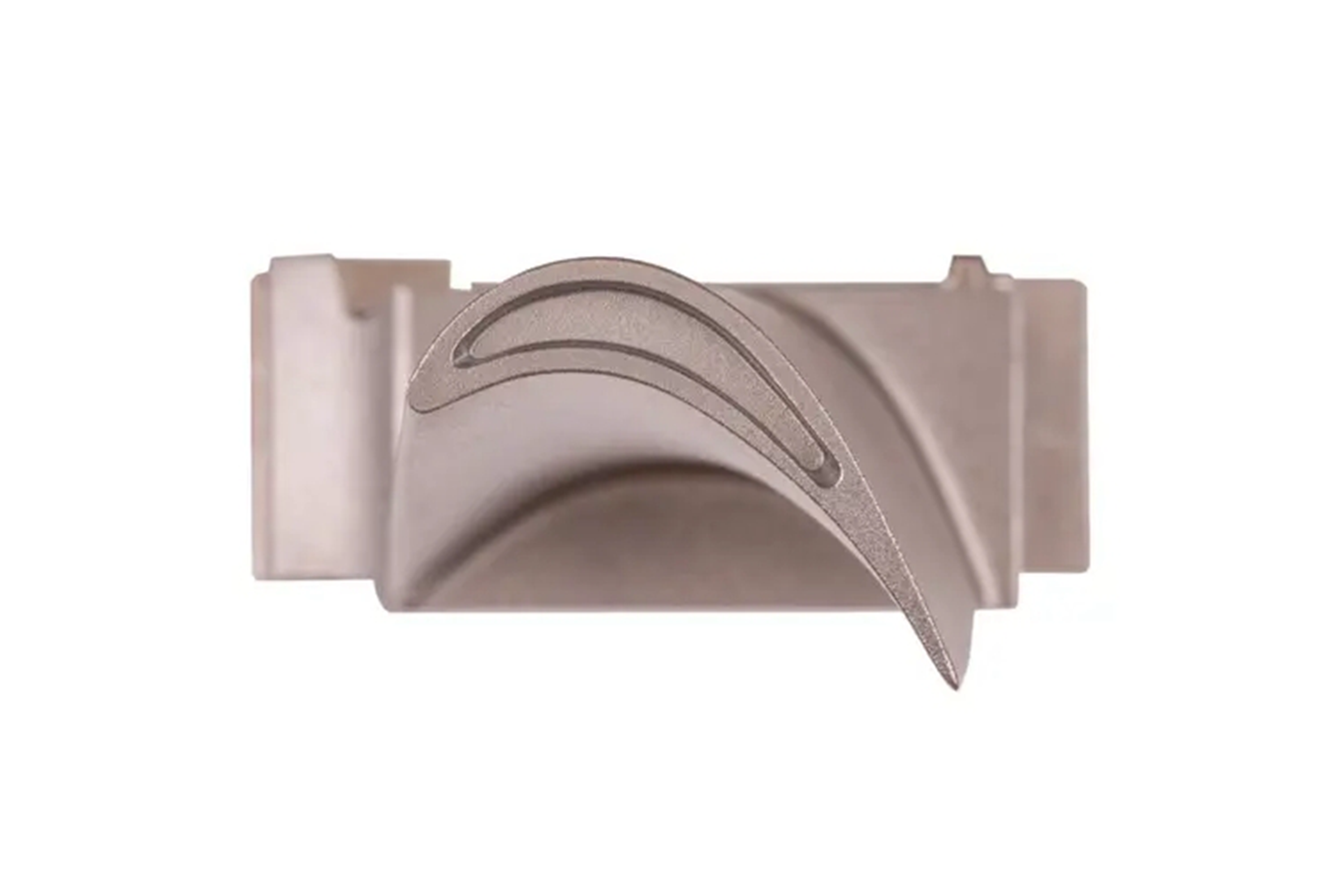
Neway AeroTech utilizes advanced single crystal vacuum investment casting to manufacture IN713LC turbine blades with excellent structural integrity, precision airfoil geometry, and extended high-temperature performance. Our process is certified to meet stringent industry standards such as AS9100 and NADCAP.
Core Technology of IN713LC Single Crystal Vacuum Casting
Wax Pattern Preparation High-precision wax patterns are injection molded with tolerances within ±0.05 mm to replicate complex turbine blade geometries accurately.
Shell Mold Construction Refractory ceramic shell molds are built in successive layers, reaching 6–8 mm thickness to withstand molten metal and thermal gradients.
Grain Selector Integration Spiral grain selectors are designed into the wax assembly to facilitate controlled single grain growth during solidification.
Vacuum Induction Melting IN713LC alloy is melted under high vacuum (≤10⁻³ Pa) using vacuum induction melting at ~1450°C to eliminate gas porosity and ensure chemical homogeneity.
Directional Solidification in Vacuum Furnace The mold is gradually withdrawn from a heated zone at 3 mm/min, ensuring [001] grain orientation and the formation of a single crystal structure.
Shell Removal and Surface Cleaning After solidification, shells are removed via vibration and high-pressure blasting, preserving edge details and cooling structures.
Hot Isostatic Pressing (HIP) The blades undergo HIP treatment at 1150°C and 150 MPa to eliminate microporosity and improve fatigue life.
Heat Treatment and Aging A controlled solution and aging heat treatment cycle stabilizes the γ' phase, enhancing mechanical strength and phase uniformity.
Material Characteristics of IN713LC in Single Crystal Form
Although IN713LC is typically used for equiaxed casting, it can be adapted for single crystal vacuum casting to improve its high-temperature mechanical properties:
Maximum Operating Temperature: 982°C (1800°F)
Ultimate Tensile Strength: ≥1034 MPa
Yield Strength: ≥862 MPa
Creep Rupture Strength: ≥200 MPa after 1000 hours at 760°C
Grain Orientation: Controlled [001] axis alignment with <2° deviation
Oxidation Resistance: Strong performance in cyclic thermal environments
Case Study: IN713LC Single Crystal Blade for HPT Application
Project Background
A defense aviation client required single crystal turbine blades made of IN713LC for high-pressure turbine (HPT) use in a tactical jet engine. Neway AeroTech delivered defect-free castings with verified [001] orientation, exceeding fatigue and creep resistance requirements.
Typical Applications
Military Jet Engines (e.g., F100, F110): Turbine blades for hot-stage turbines requiring superior creep and fatigue resistance.
Power Turbines (e.g., LM2500+): Blades used in continuous-duty environments, operating above 950°C for thousands of cycles.
Aerospace Auxiliary Power Units (APUs): Turbine blades needing low cycle fatigue strength and oxidation resistance.
Unmanned Aerial Vehicles (UAVs): Lightweight single crystal blades that offer long service life under thermal fluctuations.
Blade Design Features
Precision airfoil geometries optimized through CFD analysis
Internal serpentine and impingement cooling channels
Fir-tree or dovetail roots for disk engagement
Shrouds and tip rails for sealing and vibration control
IN713LC Turbine Blade Manufacturing Solution
Integrated Wax Assembly Design Complex gating and grain selector systems are designed to ensure proper metal flow and crystal initiation.
Vacuum Casting Execution Vacuum casting in a controlled furnace guarantees uniform thermal gradients and stable directional solidification.
HIP Processing Hot isostatic pressing eliminates residual porosity to enhance fatigue strength and creep performance.
Heat Treatment Precision Multi-step heat treatments refine γ' distribution and hardness, supporting long-term structural integrity.
CNC and EDM Finishing Critical cooling features and tight-tolerance surfaces are achieved through superalloy CNC machining and EDM.
Quality Control and NDT Each blade is evaluated with X-ray, CMM, and metallography to verify microstructure, orientation, and compliance.
Core Challenges in Single Crystal IN713LC Blade Casting
Preventing stray grain formation during withdrawal
Ensuring stable directional solidification through thermal gradient control
Maintaining [001] crystal orientation through complex blade geometries
Machining internal cooling features without thermal distortion
Results and Verification
100% single crystal structure confirmed via metallography and orientation analysis
[001] axis alignment within <2° deviation
No porosity detected after HIP; zero casting rejections
Tensile, creep, and fatigue properties met or exceeded design benchmarks for military HPT components
FAQs
What are the benefits of single crystal vacuum casting for turbine blades?
How is the [001] grain orientation controlled in IN713LC blades?
What turbine applications use single crystal IN713LC components?
How does HIP enhance turbine blade durability?
Can IN713LC match the performance of higher-cost CMSX or Rene alloys?
