
Rene Alloy Equiaxed Crystal castings Heat Treatment Service Provider
Specialized Thermal Processing for High-Performance Rene Alloy Turbine Components
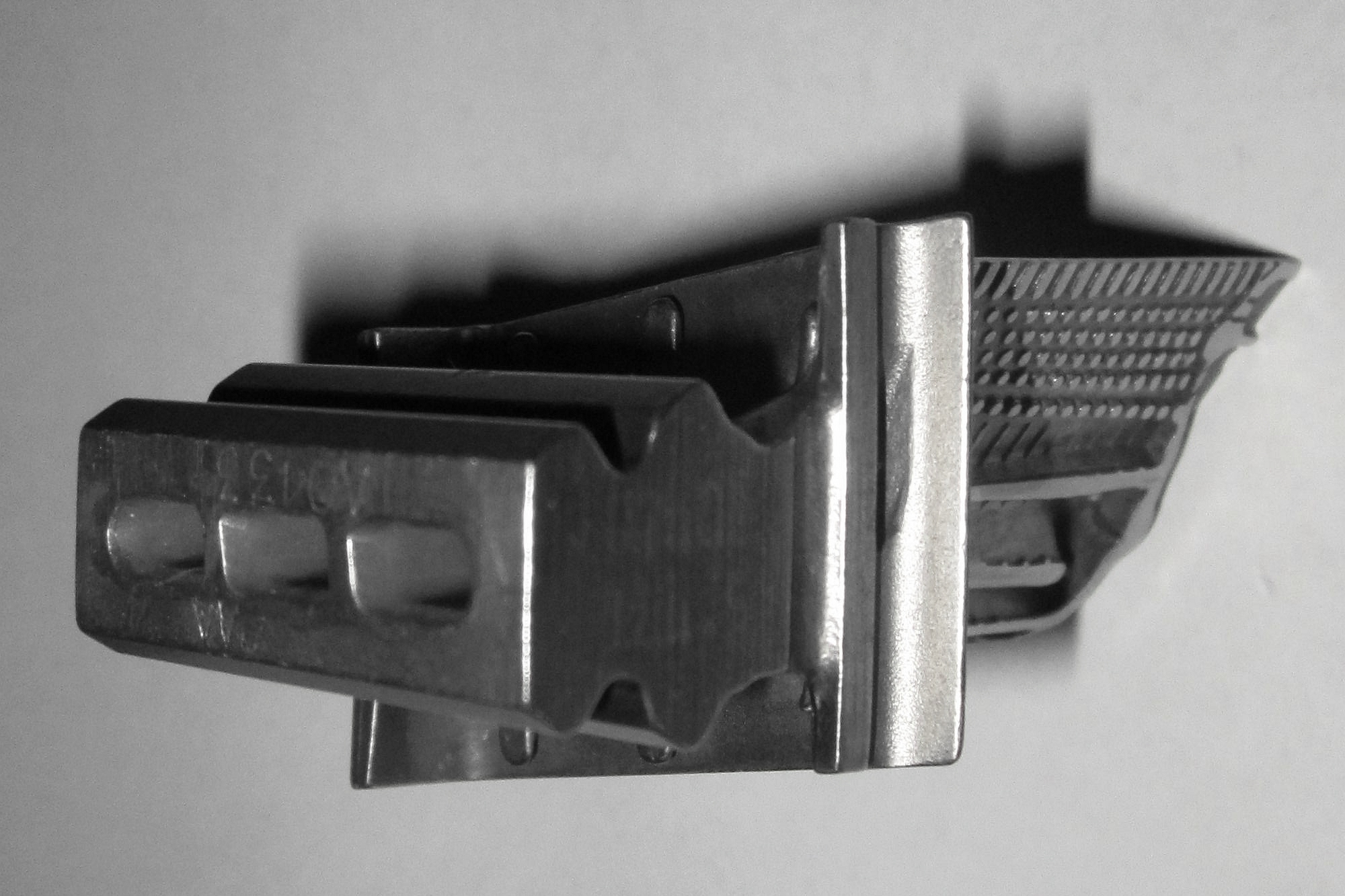
Equiaxed crystal castings made from Rene superalloys are widely used in turbine nozzles, blades, vanes, and combustor segments due to their excellent high-temperature strength and oxidation resistance. However, to reach their full mechanical potential, these castings must undergo precise heat treatment tailored to their chemistry and casting conditions.
Neway AeroTech is a certified heat treatment service provider for Rene alloy equiaxed castings, offering multi-stage solutions, aging, and stress-relief treatments. Our thermal cycles are optimized for Rene 41, Rene 77, Rene 80, and other equiaxed alloys used in high-temperature turbine sections.
Core Heat Treatment Capabilities for Rene Equiaxed Castings
We offer alloy-specific thermal cycles with real-time atmosphere control and thermal accuracy for creep- and fatigue-resistant turbine components.
Solution annealing at 1120–1170°C for microstructure homogenization and phase stabilization
Aging treatment at 845–870°C for γ′ precipitation hardening
Stress relief post-machining to eliminate distortion risk
Vacuum or inert gas furnace operation to preserve oxidation-sensitive surfaces
Our process is fully traceable and compliant with AS9100D, NADCAP, and OEM turbine standards.
Rene Alloys Commonly Heat Treated
Alloy | Max Temp (°C) | Yield Strength (MPa) | Application |
|---|---|---|---|
980 | 950 | Combustor liners, seal carriers | |
1040 | 960 | Turbine vanes, nozzle rings | |
1050 | 900 | Transition ducts, HPT blades | |
1060 | 1010 | Structural turbine segments |
These alloys benefit significantly from optimized heat treatment to control grain boundary strengthening and phase distribution.
Case Study: Heat Treatment of Rene 77 Turbine Nozzle Ring
Project Background
A power turbine OEM provided Rene 77 cast nozzle segments requiring full-cycle post-casting treatment. We performed solution annealing at 1160°C for 4 hours, followed by two-stage aging at 870°C and 760°C. Hardness increased to 410 HV, and SEM confirmed optimal γ′ morphology and carbide dispersion.
Treated Components and Applications
Component | Alloy | Thermal Process | Industry |
|---|---|---|---|
HPT Nozzle | Rene 77 | Solution + Aging | |
Flame Holder | Rene 41 | Annealing + Stress Relief | |
Turbine Segment | Rene 80 | Full Heat Treatment Cycle | |
Combustor Ring | Rene 95 | Solution Treated + Passivated |
All parts were validated through hardness testing, metallography, and dimensional inspection after thermal treatment.
Heat Treatment Challenges for Rene Equiaxed Components
Gamma prime control is essential to balance strength and ductility
Avoiding incipient melting during high-temp holding requires ±2°C precision
Stress buildup in asymmetrical sections can lead to post-machining deformation
Carbide coarsening affects creep life if temperature exceeds tolerance
Thin-wall warping is common without controlled ramp and soak schedules
Thermal Processing Solutions
Programmable furnace profiles with multi-zone thermal tracking
Vacuum and argon atmosphere chambers for oxidation control
HIP integration prior to heat treatment for porosity elimination
Customized aging schedules tuned per alloy and cross-section
Results and Quality Verification
Process Execution
Controlled heat cycles were executed in vacuum furnaces. Ramping was set at 1.5°C/min to avoid overshooting and prevent microstructural over-aging.
Metallographic Results
Post-treatment hardness: 390–420 HV. SEM confirmed no grain boundary liquation or over-precipitation. Grain size ASTM 5–6 maintained across vane geometry.
Final Inspection
CMM confirmed dimensional conformity. X-ray validated internal homogeneity. SEM ensured complete γ′ distribution and clean grain boundaries.
FAQs
What temperature range is typical for Rene 77 aging?
Can Rene 41 parts be treated without post-machining distortion?
Do you offer HIP and heat treatment combination for Rene components?
How do you prevent over-aging or grain coarsening in Rene 80?
What inspection methods are used after Rene alloy heat treatment?
