
PWA 1484 Superalloy Monocrystalline Casting Turbine Components
Introduction
Gas turbine components such as blades, vanes, and nozzle segments operate in extreme environments—temperatures exceeding 1100°C, high-pressure combustion gases, and constant thermal cycling. In such conditions, grain boundaries become weak points for creep, oxidation, and fatigue failures. PWA 1484, a fourth-generation nickel-based superalloy developed by Pratt & Whitney, is engineered for monocrystalline casting, enabling the production of single crystal turbine components with superior structural integrity and thermal performance.
Neway AeroTech offers vacuum investment casting of PWA 1484 single crystal components, serving aerospace, military, and power generation sectors. Our monocrystalline turbine parts are produced using spiral selector casting, advanced process controls, and post-casting HIP and heat treatment to meet the highest endurance and fatigue life standards.
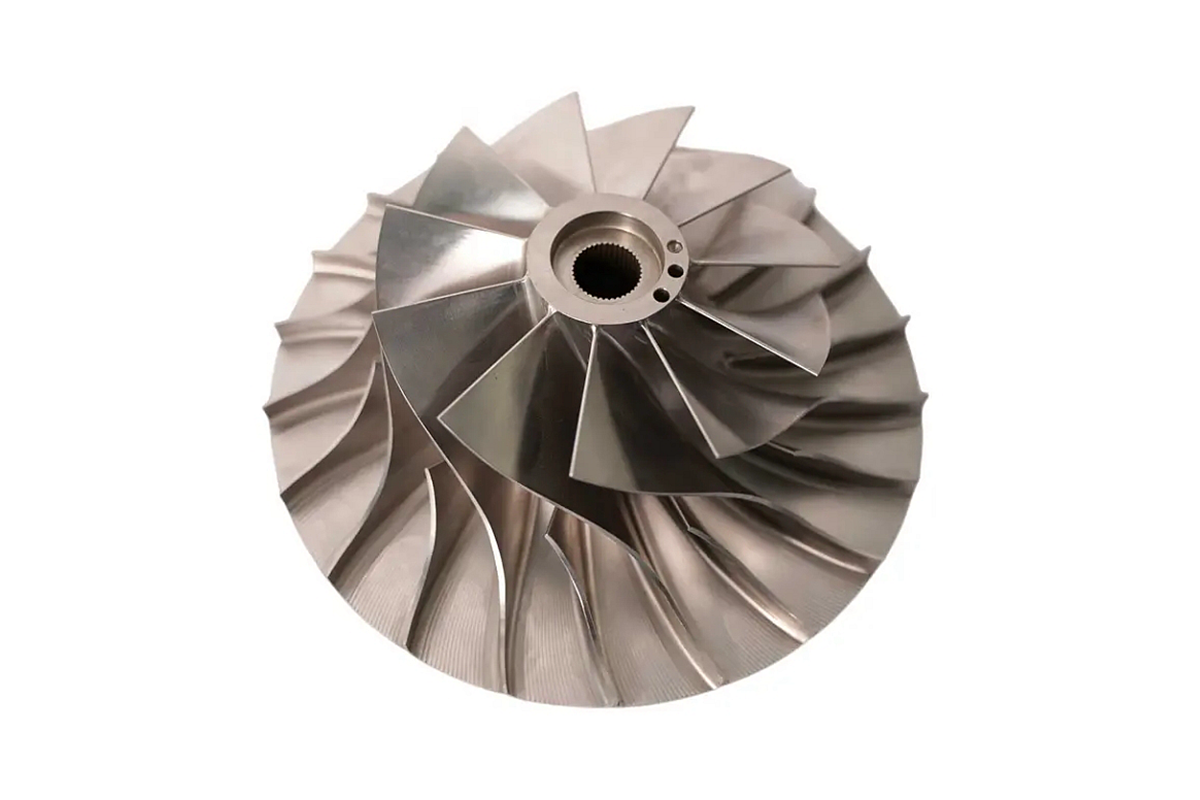
Core Technology of Monocrystalline PWA 1484 Casting
Wax Pattern Fabrication Precision wax patterns (±0.05 mm) replicate complex airfoil geometries, shrouds, tip rails, and serpentine cooling channels.
Shell Mold Construction Multi-layer ceramic molds (6–10 mm) are constructed to withstand high withdrawal temperatures and support directional solidification.
Spiral Selector Integration A helical grain selector is used to initiate [001] oriented single crystal growth, ensuring zero grain boundary intersection throughout the part.
Vacuum Induction Melting PWA 1484 alloy is melted under vacuum (≤10⁻³ Pa) at ~1450–1480°C, minimizing segregation and contamination.
Controlled Directional Withdrawal The mold is withdrawn from the heating zone at 2–4 mm/min through a precisely regulated thermal gradient, enabling single grain elongation from root to tip.
Shell Knockout and Cleaning Ceramic shells are removed by high-pressure blasting and acid leaching, preserving detailed features and cooling slot precision.
Hot Isostatic Pressing (HIP) HIP at 1200°C and 150 MPa removes residual porosity, improving fatigue and rupture resistance.
Solution + Aging Heat Treatment PWA 1484 undergoes heat treatment to stabilize the γ′ microstructure, optimizing creep resistance and phase stability.
Material Properties of PWA 1484
Max Operating Temperature: 1150°C
Tensile Strength: ≥1200 MPa at 20°C
Creep Rupture Strength: ≥260 MPa at 1093°C for 1000 hours
Gamma Prime Content: ~70%
Oxidation Resistance: Excellent under high-pressure, high-temperature gas streams
Grain Orientation: Single crystal [001], deviation <2°
Case Study: PWA 1484 Monocrystalline Blades and Vanes for Aeroengine HPT
Project Background
Neway AeroTech was contracted to manufacture single crystal PWA 1484 HPT blades and nozzle segments for a next-generation fighter jet engine. The design required high creep strength, oxidation resistance, and dimensional stability over 20,000+ cycles at >1100°C.
Application Examples
High-Pressure Turbine (HPT) Blades: Operate at the core of military and commercial jet engines with exposure to combustion temperatures >1100°C.
Nozzle Guide Vanes: Exposed to high-velocity gas flow, requiring thermal fatigue and oxidation resistance without grain boundary failure.
Turbine Seals and Shrouds: Require exact dimensional fit and single crystal structure to maintain sealing and prevent thermal cracking.
Manufacturing Solution for PWA 1484 Single Crystal Components
Gating and Mold Optimization Using CFD analysis, gating, riser, and selector paths are designed to control solidification flow and avoid thermal hotspots.
Directional Solidification in Vacuum Furnace PWA 1484 is cast in vacuum, with thermal gradients optimized for precise [001] alignment throughout complex airfoil geometries.
HIP and Heat Treatment Post-casting HIP and proprietary aging cycles refine γ′ particle distribution and maximize creep and fatigue strength.
CNC Machining and EDM Cooling holes, platform interfaces, and fir-tree roots are finished via CNC machining and EDM for precision and consistency.
Metrology and NDT Validation Components are inspected using CMM, X-ray, ultrasonic, and EBSD to confirm grain orientation and structural integrity.
Manufacturing Challenges
Controlling [001] orientation in twisted airfoils and radial cooling structures
Preventing stray grains and recrystallization during casting
Achieving uniform phase stability after HIP and heat treatment
Ensuring tight tolerances post-machining without thermal distortion
Results and Verification
[001] single crystal alignment verified with <2° deviation
No internal porosity or defects post-HIP
Creep performance exceeded 260 MPa at 1093°C
Airfoil tolerances held within ±0.03 mm across complex profiles
100% NDT pass rate using X-ray, ultrasonic, and EBSD evaluation
FAQs
What advantages does PWA 1484 offer in single crystal turbine casting?
What turbine components are best suited for PWA 1484 monocrystalline casting?
How is [001] crystal orientation achieved and verified?
Can PWA 1484 parts be repaired or welded post-service?
What non-destructive testing is standard for single crystal turbine blades?
