
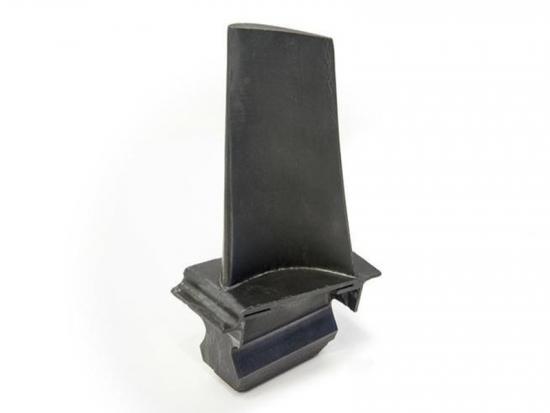
Inconel 625 Superalloy CNC Machining Turbine Blade
Introduction
Inconel 625 is a corrosion-resistant, high-strength nickel-based superalloy widely used in turbine blades operating in high-temperature and high-pressure environments. At Neway AeroTech, we specialize in CNC machining of Inconel 625 turbine blades to tolerances within ±0.01 mm, supporting critical applications in aerospace, power generation, and marine propulsion systems.
Our expertise in machining hard-to-cut superalloys ensures that Inconel 625 turbine blades maintain aerodynamic accuracy, fatigue strength, and thermal stability throughout their operational lifecycle.
Material Characteristics of Inconel 625 for Turbine Blades
Property | Specification |
|---|---|
Maximum Operating Temp | 980°C |
Ultimate Tensile Strength | ~930 MPa |
Yield Strength | ~480 MPa |
Elongation | ≥30% |
Creep Resistance | Excellent up to 800°C |
Oxidation Resistance | Outstanding in air and exhaust gases |
Corrosion Resistance | Exceptional in seawater and acidic environments |
Machinability | Low, due to work hardening and toughness |
Typical Applications of Inconel 625 Turbine Blades
Gas Turbine Rotor Blades: Withstand high centrifugal forces and temperatures exceeding 900°C in commercial and military jet engines.
Power Plant Turbine Blades: Operate under corrosive steam conditions, especially in combined-cycle gas turbines (CCGTs) and waste heat recovery systems.
Marine Propulsion Turbines: Resist chloride-induced corrosion and erosion in naval propulsion and offshore power generation systems.
Auxiliary Power Units (APUs): Deliver consistent power in aerospace APU systems, balancing thermal fatigue and oxidation stability.
CNC Machining Solution for Inconel 625 Turbine Blades
Blank Preparation: Blades pre-cast or forged to near-net shape to minimize material removal and improve grain alignment.
Workholding and Setup: Custom jigs and multi-axis fixtures designed to prevent distortion and ensure repeatable positioning for complex profiles.
Tool Selection: High-performance carbide tools with TiAlN coatings used to manage heat and tool wear during cutting of hardened Inconel 625.
Rough Machining: High-pressure coolant and low cutting speeds (~30–60 m/min) applied during rough profiling to reduce work hardening.
Finish Machining: 5-axis CNC milling ensures airfoil geometry within ±0.01 mm and surface finish below Ra 1.6 µm for aerodynamic efficiency.
Hole Drilling and EDM: Film cooling holes and root locking features produced via micro-EDM or high-speed drilling with CBN tools.
Stress Relieving: Optional post-machining heat treatment performed to eliminate residual stress before final inspection.
Inspection and Quality Control: CMM inspection verifies blade geometry; surface integrity assessed by dye penetrant and X-ray NDT.
Results and Validation
Dimensional Accuracy: Achieved ±0.01 mm tolerance on root fit, airfoil thickness, and trailing edge geometry.
Surface Quality: Final surface finish of Ra ≤1.6 µm improved turbine efficiency and reduced drag.
Mechanical Integrity: No subsurface defects or cracking observed in NDT inspection; fatigue life extended under simulated operating loads.
Thermal Cycle Testing: Blades maintained dimensional stability after 1000 thermal cycles from ambient to 950°C.
Corrosion Resistance: Excellent performance in simulated exhaust and saltwater environments with no pitting or erosion detected.
FAQs
What challenges are associated with machining Inconel 625 turbine blades?
How does Neway AeroTech achieve tight tolerances in airfoil geometry?
Can Inconel 625 blades be coated with TBC or anti-corrosion layers?
What industries benefit most from Inconel 625 turbine blade applications?
What inspection methods are used to verify Inconel blade quality after machining?
