
High-Accuracy Superalloy Turbine Components CNC Machining Services
Precision Manufacturing for Extreme Performance Applications
Superalloy turbine components operate in high-temperature, high-pressure, and high-speed environments, making dimensional accuracy, fatigue resistance, and surface integrity essential. These parts—used in jet engines, gas turbines, and turbo machinery—must be CNC-machined with tolerances within ±0.005 mm and surface finishes of Ra ≤ 0.4 μm to ensure optimal efficiency and durability.
Neway AeroTech provides advanced CNC machining services for turbine components made from Inconel, Rene alloys, CMSX series, and Hastelloy, delivering high-accuracy blades, nozzles, casings, and heat shields.
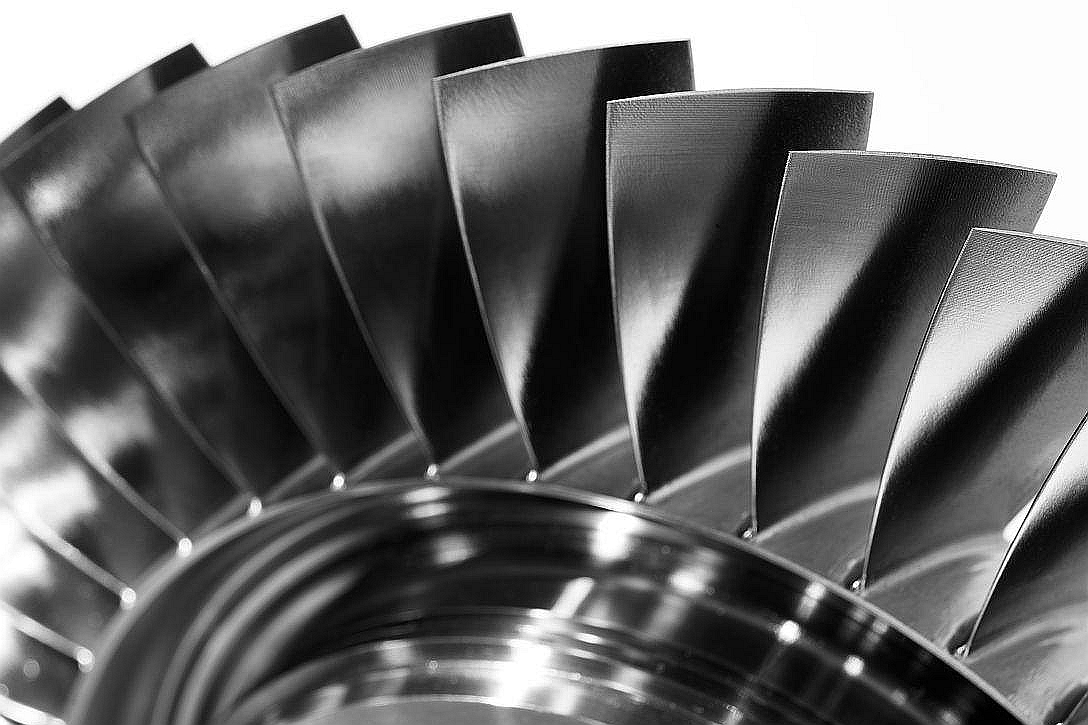
Core Technologies for Superalloy Turbine Machining
Our machining systems are designed to produce complex geometries while maintaining high accuracy under strict aerospace and energy performance requirements.
5-axis simultaneous machining for complex airfoil and platform geometries
In-process probing and tool wear compensation for ±0.005 mm accuracy
Coolant-through spindle machining to control heat and extend tool life
CAM-based toolpath generation from CAD and CFD profiles
All services conform to AS9100D and NADCAP standards for turbine-critical components.
Superalloy Materials for Turbine Component CNC Machining
Alloy | Max Temp (°C) | Yield Strength (MPa) | Application |
|---|---|---|---|
1050 | 880 | High-temperature turbine vanes | |
980 | 1450 | Turbine blades and root locks | |
1140 | 980 | First-stage turbine airfoils | |
1175 | 790 | Combustor liners and heat shields |
These materials offer superior oxidation resistance, creep strength, and thermal stability.
Case Study: CNC Machining of Rene 88 Turbine Rotor with Multi-Axis Geometry
Project Background
A turbine manufacturer required ±0.005 mm profile tolerance on a 5-axis machined Rene 88 rotor with 12 cooling slots and complex fir-tree root geometry. Surface finish Ra ≤ 0.4 μm was required on sealing surfaces and blade trailing edges.
Typical Machined Components and Applications
Component | Material | Accuracy | Industry |
|---|---|---|---|
Turbine Blade | CMSX-4 | ±0.006 mm | |
Nozzle Guide Vane | Inconel 738 | ±0.008 mm | |
Turbine Rotor Disc | Rene 88 | ±0.005 mm | |
Combustor Shield | Hastelloy X | ±0.010 mm |
All parts undergo CFD-based toolpath validation and heat distortion simulation prior to machining.
CNC Machining Challenges for Superalloy Turbine Components
Maintaining ±0.005 mm accuracy in Inconel or CMSX during long-cycle milling
Surface finish Ra ≤ 0.4 μm on trailing edges and platform sealing faces
Geometry alignment between airfoil, shroud, and root within 0.01 mm
Tool wear monitoring in nickel alloys exceeding 40 HRC hardness
Vibration and chatter suppression in thin-walled blade and vane segments
High-Accuracy Machining Solutions
Probing after each operation ensures dimensional repeatability within ±0.005 mm tolerance
CFD-aided CAM programming for optimized material removal and profile conformity
Toolpath smoothing algorithms reduce deflection in multi-step blade machining
Pre-machining heat treatment improves grain stability and machinability
Real-time load monitoring prevents chatter and surface irregularities during critical passes
Results and Verification
Manufacturing Methods
Parts were prepared from forged or investment castings, then 5-axis milled using high-speed carbide tooling. Airfoil and platform dimensions were held within ±0.006 mm over full length.
Precision Finishing
Trailing edges were polished to Ra 0.3 μm using 3-axis controlled lapping. Holes and slots were deburred using EDM. Surface flatness ≤ 0.01 mm was achieved on sealing faces.
Post-Processing
Components were HIP treated and underwent full stress-relief heat treatment. Select parts received TBC coatings to withstand combustor gas exposure.
Inspection
CMM verified all critical features within ±5 μm. X-ray confirmed no subsurface flaws. SEM analysis validated post-machining surface integrity and grain continuity.
FAQs
What is the tightest dimensional tolerance achievable in superalloy blade machining?
How do you maintain surface finish under Ra 0.4 μm in hard alloys?
Can you machine single crystal turbine components without stress cracking?
What processes are used to inspect turbine blade geometry?
What post-machining treatments are required for combustor components?
