
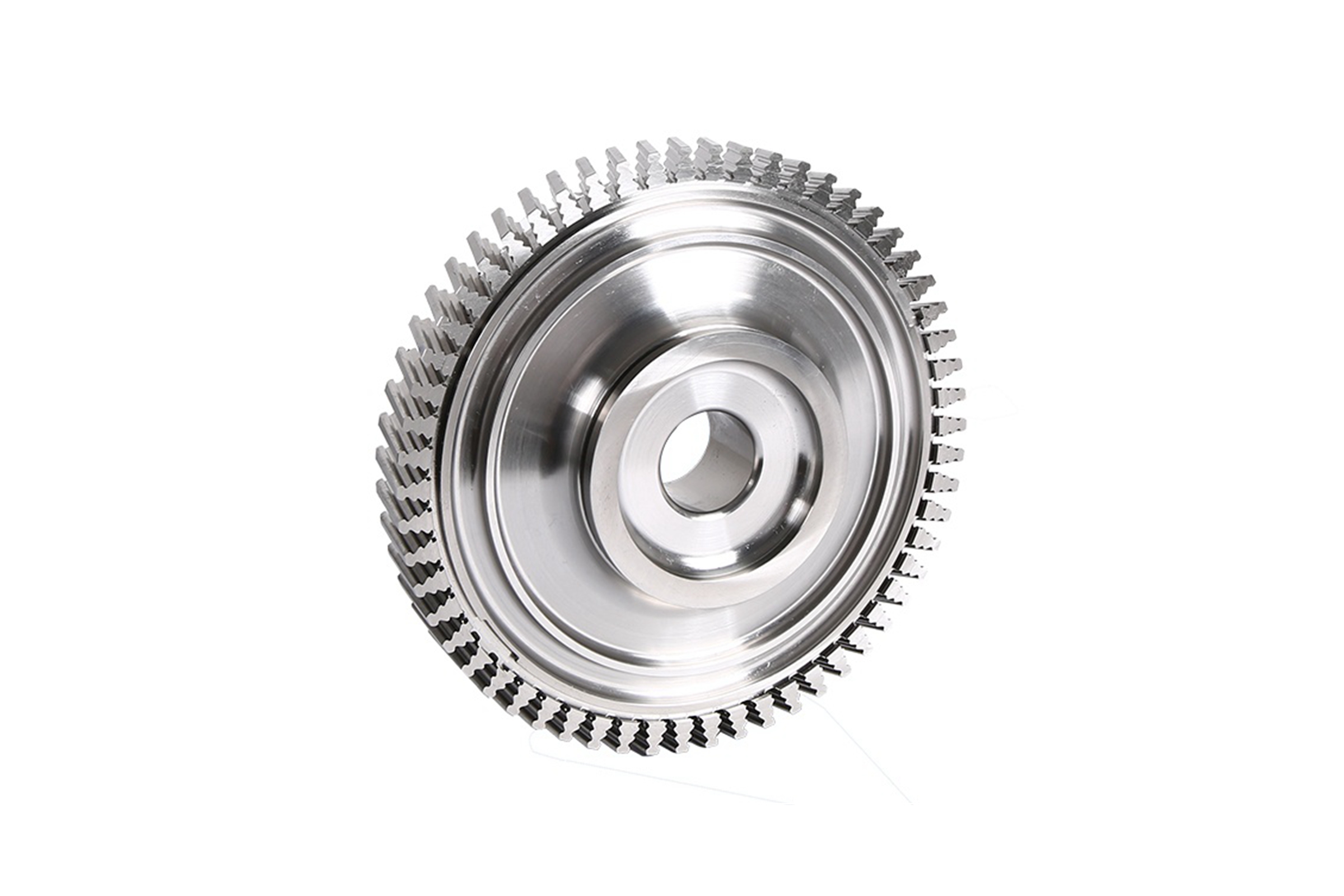
FGH97 Powder Metallurgy Turbine Turbine Disc
Introduction
FGH97 is a premium nickel-based superalloy renowned for its exceptional high-temperature strength, delivering tensile properties exceeding 1500 MPa at operating temperatures of up to 700°C. Utilizing advanced Powder Metallurgy (PM) manufacturing techniques, FGH97 turbine discs offer superior fatigue and creep resistance, making them ideally suited for critical aerospace engine components and industrial gas turbines.
At Neway AeroTech, specialized powder metallurgy processes, such as Hot Isostatic Pressing (HIP) and precision forging, are implemented to achieve extremely low porosity (<0.1%), precise grain size control (ASTM grain size 10–12), and robust mechanical stability. These attributes ensure maximum component reliability under extreme operating conditions.
Core Technology of FGH97 Powder Metallurgy
Powder Production: FGH97 alloy is atomized into spherical particles (10–50 microns), ensuring uniform chemical composition and consistent microstructure throughout the component.
Powder Classification and Blending: Precise sieving and blending standardize particle size distributions, promoting uniform densification and mechanical property consistency in subsequent processing.
HIP Consolidation: Consolidation performed using Hot Isostatic Pressing at 1160–1200°C under pressures of approximately 120–150 MPa, resulting in fully dense billets.
Precision Forging: Superalloy precision forging at approximately 1100°C refines grain structure, enhancing fatigue resistance and ensuring uniformity.
Heat Treatment: Component undergoes solution heat treatment at around 1160°C, followed by aging at 760–850°C, maximizing strength, creep, and fatigue performance.
Material Characteristics of FGH97
Property | Specification |
|---|---|
Alloy Base | Nickel-based (~60% Nickel) |
Alloying Elements | Chromium 12%, Cobalt 15%, Tungsten 5%, Molybdenum 3.5%, Titanium 4% |
Tensile Strength | ≥1500 MPa at 700°C |
Creep Resistance | Stable up to 750°C |
Fatigue Life | Exceptional cyclic fatigue resistance |
Grain Size | ASTM grain size 10–12 |
Porosity | <0.1% (HIP consolidation) |
Typical Applications | Turbine discs for aerospace and energy sectors |
FGH97’s defined characteristics clearly align with demanding requirements in aerospace turbine disc applications, where reliability and durability under cyclic and thermal stress are critical.
Case Study: FGH97 Powder Metallurgy Turbine Disc
Project Background
An international aerospace engine manufacturer required turbine discs that could reliably operate above 700°C, enhance cyclic fatigue lifespan, and reduce maintenance intervals in high-performance commercial jet engines.
Common Turbine Disc Models and Applications
CFM LEAP-1A High-Pressure Turbine Disc: Offers enhanced reliability and fatigue resistance for commercial narrow-body jet engines under severe thermal cycling.
GE Aviation GE9X Compressor Disc: Ensures superior strength and dimensional stability for commercial aircraft engines operating under extreme conditions.
Rolls-Royce Trent 1000 HP Turbine Disc: Delivers excellent creep and fatigue resistance, supporting long-haul commercial aviation reliability.
Mitsubishi Heavy Industries J-Series Gas Turbine Disc: Optimizes operational stability and durability for industrial gas turbines in power generation.
Selection and Structural Features of Typical Turbine Disc
FGH97 was chosen for the HP turbine disc due to outstanding creep strength and fatigue resistance. Structural enhancements included radial symmetry, optimized bore design, advanced dovetail blade attachment configurations, and minimal stress concentration regions to maximize operational longevity and performance.
Turbine Disc Component Manufacturing Solution
Powder Consolidation: Hot Isostatic Pressing at 1180°C, 140 MPa ensures full density and porosity levels below 0.1%.
Precision Forging: Superalloy precision forging at around 1100°C optimizes microstructure uniformity and mechanical properties.
Heat Treatment: Superalloy heat treatment conducted at 1160°C, followed by aging at 760–850°C enhances fatigue and creep resistance.
Precision Machining: CNC machining achieves precise dimensional tolerances within ±0.02 mm to strictly adhere to aerospace standards.
Thermal Barrier Coating: TBC coating improves thermal resistance and significantly extends component life.
Non-Destructive Testing: Ultrasonic and X-ray inspections verify internal integrity, meeting aerospace compliance standards.
Dimensional Inspection: Coordinate Measuring Machine (CMM) ensures accurate dimensions within ±0.005 mm for precise assembly fitment.
Mechanical Property Validation: Tensile and fatigue testing confirm material performance, validating strengths above 1500 MPa and prolonged fatigue lifespans.
Core Manufacturing Challenges of Turbine Discs
Maintaining precise dimensional tolerances (±0.02 mm)
Minimizing porosity consistently (<0.1%)
Achieving uniform grain structure (ASTM grain size 10–12)
Validating mechanical properties through rigorous testing protocols
Results and Verification
Microstructure Assessment: Scanning Electron Microscopy (SEM) verified consistent grain uniformity (ASTM grain size 10–12).
Porosity Check: Ultrasonic and X-ray methods verified porosity levels maintained below 0.1%.
Tensile Strength Tests: Confirmed tensile strength consistently exceeded 1500 MPa at 700°C, exceeding project requirements.
Fatigue Life Analysis: Demonstrated cyclic fatigue life improvement by more than 20%.
Thermal Stability: Confirmed stable mechanical properties at operational temperatures up to 750°C.
Dimensional Precision Verification: CMM dimensional inspection consistently achieved accuracy within ±0.005 mm.
Surface Coating Performance: TBC maintained integrity and effectively protected the disc throughout extended thermal cycles.
Final Certification: Comprehensive quality assurance and certifications completed according to international aerospace standards.
FAQs
What advantages does FGH97 offer in aerospace and energy turbine applications?
How does Neway AeroTech ensure the high quality of FGH97 turbine discs?
What industries primarily benefit from FGH97 powder metallurgy turbine discs?
Can Neway AeroTech customize FGH97 turbine discs according to specific engineering requirements?
What typical lead times can customers expect for manufacturing FGH97 turbine discs?
