
Carbon Steel Lost Wax Casting Factory Company
Introduction
Lost wax casting is a highly effective process for manufacturing carbon steel components that demand precise tolerances (±0.05 mm), superior surface finishes (Ra ≤3.2 µm), and excellent mechanical performance. As a leading provider of precision casting solutions, Neway AeroTech specializes in carbon steel investment casting, serving critical sectors such as automotive, mining, and chemical processing.
Our carbon steel castings offer robust mechanical strength (up to 1000 MPa tensile strength), exceptional wear resistance, and durability under demanding operational conditions.
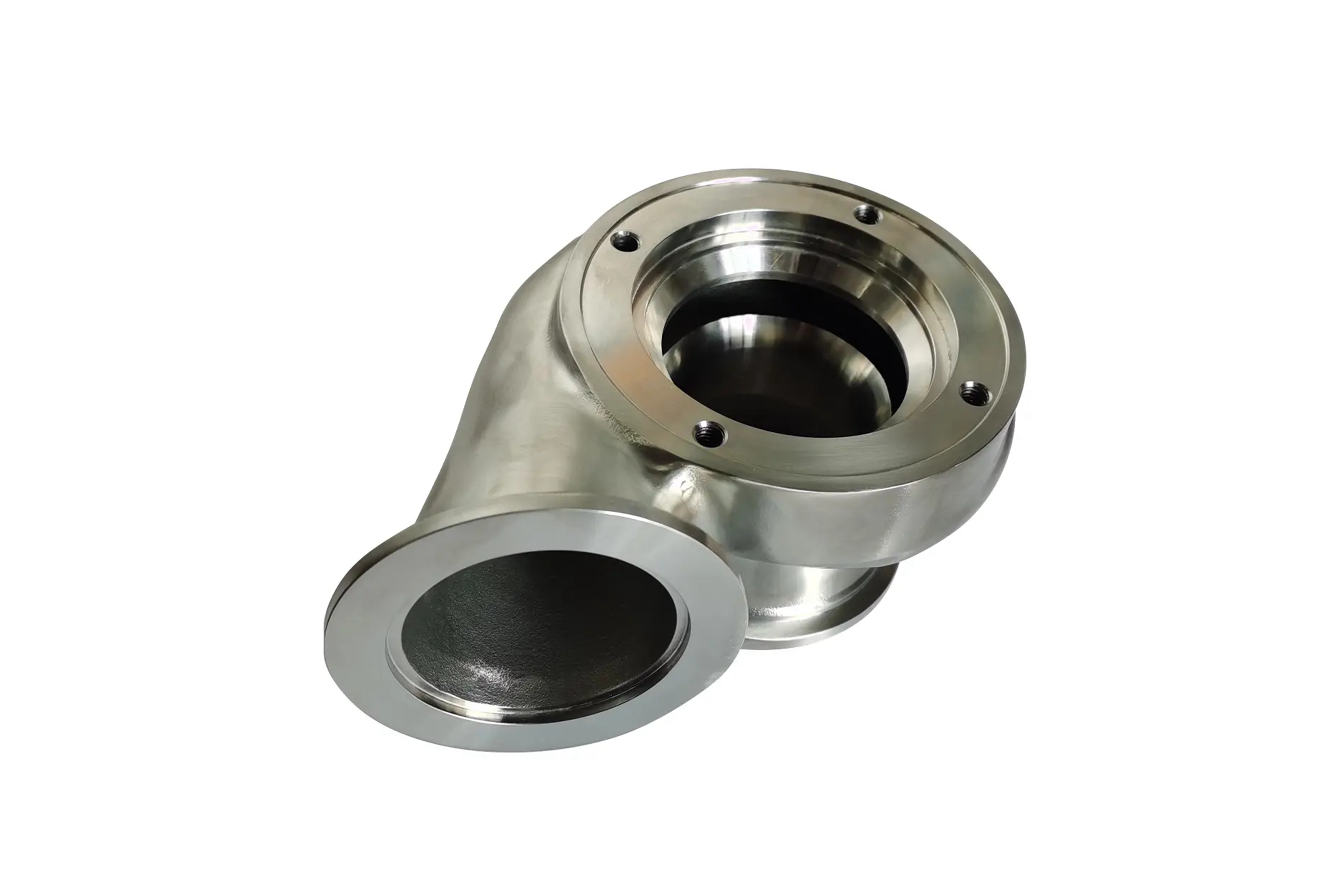
Core Technology of Carbon Steel Lost Wax Casting
Wax Pattern Injection: Precision wax models created to dimensional tolerances of ±0.03 mm, ensuring consistent reproduction of detailed geometries.
Ceramic Shell Formation: Repeated slurry dipping creates robust ceramic shells (10–15 mm thickness) capable of withstanding casting pressures.
Controlled Dewaxing Process: Shells heated gradually to approximately 250°C to remove wax without deformation, preserving intricate details and dimensions.
Precision Vacuum-Assisted Casting: Carbon steel alloy melted at temperatures around 1550°C, poured under vacuum (≤0.01 MPa oxygen) to achieve porosity <0.1%.
Shell Removal & Cleaning: Mechanical shell removal and careful surface cleaning achieve final surface roughness Ra ≤3.2 µm.
Heat Treatment: Customized heat treatments including normalization, quenching, and tempering (~850°C), enhancing mechanical strength and toughness.
Material Characteristics of Carbon Steel Castings
Property | Specification |
|---|---|
Material | Low, medium, and high-carbon steels |
Tensile Strength | 600–1000 MPa |
Yield Strength | ≥500 MPa |
Hardness | Up to HRC 60 |
Wear Resistance | Excellent abrasion and wear resistance |
Operating Temperature | Up to 400°C |
Dimensional Tolerance | ±0.05 mm |
Surface Finish | Ra ≤3.2 µm |
Case Study: Carbon Steel Lost Wax Casting Components
Project Background
An international mining equipment manufacturer required highly durable carbon steel castings capable of withstanding severe abrasion, impact loads, and challenging environmental conditions. Primary objectives included high-dimensional accuracy, exceptional wear resistance, and robust mechanical properties.
Common Carbon Steel Casting Types and Applications
Valve Bodies and Fittings: Used in high-pressure applications (up to 40 MPa), ensuring reliability and sealing integrity in chemical processing industries.
Mining Equipment Components: Durable, high-wear resistance castings (≥800 MPa strength) utilized in harsh mining conditions requiring high abrasion resistance.
Automotive Parts: Precision castings with excellent fatigue strength, dimensional accuracy (±0.05 mm), and mechanical durability (600–900 MPa tensile strength).
Pump and Compressor Parts: Robust components ensuring efficient fluid handling and mechanical stability under continuous operation at pressures up to 35 MPa.
Selection and Structural Features
Carbon steel alloys selected for their optimal balance of strength (600–1000 MPa tensile strength), toughness, and wear resistance (up to HRC 60). Designs incorporate optimized wall thicknesses, reinforced critical stress areas, and precision-machined interfaces.
Carbon Steel Casting Manufacturing Solution
Precision Wax Injection: Wax patterns molded within tight tolerances (±0.03 mm), ensuring dimensional consistency for complex castings.
Robust Mold Fabrication: Ceramic molds formed to uniform thicknesses (10–15 mm), ensuring dimensional integrity during high-temperature casting.
Vacuum Casting Process: Carbon steel melted and poured under vacuum (≤0.01 MPa oxygen) at temperatures around 1550°C, minimizing internal defects.
Post-Casting Heat Treatment: Normalizing, quenching, and tempering treatments around 850°C enhance mechanical performance and durability (≥600 MPa yield strength).
Precision CNC Machining: High-accuracy CNC machining finalizes dimensional precision (±0.05 mm) and optimizes surface finish and fit.
Surface Hardening: Specialized surface treatments, including nitriding and case-hardening, significantly enhance wear resistance and service life.
Non-Destructive Testing (NDT): Radiographic (X-ray inspection) and ultrasonic inspections ensure internal integrity and defect-free components.
Operational Testing: Realistic field-simulation testing validates component performance under demanding operational conditions.
Core Manufacturing Challenges
Maintaining dimensional tolerances within ±0.05 mm.
Minimizing porosity (<0.1%) and ensuring internal structural integrity.
Achieving consistent mechanical properties and wear resistance.
Rigorous validation tests to confirm real-world performance.
Results and Verification
Dimensional Accuracy Assurance: Precision measurement using advanced Coordinate Measuring Machines (CMM) confirmed ±0.05 mm accuracy.
Mechanical Properties Validation: Tensile and hardness tests verified strengths between 600–1000 MPa and hardness up to HRC 60, surpassing industry standards.
Wear Resistance Confirmation: Abrasion tests (ASTM standards) demonstrated excellent wear performance under extreme industrial conditions.
Internal Quality Assurance: Radiographic and ultrasonic NDT confirmed defect-free castings, ensuring reliability under harsh operational scenarios.
Surface Quality: Surface finish consistently achieved Ra ≤3.2 µm, enhancing durability, corrosion resistance, and performance efficiency.
FAQs
What carbon steel grades does Neway AeroTech offer for casting?
How precise are the dimensional tolerances achieved through lost wax casting?
What surface treatments can enhance wear resistance in carbon steel castings?
Does Neway AeroTech accommodate customized carbon steel casting designs?
What quality control methods ensure defect-free carbon steel castings?
