
15-5 PH Personalized Marine Parts 3D Manufacturing
Introduction to 15-5 PH Additive Manufacturing for Marine Applications
15-5 PH is a precipitation-hardened martensitic stainless steel that offers a unique balance of high strength, excellent corrosion resistance, and good toughness. These characteristics make it ideal for custom marine components that operate in harsh saltwater, brackish, or high-pressure environments.
At Neway Aerotech, our stainless steel 3D printing services use Selective Laser Melting (SLM) to produce high-performance 15-5 PH marine parts such as brackets, valve bodies, structural supports, and propeller hubs—all with short lead times and design flexibility.
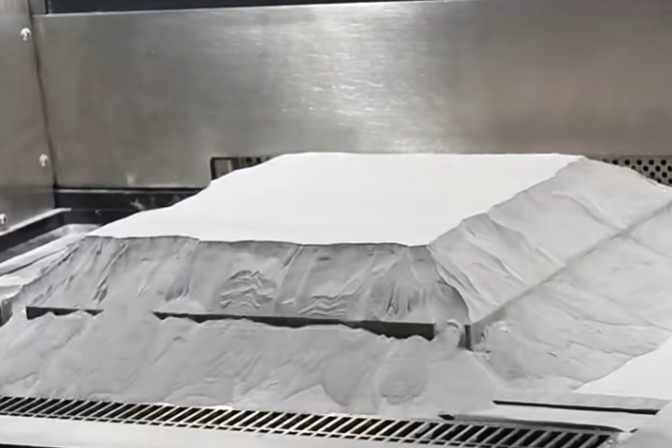
SLM Additive Manufacturing Capabilities for 15-5 PH
Process Parameters
Parameter | Value | Benefit for Marine Parts |
|---|---|---|
Layer Thickness | 30–50 µm | Enables precise geometries and small features |
Minimum Wall Thickness | ≥1.0 mm | Allows thin-walled, lightweight structures |
Surface Roughness (as built) | Ra 6–12 µm | Improves post-processing and sealing faces |
Tolerance (as printed) | ±0.05 mm | Ensures dimensional accuracy for mating parts |
Build Atmosphere | Argon | Prevents oxidation during printing |
Why 15-5 PH is Ideal for Marine Component Applications
Property | Value | Marine Application Advantage |
|---|---|---|
Ultimate Tensile Strength | 1100–1300 MPa | High mechanical reliability in dynamic load conditions |
Yield Strength | ~1000 MPa | Structural stability for marine brackets and frames |
Corrosion Resistance | Excellent in salt and humid air | Long service life in harsh marine environments |
Hardenability | H900–H1150 options | Customizable strength or toughness |
Weldability and Machinability | Good | Suitable for hybrid assemblies and CNC finishing |
Post-Processing and Surface Treatment Strategy
Heat Treatment:
H900 for maximum strength
H1025 for better ductility in impact applications
HIP: Optional for fatigue or pressure-critical components
CNC Machining: Threads, sealing interfaces, and gear surfaces
Passivation: Improves corrosion resistance in saltwater or marine spray zones
Case Study: 3D Printed 15-5 PH Structural Mount for Offshore Boat Deck
Project Background
A marine design firm required a custom deck mount bracket for an offshore research vessel. The part needed to withstand vibration, salt spray, and direct sunlight exposure while housing a removable sensor mast.
Manufacturing Workflow
Design: Complex hollow bracket with mounting flanges, cable routing ports, and self-draining channels.
Material: Certified 15-5 PH powder, D50 ~35 µm.
Printing: SLM at 40 μm layers, argon atmosphere, part oriented for self-supporting internal geometry.
Post-Processing:
H1025 heat treatment
Surface blasted and passivated
CNC machined critical hole patterns to ±0.02 mm
Inspection: CMM inspection for geometric accuracy; salt spray tested for 500 hours (ASTM B117)
Results and Verification
The 3D printed 15-5 PH marine bracket reduced part count from 4 to 1 and passed both structural and corrosion tests without cracking or dimensional distortion. The part met offshore vibration and UV exposure requirements and is now used across the customer’s vessel fleet.
FAQs
What’s the difference between 15-5 PH and 17-4 PH in marine use?
Can 15-5 PH printed parts be welded or joined to other marine alloys?
How does 3D printing improve flow and weight optimization in marine brackets?
Do 15-5 PH printed parts require post-treatment before deployment?
What are the corrosion testing standards for marine stainless parts?
