What Post-Processing Steps Are Needed to Improve MJF Part Quality?
Essential Powder Removal and Cleaning
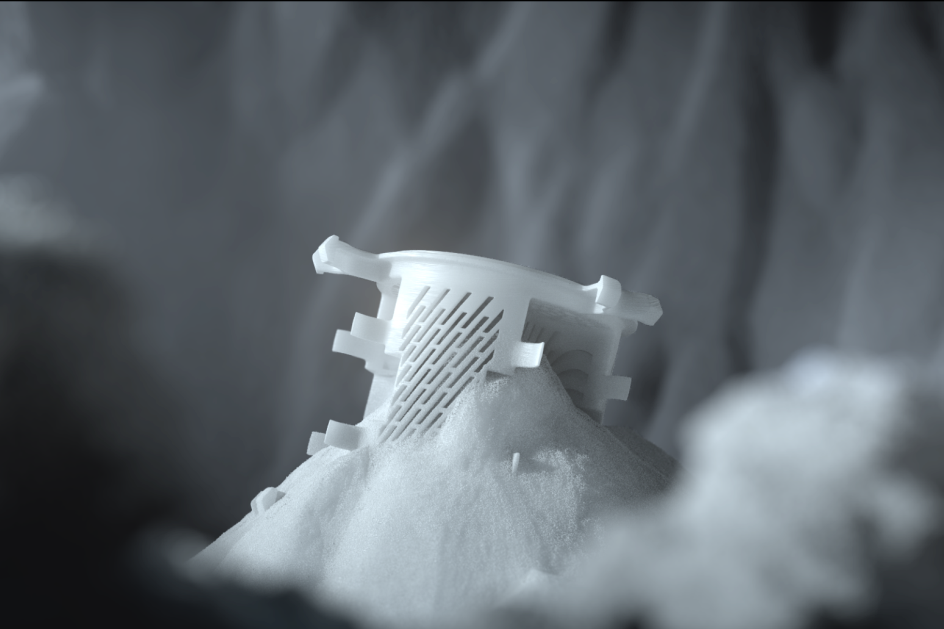
The first critical step after an MJF part is printed is thorough powder removal. Unsintered powder surrounds and fills internal cavities of the printed component. This is removed using a combination of manual brushing, compressed air, and dedicated bead blasting or vacuum systems. Effective cleaning is crucial, especially for parts with the complex internal geometries MJF enables, as trapped powder can affect mechanical function and dimensional accuracy. For high-value or complex parts, ultrasonic cleaning may be employed to ensure all residual powder is eliminated from channels and lattices.
Surface Finishing via Bead Blasting
The standard "as-printed" surface of an MJF part has a slightly grainy, matte texture. Bead blasting is the most common post-processing step to significantly improve surface quality. This process uses fine, spherical media propelled by air to uniformly abrade the part's surface. It effectively removes any remaining powder particles and smooths the surface layer, resulting in a more consistent, satin-like finish. Bead blasting enhances both the aesthetic appeal and tactile feel of the part, and can also lightly break edges, which is important for handling and certain functional applications.
Color Treatment and Dyeing
MJF parts are typically printed in a neutral, off-white or dark grey PA12 material. For applications requiring specific corporate colors, aesthetic consistency, or UV protection, dyeing is a standard post-process. The cleaned parts are submerged in a hot dye bath, where the porous surface of the thermoplastic absorbs the pigment. This results in deep, uniform color penetration that is far more resistant to scratching or wearing off compared to surface painting. For specialized needs, specialty plastics or coatings can be considered for enhanced properties.
Advanced Finishing and Secondary Operations
For applications demanding higher performance, additional post-processing steps are available. Vapor smoothing with solvents can create an almost injection-molded-like gloss and seal the part's surface, improving water resistance and making it easier to clean. For critical dimensions or interfaces, secondary machining operations like CNC machining may be used to achieve tolerances beyond standard 3D printing capabilities. Parts can also be assembled, tapped, or have inserts installed to integrate them into larger systems for industries like automotive or aerospace and aviation prototyping.
Quality Assurance and Inspection
The final, integral post-processing step is quality assurance. This involves a dimensional check using calipers, micrometers, or Coordinate Measuring Machines (CMM) to verify critical features meet design specifications. Visual inspection confirms the success of surface finishing and dyeing processes. For functional validation, especially for complex internal features, techniques similar to material testing and analysis may be adapted to ensure the MJF part performs as intended in its final application.