
Superalloy Vacuum Investment Casting Turbine Wheel Solutions
Introduction
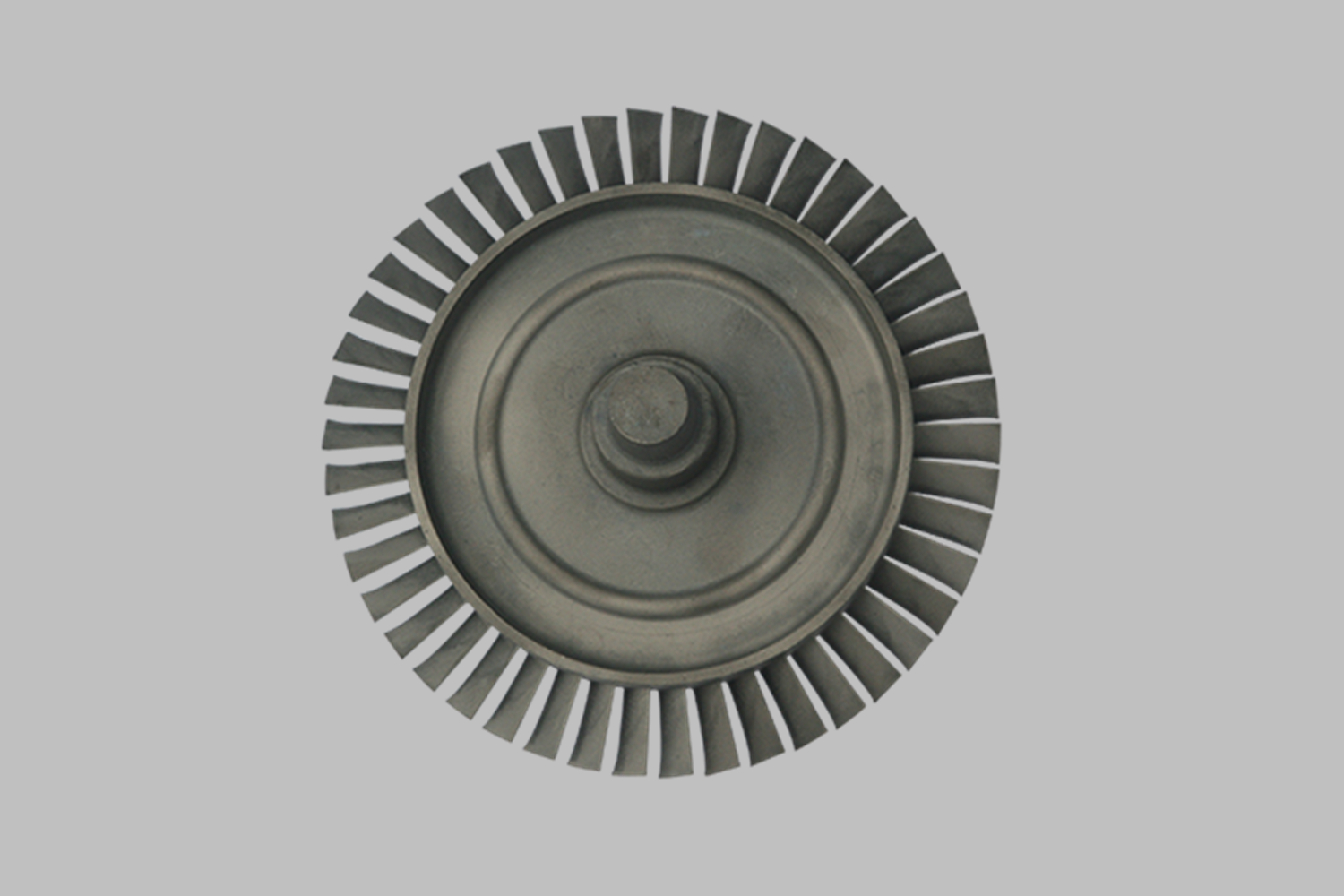
Superalloy turbine wheels produced by vacuum investment casting perform reliably in critical aerospace turbines and power generation systems at temperatures exceeding 1100°C. This advanced method achieves dimensional tolerances of ±0.05 mm and surface finishes (Ra ≤1.6 µm), ensuring components meet stringent aerospace quality standards.
Neway AeroTech employs high-vacuum furnaces (<0.01 Pa) and strict metallurgical control, consistently achieving alloy purity levels greater than 99.9%, thus significantly enhancing fatigue resistance, dimensional precision, and component reliability in demanding applications.
Core Manufacturing Challenges of High-Temperature Alloy Parts
Manufacturing turbine wheels using superalloys such as Inconel, CMSX-series, and Rene alloys presents significant challenges, including:
High melting points (1300-1450°C), requiring specialized vacuum furnaces.
Strict metallurgical control, including precise grain structures (single-crystal, directional, or equiaxed).
Rigorous dimensional accuracy requirements (±0.05 mm tolerances).
High-quality surface finish demands (Ra ≤1.6 µm).
Detailed Explanation of Manufacturing Process
Vacuum investment casting involves several controlled stages:
Wax Pattern Creation: Precision wax molds crafted via CNC machining or additive methods.
Shell Building: Apply ceramic slurry and refractory sand layers around wax patterns.
Wax Removal (Dewaxing): Autoclave steam dewaxing at ~150°C removes wax cleanly.
Vacuum Casting: Pouring molten alloy under high vacuum conditions (below 0.01 Pa) prevents oxidation and impurities.
Controlled Solidification: Precision control of grain structures through single-crystal, directional, or equiaxed solidification.
Shell Removal and Cleaning: Ceramic shells are removed using mechanical vibration and chemical methods, revealing the finished parts.
Comparison of Mainstream Manufacturing Processes
Method | Dimensional Accuracy | Surface Finish (Ra) | Grain Structure Control | Cost Efficiency | Typical Lead Time |
|---|---|---|---|---|---|
Vacuum Investment Casting | ±0.05 mm | ≤1.6 µm | Excellent | Moderate | 4-8 weeks |
Powder Metallurgy | ±0.03 mm | ≤1.2 µm | Excellent | High | 6-12 weeks |
Superalloy 3D Printing (SLM) | ±0.1 mm | ≤5 µm | Good | Low-Medium | 2-4 weeks |
Precision Forging | ±0.2 mm | ≤3 µm | Moderate | Medium | 4-6 weeks |
Manufacturing Process Selection Strategy
Choosing the optimal manufacturing process involves evaluating precise application requirements:
Vacuum Investment Casting: Ideal for complex turbine geometries requiring tight dimensional tolerances (±0.05 mm), high surface quality (Ra ≤1.6 µm), and excellent alloy purity (>99.9%).
Powder Metallurgy: Optimal for components requiring fine-grained microstructures, enhanced fatigue strength, and exceptional uniformity, typically employed in turbine discs.
Superalloy 3D Printing (SLM): Suited for rapid prototyping, intricate cooling channels, and low-volume parts, delivering geometric flexibility with tolerances around ±0.1 mm.
Precision Forging: Preferred for simpler turbine shapes benefiting from mechanical deformation, improving fatigue life and strength, with typical tolerances ±0.2 mm.
Material Analysis Matrix
Alloy Group | Melting Range (°C) | Max Service Temp (°C) | Tensile Strength (MPa) | Oxidation Resistance | Typical Applications |
|---|---|---|---|---|---|
1260–1336 | 700 | 1375 | Excellent | Aerospace turbines, gas turbines | |
1315–1345 | 1150 | 1250 | Superior | Single-crystal turbine blades, jet engines | |
1320–1365 | 1150 | 1150 | Superior | Advanced aero-engine turbines | |
1260–1355 | 900 | 860 | Superior | Gas turbine combustors, industrial heaters | |
1320–1360 | 950 | 1200 | Excellent | Gas turbine components, exhaust valves | |
1260–1350 | 800 | 870 | Excellent | Valve seats, pump impellers |
Material Selection
Material selection strategy for superalloy turbine wheels considers precise service temperatures, mechanical loads, and oxidation environments:
Inconel 718: Selected for general aerospace turbine wheels requiring tensile strengths up to 1375 MPa, reliable oxidation resistance, and operational stability at temperatures up to 700°C.
CMSX-4: Utilized for single-crystal turbine blades, offering superior creep resistance, operational capability up to 1150°C, and tensile strengths around 1250 MPa in demanding jet engine applications.
Rene N5: Chosen for advanced aero-engine turbine blades due to exceptional fatigue resistance at high temperatures (1150°C) and consistent tensile strength (1150 MPa) under thermal cycling.
Hastelloy X: Ideal for gas turbine combustors and industrial heating elements, selected for reliable oxidation resistance, tensile strength (860 MPa), and stable operation up to 900°C.
Nimonic 90: Recommended for turbine components and exhaust valves operating up to 950°C, offering tensile strengths around 1200 MPa, and excellent resistance to high-temperature corrosion.
Stellite 6: Preferred for turbine valve seats and pump impellers requiring superior abrasion resistance, oxidation stability at temperatures up to 800°C, and tensile strengths of approximately 870 MPa.
Key Post-processing Technology
Essential post-processing methods include:
Hot Isostatic Pressing (HIP): Applies pressures (~100 MPa) and temperatures (1100-1250°C) simultaneously, eliminating porosity and improving fatigue strength by ~30%.
Thermal Barrier Coating (TBC): Ceramic coatings (100-300 µm thick) reduce surface temperatures by ~150°C, extending component life significantly.
Precision CNC Machining: Multi-axis machining achieving tolerances of ±0.01 mm ensures precise turbine assembly and balance.
Superalloy Heat Treatment: Controlled thermal cycles (950-1200°C) enhance microstructures, tensile strength, and creep resistance by ~20%.
Industry Application and Case Analysis
Aerospace Case Study: CMSX-4 Turbine Wheels
Neway AeroTech provided CMSX-4 single-crystal alloy turbine wheels for an aerospace manufacturer, employing vacuum investment casting combined with HIP, meeting strict operational requirements:
Operating Temperature: Up to 1150°C
Fatigue Life Improvement: Increased by 40%
Dimensional Tolerance: Consistently maintained at ±0.02 mm
Certifications: Fully compliant with AS9100 standards
FAQs
What advantages does vacuum investment casting offer for turbine wheel production?
Which superalloy materials are optimal for aerospace turbine wheel applications?
What post-processing methods enhance turbine wheel fatigue life and thermal resistance?
How precise can dimensional tolerances be achieved in vacuum investment casting?
What criteria determine the selection of HIP versus thermal barrier coatings in turbine wheels?
2/2
