
Superalloy Mining Tools Custom Parts Casting Company
Introduction to Custom Superalloy Mining Components
Mining operations demand robust tools that withstand extreme abrasion, corrosion, and high mechanical loads. As a specialized superalloy casting company, Neway AeroTech delivers precision-engineered mining components tailored for critical mining applications. Utilizing advanced methods like vacuum investment casting, we produce superior-quality, high-performance parts with exceptional dimensional accuracy, wear resistance, and operational longevity.
Our proven expertise and comprehensive capabilities position us as a trusted partner in custom mining tool manufacturing.
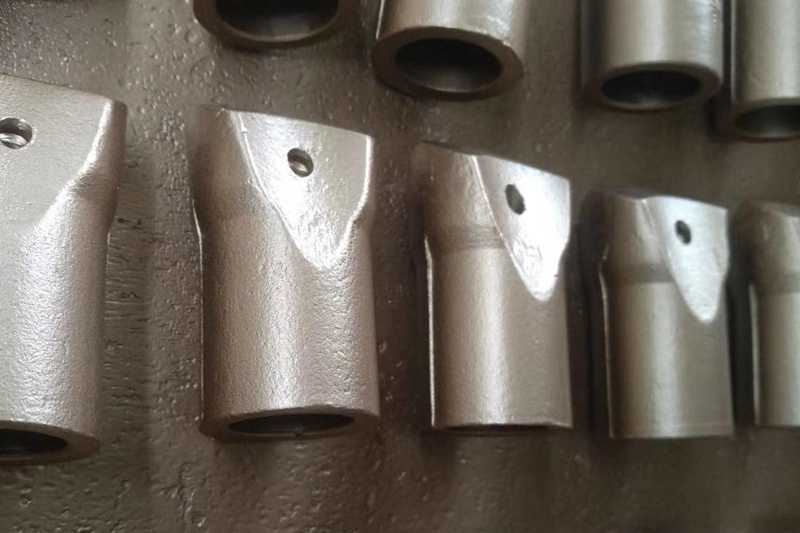
Core Manufacturing Challenges in Mining Tools Production
Key manufacturing challenges include:
Abrasion Resistance: Components must endure continuous abrasive conditions without structural degradation.
Corrosion Resistance: Tools must resist aggressive chemical environments commonly encountered in mining.
High Mechanical Strength: Components require tensile strengths exceeding 900 MPa for severe mechanical stresses.
Precision Requirements: Achieving dimensional tolerances within ±0.10 mm and surface finishes down to Ra 1.6 µm.
Superalloy Casting Processes for Mining Applications
Vacuum Investment Casting
High-precision wax models form intricate geometries.
Ceramic molds developed around wax patterns, with wax removal at controlled temperatures (~180°C).
Vacuum environment (<0.01 Pa) ensures purity and defect minimization.
Slow cooling rates (20–35°C/hour) to prevent internal stresses.
Equiaxed and Directional Solidification Casting
Equiaxed casting produces uniform grain structures, enhancing component toughness.
Directional solidification aligns grains, significantly improving mechanical properties and fatigue resistance.
Precise thermal gradients (20–50°C/cm) ensure controlled microstructural development.
Comparative Evaluation of Casting Methods
Casting Method | Dimensional Accuracy | Surface Finish | Efficiency | Complexity |
|---|---|---|---|---|
Vacuum Investment Casting | ±0.15 mm | Ra 3.2–6.3 µm | Moderate | High |
Equiaxed Crystal Casting | ±0.20 mm | Ra 6.3–12.5 µm | Moderate | Moderate |
Directional Casting | ±0.20 mm | Ra 6.3–12.5 µm | Moderate | High |
CNC Machining | ±0.01 mm | Ra 0.8–3.2 µm | Moderate | Moderate |
Process Selection Strategy for Mining Components
Vacuum Investment Casting: Optimal for complex geometries, high purity, and precision within ±0.15 mm tolerances.
Equiaxed Crystal Casting: Preferred for balanced toughness and strength in general mining components.
Directional Casting: Ideal for high-strength, creep-resistant parts demanding aligned grain structures.
CNC Machining: Recommended for final precision machining, achieving critical accuracy of ±0.01 mm.
Superalloy Material Analysis Matrix
Material | Tensile Strength | Yield Strength | Max Temp | Abrasion Resistance | Primary Application |
|---|---|---|---|---|---|
860 MPa | 700 MPa | 850°C | Exceptional | Cutting tools | |
1240 MPa | 1030 MPa | 704°C | Excellent | Structural parts | |
750 MPa | 360 MPa | 1038°C | Superior | Corrosive mining environments | |
1200 MPa | 760 MPa | 900°C | Excellent | Drill components | |
1300 MPa | 1150 MPa | 650°C | Outstanding | Load-bearing parts | |
1300 MPa | 1000 MPa | 1150°C | Exceptional | High-temp blades |
Material Selection Criteria
Stellite 6: Ideal for tools requiring superior abrasion resistance at operating temperatures up to 850°C.
Inconel 718: Recommended for components needing excellent tensile strength (1240 MPa) and mechanical reliability.
Hastelloy C-276: Optimal for corrosive mining environments, maintaining integrity at temperatures up to 1038°C.
Nimonic 90: Chosen for mining tools requiring high strength (1200 MPa tensile) and fatigue resistance at elevated temperatures (~900°C).
Rene 95: Suitable for high-load structural components with excellent mechanical properties and strength (1300 MPa).
CMSX-4: Preferred for single-crystal blades needing maximum creep resistance and structural stability at high temperatures (1150°C).
Key Post-processing Technologies
Hot Isostatic Pressing (HIP): Enhances internal integrity by removing porosity at ~1200°C and pressures around 150 MPa.
Thermal Barrier Coating (TBC): Reduces surface temperatures (~200°C lower), extending component lifespan in harsh conditions.
Electrical Discharge Machining (EDM): Enables precise, complex geometries and internal features with tolerances as tight as ±0.005 mm.
Heat Treatment: Optimizes alloy microstructure, significantly improving strength, wear, and corrosion resistance.
Industry Case Study: Stellite Mining Cutter Production
Neway AeroTech recently completed production of custom vacuum investment-cast Stellite 6 mining cutters for a global mining equipment leader. Employing HIP and advanced heat treatment, we achieved superior abrasion resistance, dimensional accuracy (±0.15 mm), and significantly increased operational life, exceeding typical industry standards.
Our comprehensive alloy expertise and advanced manufacturing processes affirm our position as a reliable superalloy casting company for mining tools.
FAQs
What is your typical lead time for producing custom superalloy mining components?
Can you accommodate small-batch or prototype mining component manufacturing?
What industry standards and certifications do your mining products meet?
Which superalloy materials are best suited for highly abrasive mining environments?
Do you offer technical support for material selection and component design optimization in mining applications?
